
ALiRaza
25 Posts
ALiRaza
No Complex ICT / SMC / VSA / CRT Simple Bank Strategy Only Become A Profitable Trader Join The 1% Traders Leave The 99% Behind Banks strategy Wp 03146513390
Open Trade
Frequent Trader
4.4 Years
8 Following
63 Followers
18 Liked
Posts
Portfolio
All
Videos
Live
PINNED
Student Review - Bank Strategy
"After switching from SMC to Bank Strategy, my chart analysis became simpler"
- Anonymous Student
#Binance #banksstragey #crypto
"After switching from SMC to Bank Strategy, my chart analysis became simpler"
- Anonymous Student
#Binance #banksstragey #crypto
the main point of the bank strategy is
pinpoint entries ⚡
- Keeps you disciplined
- Works 99% of the time
- Includes all ICT/SMC concepts
- You won't need to draw anything on the chart, it will feel like you're driving the market
Don't create anything on the chart, just follow it.
A 99% working strategy that also teaches discipline 🔥
#ProfitProtector #losstolearn @Gulabo Jaan #Binance
pinpoint entries ⚡
- Keeps you disciplined
- Works 99% of the time
- Includes all ICT/SMC concepts
- You won't need to draw anything on the chart, it will feel like you're driving the market
Don't create anything on the chart, just follow it.
A 99% working strategy that also teaches discipline 🔥
#ProfitProtector #losstolearn @Gulabo Jaan #Binance
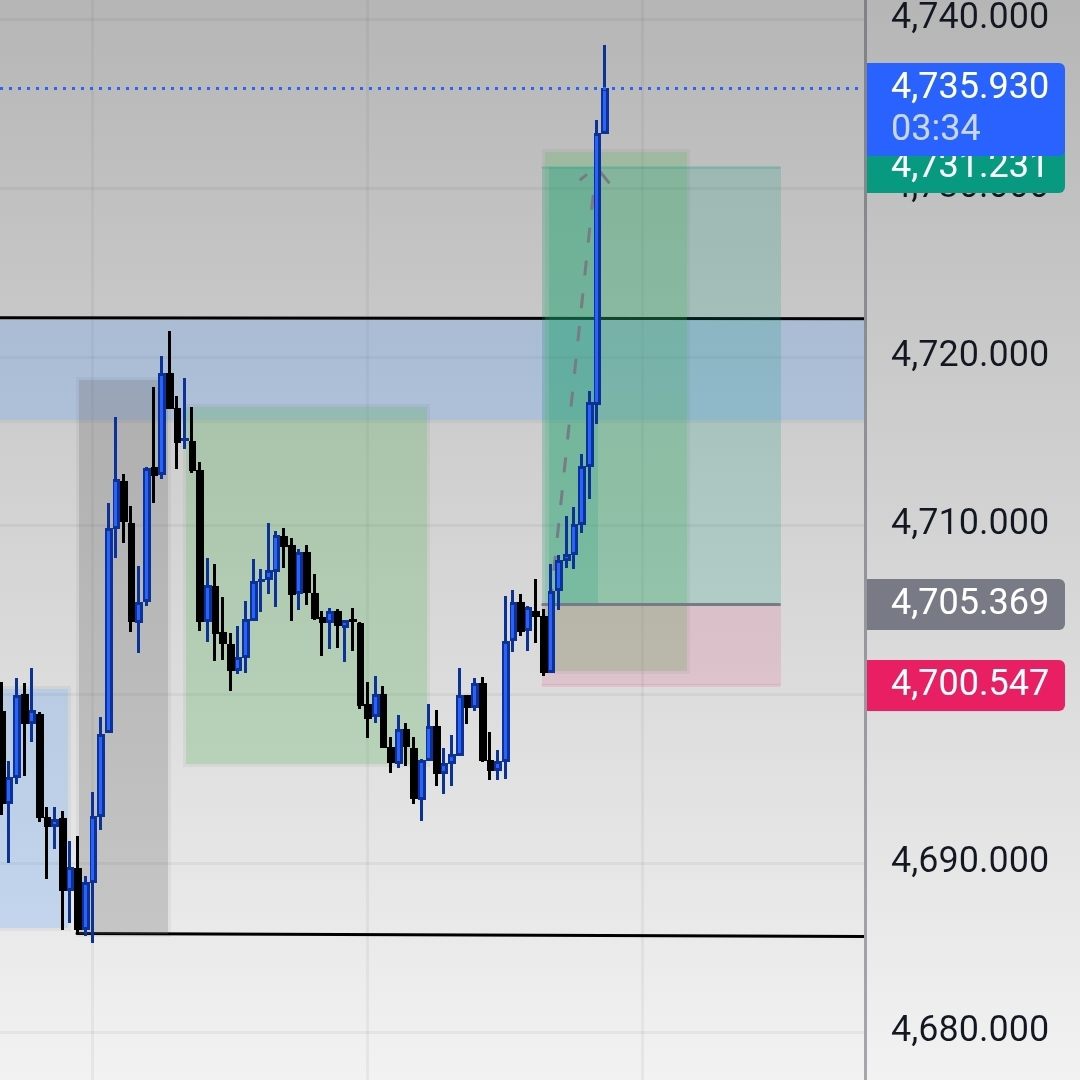
**XAUUSD Gold - Bank Strategy Analysis
No indicators used here. Only price, structure, and liquidity zones.
What I See
Market made a sharp drop from the $4711 supply zone to $4540 demand zone
- Price is now consolidating between these two levels
- The $4692-$4711 area acted as resistance multiple times
- $4540 is acting as short-term support
Bank Strategy Concept:
Look for liquidity grabs above resistance and below support.
Price often sweeps these zones before reversing or continuing.
Key Levels:
Resistance: $4692, $4711, $4729
Support: $4540, $4520
This is pure price action observation. No financial advice.
Always manage risk and wait for your confirmation.
Do you trade Gold with price action or use indicators? Comment below 👇
#xauusdt #BankStrategy #SMCShort #Trading #Bitcionpop
No indicators used here. Only price, structure, and liquidity zones.
What I See
Market made a sharp drop from the $4711 supply zone to $4540 demand zone
- Price is now consolidating between these two levels
- The $4692-$4711 area acted as resistance multiple times
- $4540 is acting as short-term support
Bank Strategy Concept:
Look for liquidity grabs above resistance and below support.
Price often sweeps these zones before reversing or continuing.
Key Levels:
Resistance: $4692, $4711, $4729
Support: $4540, $4520
This is pure price action observation. No financial advice.
Always manage risk and wait for your confirmation.
Do you trade Gold with price action or use indicators? Comment below 👇
#xauusdt #BankStrategy #SMCShort #Trading #Bitcionpop
Bank's strategy 🫣
GUAUSDT Hits New ATH | SUPERFORTUNE +19% in 24h
SUPERFORTUNE breaks out to $1.55 ATH. Supply, volume, and key levels breakdown inside.
**SUPERFORTUNE (GUA) - Fast Facts**
**Price & Volume**
- Price: $1.4643 [+19.46% 24h]
- 24h High/Low: $1.5091 / $1.1356
- 24h Volume: $8.87M
- 30D Gain: +155.59%
**Token Supply**
- Circulating: 242.64M GUA
- Max Supply: 1B GUA
- Market Cap: $352.98M
- FDV: $1.45B
**What to Watch**
ATH hit at $1.5547 on 2026-05-13. Volume spike shows strong interest.
Key resistance: $1.55-$1.60 zone
Key support: $1.22 level
Links: Official website + Whitepaper available on Binance info page.
Contract is on BSCScan.
This is educational content only. Not financial advice. DYOR.
Bullish or bearish on GUA? Comment below 👇
#GUA #SUPERFORTUNE #Binance #Crypto #altcoins
GUAUSDT Hits New ATH | SUPERFORTUNE +19% in 24h
SUPERFORTUNE breaks out to $1.55 ATH. Supply, volume, and key levels breakdown inside.
**SUPERFORTUNE (GUA) - Fast Facts**
**Price & Volume**
- Price: $1.4643 [+19.46% 24h]
- 24h High/Low: $1.5091 / $1.1356
- 24h Volume: $8.87M
- 30D Gain: +155.59%
**Token Supply**
- Circulating: 242.64M GUA
- Max Supply: 1B GUA
- Market Cap: $352.98M
- FDV: $1.45B
**What to Watch**
ATH hit at $1.5547 on 2026-05-13. Volume spike shows strong interest.
Key resistance: $1.55-$1.60 zone
Key support: $1.22 level
Links: Official website + Whitepaper available on Binance info page.
Contract is on BSCScan.
This is educational content only. Not financial advice. DYOR.
Bullish or bearish on GUA? Comment below 👇
#GUA #SUPERFORTUNE #Binance #Crypto #altcoins
BREAKING: Bitcoin ETF Volume Spikes 40% | What It Means for BTC
BREAKING: Bitcoin ETF Volume Spikes 40% | What It Means for BTC
Bitcoin ETF volume jumped 40% in the last 24h according to latest data.
What this means:
1. Institutional interest is rising again
2. Volatility could increase around key resistance levels
3. Traders are watching $65k and $68k as next targets
This is NOT financial advice. Always do your own research.
What's your take? Drop it below 👇
#Bitcoin #BTC #CryptoNews #ETF #Binance BitcoinETFsSee$131MNetInflows
BREAKING: Bitcoin ETF Volume Spikes 40% | What It Means for BTC
Bitcoin ETF volume jumped 40% in the last 24h according to latest data.
What this means:
1. Institutional interest is rising again
2. Volatility could increase around key resistance levels
3. Traders are watching $65k and $68k as next targets
This is NOT financial advice. Always do your own research.
What's your take? Drop it below 👇
#Bitcoin #BTC #CryptoNews #ETF #Binance BitcoinETFsSee$131MNetInflows
One concept from the advance course can change your life: "Banks don't chase price"
This chart is a live example of that 💯 Thank you, sir
This chart is a live example of that 💯 Thank you, sir
Miss Sana 3 Year old
Student Review - Bank Strategy
"After switching from SMC to Bank Strategy, my chart analysis became simpler"
- Anonymous Student
Student Review - Bank Strategy
"After switching from SMC to Bank Strategy, my chart analysis became simpler"
- Anonymous Student
😚🔥 Everyone, hold on to your altcoins tightly and don't sell them because the market is going to be pumped quite heavily within these two months. 🌋
Hold my trade 🔥 SMART Trader 🔥😚
already my 1 trade tp hit
secend trade hold and set brakeven set bitcion boom 🔥
#bitcion #crypto #cz #blackrock
already my 1 trade tp hit
secend trade hold and set brakeven set bitcion boom 🔥
#bitcion #crypto #cz #blackrock
THENA Cion 80% profit book
I had shorted this coin at 3.85 and now I have booked 80 percent profit yesterday and now this is my trade close. 🔥😚
If you guys also want to learn advanced market structure which is very profitable, you can take big trades with small stop loss, you can join the market trend, you will know everything, which direction the market trend is, all this is advanced, it is my own experience of five years, if you want to turn $20 into $200 or $500, then follow me, I will also give signals for daily trades, I will have two or four signals which will go into profit.
#Thena $BTC
I had shorted this coin at 3.85 and now I have booked 80 percent profit yesterday and now this is my trade close. 🔥😚
If you guys also want to learn advanced market structure which is very profitable, you can take big trades with small stop loss, you can join the market trend, you will know everything, which direction the market trend is, all this is advanced, it is my own experience of five years, if you want to turn $20 into $200 or $500, then follow me, I will also give signals for daily trades, I will have two or four signals which will go into profit.
#Thena $BTC
Advance Smart Money stcher reading 🔥
Here are some advanced concepts in Smart Money Concept (SMC) trading:
Inducement (IDM)
The extreme point of the last pullback in a market structure that prompts traders to buy and sell.
Change of Character (CHoCH)
A notable alteration in the market's behavior, often seen through an abrupt increase in volatility or a shift in price direction.
Break of Structure (BOS)
A BOS occurs when the price surpasses a significant high or low, indicating a potential change in market trend.
Sweeped BOS
The first POI zone for counter-trend entries is right at the start, i.e., after a Sweeped BOS.
Other concepts in SMC trading include:
order blocks, breaker blocks, mitigation blocks, flip zones, fair value gaps, and liquidity grabs.
SMC is a trading strategy that helps traders interpret market movements by looking at institutional activities. The term "smart money" refers to the capital that is being controlled by institutional investors, market mavens, central banks, funds, and other financial professionals.
#bitcion #cz #thena #sol #crypto
Here are some advanced concepts in Smart Money Concept (SMC) trading:
Inducement (IDM)
The extreme point of the last pullback in a market structure that prompts traders to buy and sell.
Change of Character (CHoCH)
A notable alteration in the market's behavior, often seen through an abrupt increase in volatility or a shift in price direction.
Break of Structure (BOS)
A BOS occurs when the price surpasses a significant high or low, indicating a potential change in market trend.
Sweeped BOS
The first POI zone for counter-trend entries is right at the start, i.e., after a Sweeped BOS.
Other concepts in SMC trading include:
order blocks, breaker blocks, mitigation blocks, flip zones, fair value gaps, and liquidity grabs.
SMC is a trading strategy that helps traders interpret market movements by looking at institutional activities. The term "smart money" refers to the capital that is being controlled by institutional investors, market mavens, central banks, funds, and other financial professionals.
#bitcion #cz #thena #sol #crypto
5 years Exprence...
*Market Structure*
1. *Order Flow*: Understanding how orders interact with the market, including order types, routing, and execution.
2. *Liquidity Pools*: Identifying and analyzing liquidity pools, including dark pools, ECNs, and exchanges.
3. *Market Microstructure*: Examining the intricacies of market mechanics, including tick size, lot size, and trading halts.
*Technical Analysis*
1. *Advanced Chart Patterns*: Exploring complex chart patterns, such as harmonic patterns, Elliott Wave, and Point & Figure.
2. *Indicator Development*: Creating custom technical indicators using programming languages like Python, MATLAB, or R.
3. *Machine Learning Applications*: Applying machine learning algorithms to technical analysis, including predictive modeling and backtesting.
*Risk Management*
1. *Position Sizing*: Implementing advanced position sizing strategies, including optimal f, Kelly Criterion, and Monte Carlo simulations.
2. *Risk-Reward Optimization*: Analyzing and optimizing risk-reward ratios using techniques like expected value and utility theory.
3. *Stress Testing*: Developing robust stress testing frameworks to evaluate portfolio resilience.
*Trading Psychology*
1. *Behavioral Finance*: Understanding cognitive biases and heuristics that influence trading decisions.
2. *Emotional Intelligence*: Developing self-awareness, self-regulation, and motivation to improve trading performance.
3. *Mindfulness and Performance*: Applying mindfulness techniques to enhance focus, discipline, and resilience.
#thena #bnb #BlackRock #bitcion
*Market Structure*
1. *Order Flow*: Understanding how orders interact with the market, including order types, routing, and execution.
2. *Liquidity Pools*: Identifying and analyzing liquidity pools, including dark pools, ECNs, and exchanges.
3. *Market Microstructure*: Examining the intricacies of market mechanics, including tick size, lot size, and trading halts.
*Technical Analysis*
1. *Advanced Chart Patterns*: Exploring complex chart patterns, such as harmonic patterns, Elliott Wave, and Point & Figure.
2. *Indicator Development*: Creating custom technical indicators using programming languages like Python, MATLAB, or R.
3. *Machine Learning Applications*: Applying machine learning algorithms to technical analysis, including predictive modeling and backtesting.
*Risk Management*
1. *Position Sizing*: Implementing advanced position sizing strategies, including optimal f, Kelly Criterion, and Monte Carlo simulations.
2. *Risk-Reward Optimization*: Analyzing and optimizing risk-reward ratios using techniques like expected value and utility theory.
3. *Stress Testing*: Developing robust stress testing frameworks to evaluate portfolio resilience.
*Trading Psychology*
1. *Behavioral Finance*: Understanding cognitive biases and heuristics that influence trading decisions.
2. *Emotional Intelligence*: Developing self-awareness, self-regulation, and motivation to improve trading performance.
3. *Mindfulness and Performance*: Applying mindfulness techniques to enhance focus, discipline, and resilience.
#thena #bnb #BlackRock #bitcion
Many people have sell it and many people have buy it. No one understands anything. It will come on this side of the down. There is a direction on its side. If it comes on this side, then let's follow me. I have learned advanced market structure and I have five years of experience.
i am short the cion 5x 500$ tp 3$
i am short the cion 5x 500$ tp 3$
Log in to explore more content