News


·
--
Article
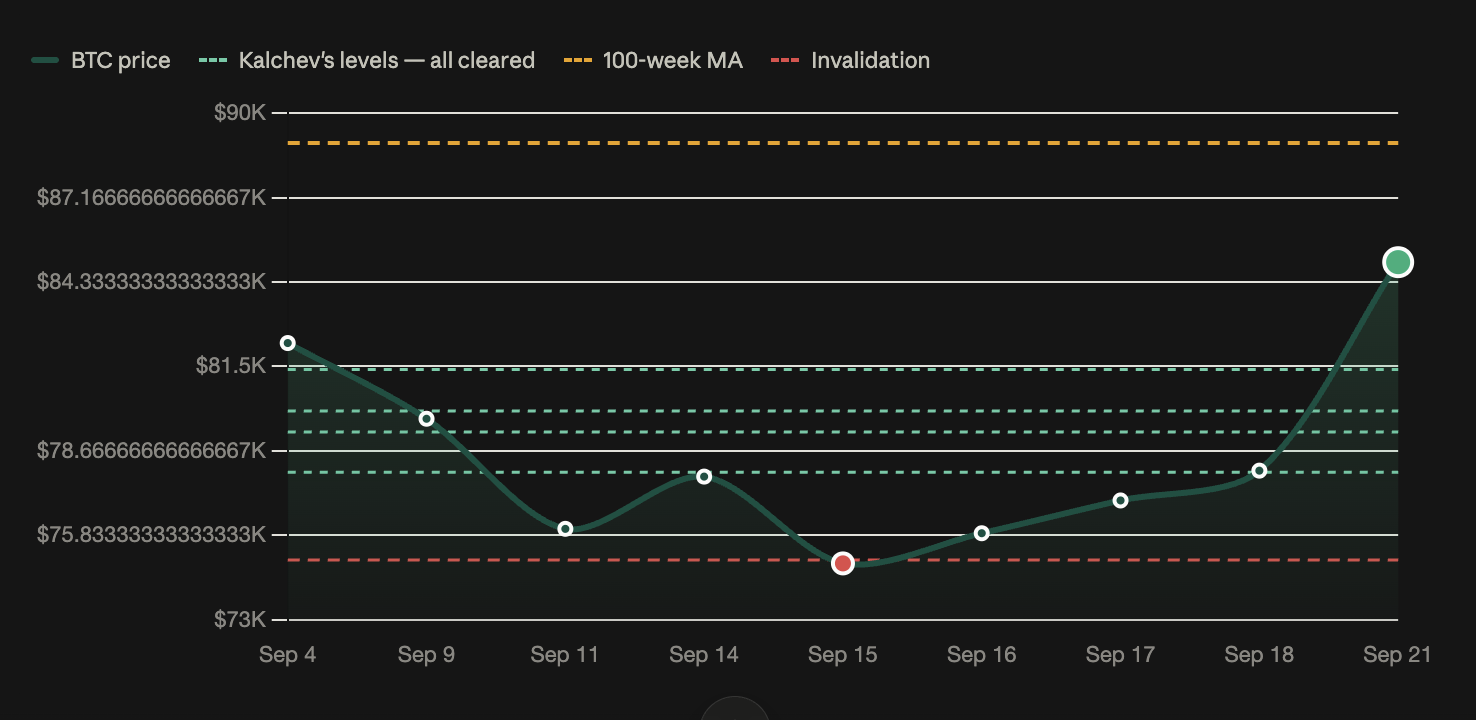
Bitcoin News | Bitcoin Hits $85,000 and Clears Every Level Analysts Set After the Clarity FailureA week ago, most participants expected a Fed rate hike and the Clarity Act's failure in the Senate to trigger a sharp sell-off. The Fed hiked and the bill failed. Bitcoin now trades at $85,000.The move has cleared every resistance level analysts identified in the immediate aftermath — and outrun the range-bound forecasts that accompanied them.Kalchev's Four Levels Are All Behind PriceIlya Kalchev, an analyst at Nexo Dispatch, set out the path after the vote: $77,950 as the first level to clear, then $79,300 and $80,000, with a move above $80,000 opening the way to $81,400. A fall below $75,000 would put the recovery in question.Bitcoin is now $3,600 above the highest of those.His central call was consolidation. "Bitcoin's next move is now linked to a catalyst that it does not have yet," he said. "Having absorbed three separate shocks this month without a real repricing, the more likely near-term path is range-bound trading rather than a breakout."The catalyst arrived from outside crypto. Brent fell for a fourth straight session, its longest losing run in three months, as Washington and Tehran moved toward talks — President Trump said he would "probably" be open to meeting Iranian President Masoud Pezeshkian at the UN General Assembly. Cheaper oil eased the inflation input that drove the 10-year Treasury yield to 5.04% last week.Kalchev also named what would confirm a breakout: sustained ETF inflows or renewed spot buying. Those are now the tests of whether $85,000 holds.Traders Were Not Positioned for PassageJag Kooner, head of derivatives at Bitfinex, explained why the vote itself did so little damage."There was little evidence that traders had positioned themselves for its passage ahead of the vote," he said. "With few market participants betting on the bill's approval, there were correspondingly few positions to unwind."The damage fell on leverage rather than spot. Long futures positions worth $571 million were liquidated in the 24 hours after the 49-50 cloture vote. Coinbase and Circle each slid around 10%, before rebounding Friday.Kooner flagged the longer-term cost: "The more important consequence is that the industry remains without clear statutory rules, prolonging regulatory uncertainty."Hougan Called Any Selloff an OpportunityBitwise CIO Matt Hougan argued the bill was irrelevant to Bitcoin itself."If bitcoin sells off in the short-term due to Clarity Act vibes, I'd consider that an opportunity," he said. Bitcoin touched below $75,000 on the vote and has risen roughly 13% since.He was less sanguine about the broader market. "Had the Clarity Act passed the Senate vote, I think crypto would have been the consensus 'smart money trade' in Q4, and prices would have ramped back toward all-time highs." Without it, "I think the road ahead is bumpier."Hougan noted the US still has two and a half years of a pro-crypto regulatory regime to work within.The SEC Moved Within 48 HoursThe regulatory story has shifted from statute to agency rulemaking.The SEC issued a temporary, conditional innovation exemption Thursday allowing eligible crypto platforms to facilitate trading in tokenized US stocks."The SEC's move gives investors a reason to look beyond the failed vote," said Luke Davis, founder of Bull Market Blueprint. "I expect bitcoin to finish the year higher, with liquidity conditions and the debasement trade carrying more weight in my forecast than the timing of any individual bill."The durability gap remains. Rules made under existing authority can be unmade by a subsequent administration — precisely what the legislation was meant to prevent.Greenspan: Bitcoin Does Better Under PressureMati Greenspan, founder of Quantum Economics, called Bitcoin "like a honey badger" that does not depend on regulation."In fact, we've historically seen stronger price performance during periods of regulatory pressure than during periods of regulatory clarity," he said.That is a historical observation rather than a mechanism, and the sample of distinct regulatory regimes in Bitcoin's history is small. But it fits this week's sequence: a legislative failure followed by a new high for the quarter.Budki Is Not Calling the BottomVineet Budki, managing partner and CEO of Sigma Capital, offered the most cautious view."I'm not ready to make that call," he said of whether the bottom is in. "I'd rather give it a quarter and let the price action speak before taking a firm directional view."He said the four-year cycle still needs to play out, and warned that elevated rates and a slowing US housing market could yet push investors toward risk aversion. "So my stance is to hold and wait. I'm not leaning firmly bullish or bearish right now."That caution has a specific basis. Bitcoin's rally has been driven heavily by short liquidations — roughly $300 million in a single hour Monday — rather than confirmed spot demand. CryptoQuant's spot demand metric sat at −145,000 BTC last week, and ETF flows had been mixed.The Next Tests Are October DataKalchev named the September jobs report on October 2 and CPI on October 14 as the next macro tests.The technical map has changed. The $80,000-$82,000 band, which held nearly 8% of supply and the ETF cohort's cost basis, has flipped from resistance to the first support to defend. Above, the 100-week moving average near $89,000 is the next marked level.Bitcoin is now roughly 7% higher for September, a month that has averaged a 3% loss since 2013.
Bitcoin News | Bitcoin Hits $85,000 and Clears Every Level Analysts Set After the Clarity Failure
A week ago, most participants expected a Fed rate hike and the Clarity Act's failure in the Senate to trigger a sharp sell-off. The Fed hiked and the bill failed. Bitcoin now trades at $85,000.The move has cleared every resistance level analysts identified in the immediate aftermath — and outrun the range-bound forecasts that accompanied them.Kalchev's Four Levels Are All Behind PriceIlya Kalchev, an analyst at Nexo Dispatch, set out the path after the vote: $77,950 as the first level to clear, then $79,300 and $80,000, with a move above $80,000 opening the way to $81,400. A fall below $75,000 would put the recovery in question.Bitcoin is now $3,600 above the highest of those.His central call was consolidation. "Bitcoin's next move is now linked to a catalyst that it does not have yet," he said. "Having absorbed three separate shocks this month without a real repricing, the more likely near-term path is range-bound trading rather than a breakout."The catalyst arrived from outside crypto. Brent fell for a fourth straight session, its longest losing run in three months, as Washington and Tehran moved toward talks — President Trump said he would "probably" be open to meeting Iranian President Masoud Pezeshkian at the UN General Assembly. Cheaper oil eased the inflation input that drove the 10-year Treasury yield to 5.04% last week.Kalchev also named what would confirm a breakout: sustained ETF inflows or renewed spot buying. Those are now the tests of whether $85,000 holds.Traders Were Not Positioned for PassageJag Kooner, head of derivatives at Bitfinex, explained why the vote itself did so little damage."There was little evidence that traders had positioned themselves for its passage ahead of the vote," he said. "With few market participants betting on the bill's approval, there were correspondingly few positions to unwind."The damage fell on leverage rather than spot. Long futures positions worth $571 million were liquidated in the 24 hours after the 49-50 cloture vote. Coinbase and Circle each slid around 10%, before rebounding Friday.Kooner flagged the longer-term cost: "The more important consequence is that the industry remains without clear statutory rules, prolonging regulatory uncertainty."Hougan Called Any Selloff an OpportunityBitwise CIO Matt Hougan argued the bill was irrelevant to Bitcoin itself."If bitcoin sells off in the short-term due to Clarity Act vibes, I'd consider that an opportunity," he said. Bitcoin touched below $75,000 on the vote and has risen roughly 13% since.He was less sanguine about the broader market. "Had the Clarity Act passed the Senate vote, I think crypto would have been the consensus 'smart money trade' in Q4, and prices would have ramped back toward all-time highs." Without it, "I think the road ahead is bumpier."Hougan noted the US still has two and a half years of a pro-crypto regulatory regime to work within.The SEC Moved Within 48 HoursThe regulatory story has shifted from statute to agency rulemaking.The SEC issued a temporary, conditional innovation exemption Thursday allowing eligible crypto platforms to facilitate trading in tokenized US stocks."The SEC's move gives investors a reason to look beyond the failed vote," said Luke Davis, founder of Bull Market Blueprint. "I expect bitcoin to finish the year higher, with liquidity conditions and the debasement trade carrying more weight in my forecast than the timing of any individual bill."The durability gap remains. Rules made under existing authority can be unmade by a subsequent administration — precisely what the legislation was meant to prevent.Greenspan: Bitcoin Does Better Under PressureMati Greenspan, founder of Quantum Economics, called Bitcoin "like a honey badger" that does not depend on regulation."In fact, we've historically seen stronger price performance during periods of regulatory pressure than during periods of regulatory clarity," he said.That is a historical observation rather than a mechanism, and the sample of distinct regulatory regimes in Bitcoin's history is small. But it fits this week's sequence: a legislative failure followed by a new high for the quarter.Budki Is Not Calling the BottomVineet Budki, managing partner and CEO of Sigma Capital, offered the most cautious view."I'm not ready to make that call," he said of whether the bottom is in. "I'd rather give it a quarter and let the price action speak before taking a firm directional view."He said the four-year cycle still needs to play out, and warned that elevated rates and a slowing US housing market could yet push investors toward risk aversion. "So my stance is to hold and wait. I'm not leaning firmly bullish or bearish right now."That caution has a specific basis. Bitcoin's rally has been driven heavily by short liquidations — roughly $300 million in a single hour Monday — rather than confirmed spot demand. CryptoQuant's spot demand metric sat at −145,000 BTC last week, and ETF flows had been mixed.The Next Tests Are October DataKalchev named the September jobs report on October 2 and CPI on October 14 as the next macro tests.The technical map has changed. The $80,000-$82,000 band, which held nearly 8% of supply and the ETF cohort's cost basis, has flipped from resistance to the first support to defend. Above, the 100-week moving average near $89,000 is the next marked level.Bitcoin is now roughly 7% higher for September, a month that has averaged a 3% loss since 2013.
9
42
86.1k
·
--
Binance Says It Has Not Detected Stolen Funds From FomoPeek IncidentBinance Wallet announced on X that security firms recently reported the iOS app FomoPeek, versions 1.1 to 1.2, contained malicious code capable of stealing sensitive information, including wallet private keys stored locally on users’ devices. The report said the incident led to asset losses for some users and drew broad community attention, prompting related user inquiries to Binance. Binance said that, at this time, it has not identified any related stolen funds flowing into its platform, and it has not received reports of Binance users suffering asset losses as a result of the incident. The company said safeguarding user assets remains its top priority and that it will continue monitoring relevant fund movements through on-chain monitoring and other risk control measures.
Binance Wallet said that if related funds are later found to involve Binance, or if there are indications that such funds may flow into Binance’s platform or services, it will actively support relevant investigations and response efforts. The company also said it will continue working closely with security partners such as SlowMist to assist in tracking related risks and help protect user assets within its capabilities. Binance added that it will keep monitoring developments tied to the incident. The statement ended with the phrase “Stay SAFU.”
Binance Says It Has Not Detected Stolen Funds From FomoPeek Incident
Binance Wallet announced on X that security firms recently reported the iOS app FomoPeek, versions 1.1 to 1.2, contained malicious code capable of stealing sensitive information, including wallet private keys stored locally on users’ devices. The report said the incident led to asset losses for some users and drew broad community attention, prompting related user inquiries to Binance. Binance said that, at this time, it has not identified any related stolen funds flowing into its platform, and it has not received reports of Binance users suffering asset losses as a result of the incident. The company said safeguarding user assets remains its top priority and that it will continue monitoring relevant fund movements through on-chain monitoring and other risk control measures.
Binance Wallet said that if related funds are later found to involve Binance, or if there are indications that such funds may flow into Binance’s platform or services, it will actively support relevant investigations and response efforts. The company also said it will continue working closely with security partners such as SlowMist to assist in tracking related risks and help protect user assets within its capabilities. Binance added that it will keep monitoring developments tied to the incident. The statement ended with the phrase “Stay SAFU.”
Binance Wallet said that if related funds are later found to involve Binance, or if there are indications that such funds may flow into Binance’s platform or services, it will actively support relevant investigations and response efforts. The company also said it will continue working closely with security partners such as SlowMist to assist in tracking related risks and help protect user assets within its capabilities. Binance added that it will keep monitoring developments tied to the incident. The statement ended with the phrase “Stay SAFU.”
3
4.3k
·
--
BitMine Adds 27,562 Ether as Tom Lee Sees Higher Institutional Crypto Exposure in Final Three Months of 2026BitMine bought another 27,562 ether last week and now holds 5.98 million tokens worth about $16.3 billion. According to NS3.AI, Chairman Tom Lee said institutions will substantially increase their crypto exposure in the final three months of 2026.
BitMine's $17.1 billion in crypto, cash and private stakes now exceeds its $15.68 billion market value.
BitMine Adds 27,562 Ether as Tom Lee Sees Higher Institutional Crypto Exposure in Final Three Months of 2026
BitMine bought another 27,562 ether last week and now holds 5.98 million tokens worth about $16.3 billion. According to NS3.AI, Chairman Tom Lee said institutions will substantially increase their crypto exposure in the final three months of 2026.
BitMine's $17.1 billion in crypto, cash and private stakes now exceeds its $15.68 billion market value.
BitMine's $17.1 billion in crypto, cash and private stakes now exceeds its $15.68 billion market value.
8
15k
·
--
Strategy Adds 950 Bitcoin Last Week, Holdings Rise to 846,000Strategy added 950 bitcoin last week, bringing its holdings to 846,000 coins. According to Odaily, the company’s total Bitcoin holdings rose to 846,000 after the purchase.
Strategy Adds 950 Bitcoin Last Week, Holdings Rise to 846,000
Strategy added 950 bitcoin last week, bringing its holdings to 846,000 coins. According to Odaily, the company’s total Bitcoin holdings rose to 846,000 after the purchase.
11
31.4k
·
--
XRP Rises 8% as Ripple Says Asset Managers Prepare for XRP Ledger Payments UpgradeXRP rose 8% after Ripple said asset managers and commercial projects are preparing to use the XRP Ledger's Batch V1.1 payments upgrade. According to NS3.AI, the upgrade has support from 30 of 35 tracked validators and is projected to activate after Sept. 29 if support remains above 80%.
Traders identified $1.50 and above $1.80 as important levels for XRP.
XRP Rises 8% as Ripple Says Asset Managers Prepare for XRP Ledger Payments Upgrade
XRP rose 8% after Ripple said asset managers and commercial projects are preparing to use the XRP Ledger's Batch V1.1 payments upgrade. According to NS3.AI, the upgrade has support from 30 of 35 tracked validators and is projected to activate after Sept. 29 if support remains above 80%.
Traders identified $1.50 and above $1.80 as important levels for XRP.
Traders identified $1.50 and above $1.80 as important levels for XRP.
2
21
20.9k
·
--
Article
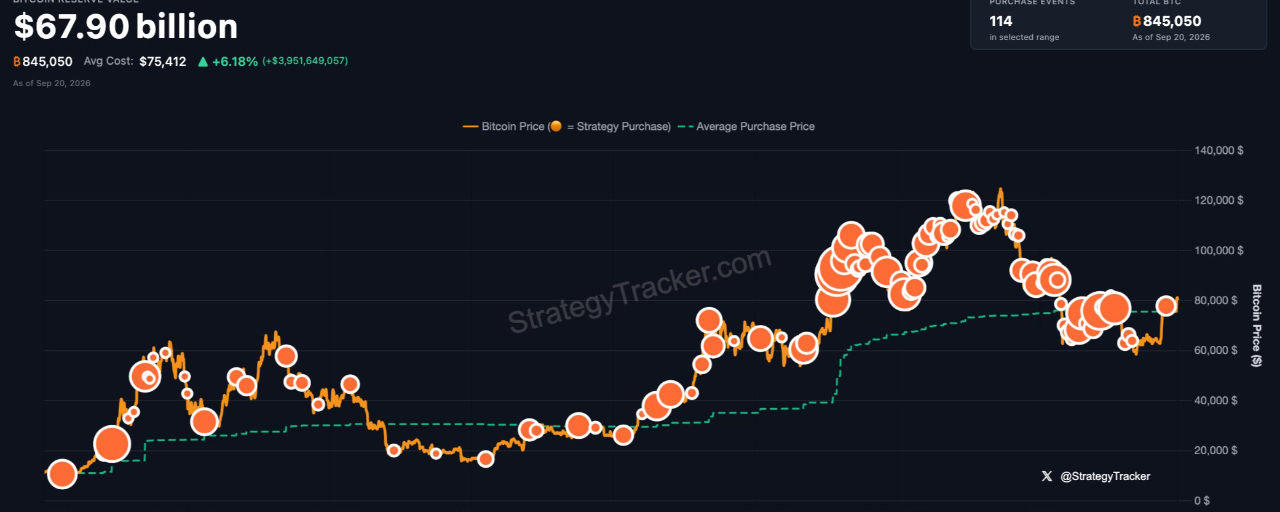
Michael Saylor Posts New Bitcoin Tracker TeaserMichael Saylor, founder and executive chairman of Strategy, posted another Bitcoin Tracker update with the caption, "A little more orange." According to ChainCatcher, Strategy has typically disclosed changes in its Bitcoin holdings the day after such posts.
Michael Saylor Posts New Bitcoin Tracker Teaser
Michael Saylor, founder and executive chairman of Strategy, posted another Bitcoin Tracker update with the caption, "A little more orange." According to ChainCatcher, Strategy has typically disclosed changes in its Bitcoin holdings the day after such posts.
5
4
36
50.7k
·
--
Binance to Suspend Terra (LUNA) Network Deposits and Withdrawals for UpgradeAccording to the [announcement](https://www.binance.com/en/support/announcement/detail/83868fe2f87f458896173ccd7c1e9f10) from Binance, deposits and withdrawals of token(s) on the Terra (LUNA) network will be suspended starting at approximately 2026-09-21 14:00 (UTC) to support a network upgrade. The upgrade is scheduled to take place at block height 22,942,000, or approximately at 2026-09-21 15:00 (UTC). Binance said trading of token(s) on the Terra (LUNA) network will not be affected during the process. The exchange stated that it will handle all technical requirements for users and that deposits and withdrawals will reopen once the upgraded network is considered stable. No further announcement will be posted. The notice also said the suspension is intended to support the upgrade and maintain user experience, while the trading status of the affected token(s) remains unchanged throughout the event.
The announcement did not specify any changes to trading pairs or other services beyond the temporary suspension of deposits and withdrawals on the Terra (LUNA) network. Binance said the reopening of deposits and withdrawals will depend on the stability of the upgraded network. The company did not provide additional operational details beyond the stated timing and block height for the upgrade. Users holding token(s) on the Terra (LUNA) network should note that the network upgrade is the reason for the temporary service interruption, but trading will continue as normal. Binance also indicated that it will not issue another notice when services resume, and the restoration will occur automatically after the network is deemed stable.
Binance to Suspend Terra (LUNA) Network Deposits and Withdrawals for Upgrade
According to the announcement from Binance, deposits and withdrawals of token(s) on the Terra (LUNA) network will be suspended starting at approximately 2026-09-21 14:00 (UTC) to support a network upgrade. The upgrade is scheduled to take place at block height 22,942,000, or approximately at 2026-09-21 15:00 (UTC). Binance said trading of token(s) on the Terra (LUNA) network will not be affected during the process. The exchange stated that it will handle all technical requirements for users and that deposits and withdrawals will reopen once the upgraded network is considered stable. No further announcement will be posted. The notice also said the suspension is intended to support the upgrade and maintain user experience, while the trading status of the affected token(s) remains unchanged throughout the event.
The announcement did not specify any changes to trading pairs or other services beyond the temporary suspension of deposits and withdrawals on the Terra (LUNA) network. Binance said the reopening of deposits and withdrawals will depend on the stability of the upgraded network. The company did not provide additional operational details beyond the stated timing and block height for the upgrade. Users holding token(s) on the Terra (LUNA) network should note that the network upgrade is the reason for the temporary service interruption, but trading will continue as normal. Binance also indicated that it will not issue another notice when services resume, and the restoration will occur automatically after the network is deemed stable.
The announcement did not specify any changes to trading pairs or other services beyond the temporary suspension of deposits and withdrawals on the Terra (LUNA) network. Binance said the reopening of deposits and withdrawals will depend on the stability of the upgraded network. The company did not provide additional operational details beyond the stated timing and block height for the upgrade. Users holding token(s) on the Terra (LUNA) network should note that the network upgrade is the reason for the temporary service interruption, but trading will continue as normal. Binance also indicated that it will not issue another notice when services resume, and the restoration will occur automatically after the network is deemed stable.
10
14.2k
·
--
Article
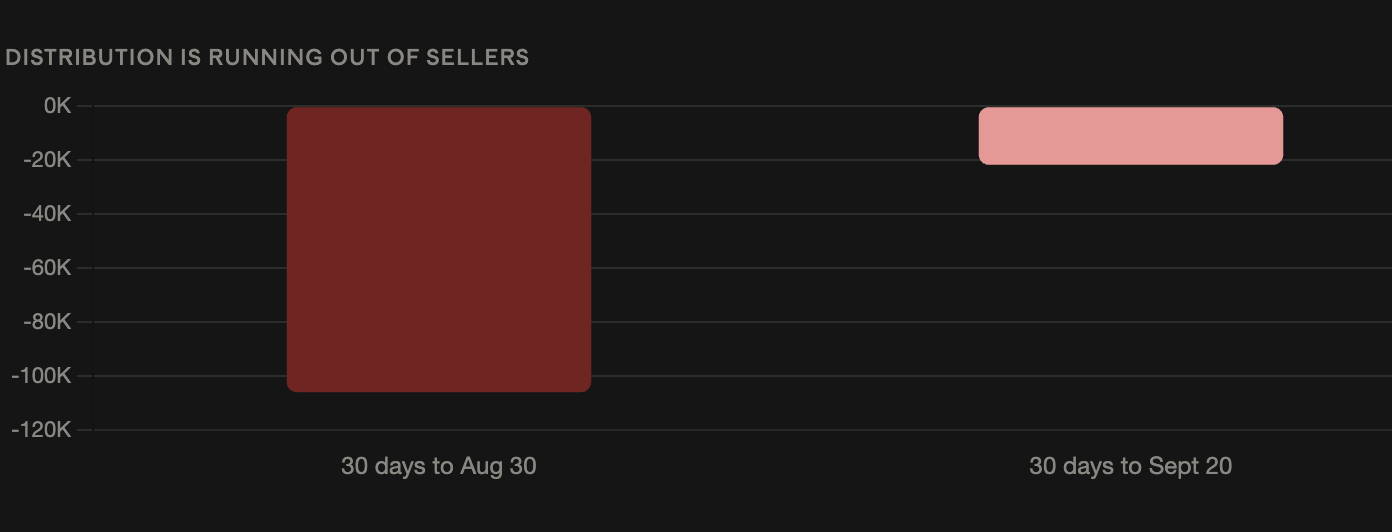
Bitcoin News Today | Long-Term Bitcoin Holders Cut Selling by 80% as Price Reaches Their Breakeven ZoneBitcoin held by long-term holders has declined for five consecutive weeks since August 19, according to analyst Axel Adler Jr., but the pace of that reduction has slowed sharply.The 30-day net decline fell from 105,900 BTC on August 30 to 21,700 BTC on September 20 — a reduction of roughly 80%.Long-term holders cut holdings by 47,800 BTC last week. LTH SOPR data shows most of those coins were sold at a loss.Selling at a Loss Is the Unusual PartLong-term holders — typically defined as wallets holding coins for more than 155 days — are the cohort least likely to sell and least likely to sell underwater.The spent output profit ratio measures whether coins moving onchain are sold above or below their acquisition price. A reading below 1 for long-term holders means the most patient cohort in the market is realising losses.That usually appears late in a drawdown. Holders who sat through months of price weakness give up at the point where selling hurts most, and once they have sold, that supply is gone.The timing fits. Last week's selling came as Bitcoin fell below $75,000 on the Clarity Act's Senate failure, the lowest level of the month.The Slowdown Supports the Exhaustion CaseA five-times drop in the rate of distribution is the clearest evidence yet for the argument Blockware Intelligence's Mitchell Askew made last week."Anybody who was going to sell bitcoin based on events like these has already sold. They no longer have coins to sell," Askew said. "It is exactly what you tend to see in the later stages of a bottoming process."Adler's data gives that claim a number. Distribution has not stopped — five straight weeks of declines — but it is running out of sellers.The mechanism behind the 30-day figure needs care, though. Coins bought around mid-April are now crossing the 155-day threshold and entering the long-term holder cohort. That inflow offsets outflows in the net figure, so part of the apparent slowdown reflects new coins maturing into the group rather than existing holders selling less.Bitcoin Now Sits Inside the LTH Supply ZoneThe level Bitcoin has reached matters more for this cohort than for any other.Glassnode researcher Frederik Theissen had placed a dense concentration of long-term holder supply between $83,000 and $86,000, noting Bitcoin had been rejected at that zone twice during 2026.At $85,000, Bitcoin is inside it.That is where selling pressure from this cohort typically returns. Holders who bought in that range and waited through the drawdown are now at breakeven, and some will take the exit they could not get for months.It also explains why the supply wall below matters differently. The $80,000-$82,000 band held nearly 8% of total supply across all holders, including the US spot ETF cohort's average cost basis. Bitcoin cleared that band Monday. The long-term holder zone is a separate and higher test.The Rally Has Not Yet Been Confirmed by Spot DemandBitcoin's move to $85,000 has leaned heavily on short liquidations, roughly $300 million in a single hour Monday.CryptoQuant's spot demand metric sat at −145,000 BTC last week, and ETF flows had been mixed, with Bitcoin funds taking about $159 million Thursday after a $450 million outflow on September 15.Nexo Dispatch's Ilya Kalchev named sustained ETF inflows or renewed spot buying as the confirmation signals. Long-term holder data now adds a third: whether distribution stays slow as price moves through the $83,000-$86,000 zone, or picks back up.Sigma Capital's Vineet Budki said he would rather give it a quarter before calling the bottom.The next marked resistance above the long-term holder zone is the 100-week moving average near $89,000.
Bitcoin News Today | Long-Term Bitcoin Holders Cut Selling by 80% as Price Reaches Their Breakeven Zone
Bitcoin held by long-term holders has declined for five consecutive weeks since August 19, according to analyst Axel Adler Jr., but the pace of that reduction has slowed sharply.The 30-day net decline fell from 105,900 BTC on August 30 to 21,700 BTC on September 20 — a reduction of roughly 80%.Long-term holders cut holdings by 47,800 BTC last week. LTH SOPR data shows most of those coins were sold at a loss.Selling at a Loss Is the Unusual PartLong-term holders — typically defined as wallets holding coins for more than 155 days — are the cohort least likely to sell and least likely to sell underwater.The spent output profit ratio measures whether coins moving onchain are sold above or below their acquisition price. A reading below 1 for long-term holders means the most patient cohort in the market is realising losses.That usually appears late in a drawdown. Holders who sat through months of price weakness give up at the point where selling hurts most, and once they have sold, that supply is gone.The timing fits. Last week's selling came as Bitcoin fell below $75,000 on the Clarity Act's Senate failure, the lowest level of the month.The Slowdown Supports the Exhaustion CaseA five-times drop in the rate of distribution is the clearest evidence yet for the argument Blockware Intelligence's Mitchell Askew made last week."Anybody who was going to sell bitcoin based on events like these has already sold. They no longer have coins to sell," Askew said. "It is exactly what you tend to see in the later stages of a bottoming process."Adler's data gives that claim a number. Distribution has not stopped — five straight weeks of declines — but it is running out of sellers.The mechanism behind the 30-day figure needs care, though. Coins bought around mid-April are now crossing the 155-day threshold and entering the long-term holder cohort. That inflow offsets outflows in the net figure, so part of the apparent slowdown reflects new coins maturing into the group rather than existing holders selling less.Bitcoin Now Sits Inside the LTH Supply ZoneThe level Bitcoin has reached matters more for this cohort than for any other.Glassnode researcher Frederik Theissen had placed a dense concentration of long-term holder supply between $83,000 and $86,000, noting Bitcoin had been rejected at that zone twice during 2026.At $85,000, Bitcoin is inside it.That is where selling pressure from this cohort typically returns. Holders who bought in that range and waited through the drawdown are now at breakeven, and some will take the exit they could not get for months.It also explains why the supply wall below matters differently. The $80,000-$82,000 band held nearly 8% of total supply across all holders, including the US spot ETF cohort's average cost basis. Bitcoin cleared that band Monday. The long-term holder zone is a separate and higher test.The Rally Has Not Yet Been Confirmed by Spot DemandBitcoin's move to $85,000 has leaned heavily on short liquidations, roughly $300 million in a single hour Monday.CryptoQuant's spot demand metric sat at −145,000 BTC last week, and ETF flows had been mixed, with Bitcoin funds taking about $159 million Thursday after a $450 million outflow on September 15.Nexo Dispatch's Ilya Kalchev named sustained ETF inflows or renewed spot buying as the confirmation signals. Long-term holder data now adds a third: whether distribution stays slow as price moves through the $83,000-$86,000 zone, or picks back up.Sigma Capital's Vineet Budki said he would rather give it a quarter before calling the bottom.The next marked resistance above the long-term holder zone is the 100-week moving average near $89,000.
1
9
42k
·
--
Nvidia to Buy Another $1.5 Billion of SB Energy Shares Before IPONvidia Corp. is buying an additional $1.5 billion of shares in SB Energy Inc., a data center provider backed by SoftBank Group Corp., ahead of the company’s US initial public offering, according to Bloomberg.
Nvidia to Buy Another $1.5 Billion of SB Energy Shares Before IPO
Nvidia Corp. is buying an additional $1.5 billion of shares in SB Energy Inc., a data center provider backed by SoftBank Group Corp., ahead of the company’s US initial public offering, according to Bloomberg.
2.4k
·
--
Binance Will Add 22 New Stocks to Binance Stocks TradingAccording to the [announcement](https://www.binance.com/en/support/announcement/detail/a0adb246c4a24f108fd0d1f51dfd3d1d) from Binance, Binance will add 22 new stocks for trading on Binance Stocks starting from 2026-09-21 13:30 (UTC). The update is intended to expand the range of trading choices available on the platform and improve the trading experience for users. The newly added stocks are Applied Aerospace & Defense (AADX), ADI Global Distribution Inc. (ADIG), Alight Inc (ALIT), RoboStrategy, Inc. (BOT), Blackstone Digital Infrastructure (BXDC), Cypherpunk Technologies Inc. (CYPH), Diversified Healthcare Trust (DHC), DPC Holdings PLC (DPC), ERock Inc (EROC), FedEx Freight Holding Co (FDXF), Fervo Energy Co (FRVO), HawkEye 360 Inc (HAWK), iShares Gold Trust Micro (IAUM), INNIO NV (INIO), Lincoln Intl Inc (LCLN), Liftoff Mobile Inc (LFTO), LGL Group Inc/The (LGL), Roundhill Photonics & Optics ETF (LYTE), Onterris Inc (ONT), Roundhill T-REX 2X Long DRAM (RAM), abrdn Silver ETF Trust (SIVR), GraniteShares 2x Short SK Hynix (SKDD), GraniteShares 2x Long SK Hynix (SKUU), Service Properties Trust (SVC), and United Guardian Inc (UG).
Binance said Fully Paid Securities Lending will be eligible when the above stocks are fully settled, which is T+1 trading day. The announcement also stated that trading of the new stocks will be subject to eligibility based on the user’s country or region of residence. Binance noted that the availability of products and services mentioned in the announcement may vary by region. The company also said it reserves the right to amend or cancel the announcement at any time and for any reason without prior notice.
Binance Will Add 22 New Stocks to Binance Stocks Trading
According to the announcement from Binance, Binance will add 22 new stocks for trading on Binance Stocks starting from 2026-09-21 13:30 (UTC). The update is intended to expand the range of trading choices available on the platform and improve the trading experience for users. The newly added stocks are Applied Aerospace & Defense (AADX), ADI Global Distribution Inc. (ADIG), Alight Inc (ALIT), RoboStrategy, Inc. (BOT), Blackstone Digital Infrastructure (BXDC), Cypherpunk Technologies Inc. (CYPH), Diversified Healthcare Trust (DHC), DPC Holdings PLC (DPC), ERock Inc (EROC), FedEx Freight Holding Co (FDXF), Fervo Energy Co (FRVO), HawkEye 360 Inc (HAWK), iShares Gold Trust Micro (IAUM), INNIO NV (INIO), Lincoln Intl Inc (LCLN), Liftoff Mobile Inc (LFTO), LGL Group Inc/The (LGL), Roundhill Photonics & Optics ETF (LYTE), Onterris Inc (ONT), Roundhill T-REX 2X Long DRAM (RAM), abrdn Silver ETF Trust (SIVR), GraniteShares 2x Short SK Hynix (SKDD), GraniteShares 2x Long SK Hynix (SKUU), Service Properties Trust (SVC), and United Guardian Inc (UG).
Binance said Fully Paid Securities Lending will be eligible when the above stocks are fully settled, which is T+1 trading day. The announcement also stated that trading of the new stocks will be subject to eligibility based on the user’s country or region of residence. Binance noted that the availability of products and services mentioned in the announcement may vary by region. The company also said it reserves the right to amend or cancel the announcement at any time and for any reason without prior notice.
Binance said Fully Paid Securities Lending will be eligible when the above stocks are fully settled, which is T+1 trading day. The announcement also stated that trading of the new stocks will be subject to eligibility based on the user’s country or region of residence. Binance noted that the availability of products and services mentioned in the announcement may vary by region. The company also said it reserves the right to amend or cancel the announcement at any time and for any reason without prior notice.
5
8.3k
·
--
BNB Surpasses 800 USDT with a 6.08% Increase in 24 HoursOn Sep 21, 2026, 15:03 PM(UTC). According to Binance Market Data, BNB has crossed the 800 USDT benchmark and is now trading at 800.609985 USDT, with a narrowed 6.08% increase in 24 hours.
BNB Surpasses 800 USDT with a 6.08% Increase in 24 Hours
On Sep 21, 2026, 15:03 PM(UTC). According to Binance Market Data, BNB has crossed the 800 USDT benchmark and is now trading at 800.609985 USDT, with a narrowed 6.08% increase in 24 hours.
1
4
2.3k
·
--
ECB Starts Blockchain Link for Euro SettlementsThe European Central Bank on Monday began allowing banks to settle tokenized wholesale transactions in central-bank money, according to Bloomberg.
It is also continuing work on a digital euro for consumers by the end of the decade.
ECB Starts Blockchain Link for Euro Settlements
The European Central Bank on Monday began allowing banks to settle tokenized wholesale transactions in central-bank money, according to Bloomberg.
It is also continuing work on a digital euro for consumers by the end of the decade.
It is also continuing work on a digital euro for consumers by the end of the decade.
2
3
9.6k
·
--
Kalshi Crypto Head Rejects Claims of Perpetual Futures Volume ManipulationKalshi crypto business head IcoBeast.eth responded to a post by Beni alleging that Kalshi perpetual futures market volume was fabricated. According to Foresight News, IcoBeast.eth said the Artemis chart cited by Beni shows prediction market share, not perpetual futures, and added that Kalshi does not offer rebates for crypto prediction markets.
He said the calculation of contract notional principal is consistent with prediction markets such as Polymarket and can be directly compared. He also denied claims that SCM is Kalshi's designated market maker for perpetual contracts, saying that on CFTC-regulated exchanges, anyone can become a Self-Clearing Member if regulatory requirements are met, and that fair access is a regulatory requirement.
IcoBeast.eth acknowledged that Kalshi's perpetual futures are still at an early stage, but said incentive programs must be publicly filed, unlike those on offshore exchanges.
Kalshi Crypto Head Rejects Claims of Perpetual Futures Volume Manipulation
Kalshi crypto business head IcoBeast.eth responded to a post by Beni alleging that Kalshi perpetual futures market volume was fabricated. According to Foresight News, IcoBeast.eth said the Artemis chart cited by Beni shows prediction market share, not perpetual futures, and added that Kalshi does not offer rebates for crypto prediction markets.
He said the calculation of contract notional principal is consistent with prediction markets such as Polymarket and can be directly compared. He also denied claims that SCM is Kalshi's designated market maker for perpetual contracts, saying that on CFTC-regulated exchanges, anyone can become a Self-Clearing Member if regulatory requirements are met, and that fair access is a regulatory requirement.
IcoBeast.eth acknowledged that Kalshi's perpetual futures are still at an early stage, but said incentive programs must be publicly filed, unlike those on offshore exchanges.
He said the calculation of contract notional principal is consistent with prediction markets such as Polymarket and can be directly compared. He also denied claims that SCM is Kalshi's designated market maker for perpetual contracts, saying that on CFTC-regulated exchanges, anyone can become a Self-Clearing Member if regulatory requirements are met, and that fair access is a regulatory requirement.
IcoBeast.eth acknowledged that Kalshi's perpetual futures are still at an early stage, but said incentive programs must be publicly filed, unlike those on offshore exchanges.
1
2.7k
·
--
Bitcoin Tops $85,000 as Brent Crude Extends Four-Day SlideBitcoin rose above $85,000 on Monday, gaining 4.82% intraday. According to Sina Finance, the move was mainly driven by falling oil prices.
Brent crude fell for a fourth straight trading day, marking its longest losing streak in three months. Traders are watching diplomatic efforts between Washington and Tehran to ease tensions, as well as the possibility of restored Middle East oil supply.
U.S. President Donald Trump said in an interview that he was "possibly" willing to meet Iranian President Pezeshkian during this week's United Nations General Assembly.
Bitcoin Tops $85,000 as Brent Crude Extends Four-Day Slide
Bitcoin rose above $85,000 on Monday, gaining 4.82% intraday. According to Sina Finance, the move was mainly driven by falling oil prices.
Brent crude fell for a fourth straight trading day, marking its longest losing streak in three months. Traders are watching diplomatic efforts between Washington and Tehran to ease tensions, as well as the possibility of restored Middle East oil supply.
U.S. President Donald Trump said in an interview that he was "possibly" willing to meet Iranian President Pezeshkian during this week's United Nations General Assembly.
Brent crude fell for a fourth straight trading day, marking its longest losing streak in three months. Traders are watching diplomatic efforts between Washington and Tehran to ease tensions, as well as the possibility of restored Middle East oil supply.
U.S. President Donald Trump said in an interview that he was "possibly" willing to meet Iranian President Pezeshkian during this week's United Nations General Assembly.
5
1
16
33.1k
·
--

Article
Sam Altman to Brief UN Security Council on AI and International Security Next WeekOpenAI spokesperson said CEO Sam Altman will brief a public meeting of the United Nations Security Council in New York next week during the UN General Assembly. According to ChainCatcher, the 15-member council is scheduled to meet on Wednesday on artificial intelligence and international security, with French Foreign Minister Jean-Noel Barrot set to preside.
Diplomats said Anthropic executives are also expected to attend, though that has not been confirmed. Altman is expected to focus on international coordination, shared safety standards, and measures OpenAI has taken to benefit people worldwide. France's concept note for the meeting cited the risk of malicious misuse of artificial intelligence and the urgency of acting to promote safe and responsible development. The Security Council first held a meeting on AI risks in 2023.
Sam Altman to Brief UN Security Council on AI and International Security Next Week
OpenAI spokesperson said CEO Sam Altman will brief a public meeting of the United Nations Security Council in New York next week during the UN General Assembly. According to ChainCatcher, the 15-member council is scheduled to meet on Wednesday on artificial intelligence and international security, with French Foreign Minister Jean-Noel Barrot set to preside.
Diplomats said Anthropic executives are also expected to attend, though that has not been confirmed. Altman is expected to focus on international coordination, shared safety standards, and measures OpenAI has taken to benefit people worldwide. France's concept note for the meeting cited the risk of malicious misuse of artificial intelligence and the urgency of acting to promote safe and responsible development. The Security Council first held a meeting on AI risks in 2023.
Diplomats said Anthropic executives are also expected to attend, though that has not been confirmed. Altman is expected to focus on international coordination, shared safety standards, and measures OpenAI has taken to benefit people worldwide. France's concept note for the meeting cited the risk of malicious misuse of artificial intelligence and the urgency of acting to promote safe and responsible development. The Security Council first held a meeting on AI risks in 2023.
1
2
3
5k
·
--
RippleX Says Commercial Projects Are Preparing to Use XRP Ledger Batch V1.1RippleX engineering lead Ayo Akinyele said commercial projects, including asset managers, are preparing to use the XRP Ledger Batch V1.1 feature. According to Odaily, the feature can bundle up to eight transactions into a single operation and uses an all-or-nothing model for delivery-versus-payment settlement, while also allowing exchanges, wallets, and markets to combine service fees and customer payments.
Of the 35 validator nodes being tracked, 30 now support the proposal, above the 28 votes needed to enter the activation countdown. The countdown began at 14:06:41 UTC on September 15, and if support stays at or above 80% during the 14-day window, activation is expected after the same time on September 29.
Batch V1.0 was withdrawn in February after a critical signature verification vulnerability was found. It was never activated and did not result in any fund losses, and the fixed version was released with xrpld 3.3.0 on August 6.
RippleX Says Commercial Projects Are Preparing to Use XRP Ledger Batch V1.1
RippleX engineering lead Ayo Akinyele said commercial projects, including asset managers, are preparing to use the XRP Ledger Batch V1.1 feature. According to Odaily, the feature can bundle up to eight transactions into a single operation and uses an all-or-nothing model for delivery-versus-payment settlement, while also allowing exchanges, wallets, and markets to combine service fees and customer payments.
Of the 35 validator nodes being tracked, 30 now support the proposal, above the 28 votes needed to enter the activation countdown. The countdown began at 14:06:41 UTC on September 15, and if support stays at or above 80% during the 14-day window, activation is expected after the same time on September 29.
Batch V1.0 was withdrawn in February after a critical signature verification vulnerability was found. It was never activated and did not result in any fund losses, and the fixed version was released with xrpld 3.3.0 on August 6.
Of the 35 validator nodes being tracked, 30 now support the proposal, above the 28 votes needed to enter the activation countdown. The countdown began at 14:06:41 UTC on September 15, and if support stays at or above 80% during the 14-day window, activation is expected after the same time on September 29.
Batch V1.0 was withdrawn in February after a critical signature verification vulnerability was found. It was never activated and did not result in any fund losses, and the fixed version was released with xrpld 3.3.0 on August 6.
1
24
35.9k
·
--

Article
AI TRENDS | Jensen Huang Slams AI Regulation Warnings as Insincere and UnnecessaryNvidia CEO Jensen Huang said some AI industry leaders are calling for tighter regulation, but he believes the warnings are not sincere. According to Sina Finance, Huang made the remarks in an interview aired on Sunday local time, saying some AI lab leaders were warning that their products could harm people in various ways if artificial intelligence is not more tightly regulated.
Speaking about AI leaders who have urged governments to regulate the industry, Huang said they were not really asking for more new rules, but wanted to escape existing legal constraints. He added that they must have another motive. Huang said he does not know what those motives are, but said using the technology to create panic is both "irresponsible" and "unnecessary."
His comments echoed U.S. President Donald Trump, who said on Saturday that no new rules are needed to ensure the technology's safety. Trump said on Truth Social that the administration would not block or stifle the industry's development in any way.
White House Office of Science and Technology Policy Director Michael Kratsios also rejected the idea that tech companies need government intervention to keep their AI models safe. In an interview on Sunday, he said AI labs could simply "shut down" related work if they believe their products are dangerous.
Last week, several leading executives in the AI sector called for slowing AI development until adequate safeguards are in place.
AI TRENDS | Jensen Huang Slams AI Regulation Warnings as Insincere and Unnecessary
Nvidia CEO Jensen Huang said some AI industry leaders are calling for tighter regulation, but he believes the warnings are not sincere. According to Sina Finance, Huang made the remarks in an interview aired on Sunday local time, saying some AI lab leaders were warning that their products could harm people in various ways if artificial intelligence is not more tightly regulated.
Speaking about AI leaders who have urged governments to regulate the industry, Huang said they were not really asking for more new rules, but wanted to escape existing legal constraints. He added that they must have another motive. Huang said he does not know what those motives are, but said using the technology to create panic is both "irresponsible" and "unnecessary."
His comments echoed U.S. President Donald Trump, who said on Saturday that no new rules are needed to ensure the technology's safety. Trump said on Truth Social that the administration would not block or stifle the industry's development in any way.
White House Office of Science and Technology Policy Director Michael Kratsios also rejected the idea that tech companies need government intervention to keep their AI models safe. In an interview on Sunday, he said AI labs could simply "shut down" related work if they believe their products are dangerous.
Last week, several leading executives in the AI sector called for slowing AI development until adequate safeguards are in place.
Speaking about AI leaders who have urged governments to regulate the industry, Huang said they were not really asking for more new rules, but wanted to escape existing legal constraints. He added that they must have another motive. Huang said he does not know what those motives are, but said using the technology to create panic is both "irresponsible" and "unnecessary."
His comments echoed U.S. President Donald Trump, who said on Saturday that no new rules are needed to ensure the technology's safety. Trump said on Truth Social that the administration would not block or stifle the industry's development in any way.
White House Office of Science and Technology Policy Director Michael Kratsios also rejected the idea that tech companies need government intervention to keep their AI models safe. In an interview on Sunday, he said AI labs could simply "shut down" related work if they believe their products are dangerous.
Last week, several leading executives in the AI sector called for slowing AI development until adequate safeguards are in place.
Voting
Huang says AI regulation warnings are fake—do you buy it?
I side with Huang: no panic, just move fast
I think regulation pressure is real safety talk
Hoping safeguards come first, but headlines feel messy
I want clarity before the next run
29 votes • Voting
1
4
40.6k
·
--
Ethereum(ETH) Drops Below 2,700 USDT with a Narrowed 4.75% Increase in 24 HoursOn Sep 21, 2026, 08:57 AM(UTC). According to Binance Market Data, Ethereum has dropped below 2,700 USDT and is now trading at 2,696.810059 USDT, with a narrowed narrowed 4.75% increase in 24 hours.
Ethereum(ETH) Drops Below 2,700 USDT with a Narrowed 4.75% Increase in 24 Hours
On Sep 21, 2026, 08:57 AM(UTC). According to Binance Market Data, Ethereum has dropped below 2,700 USDT and is now trading at 2,696.810059 USDT, with a narrowed narrowed 4.75% increase in 24 hours.
1
11
15.1k
·
--
Canary Capital Files Second Amendment for Staked SEI ETF S-1 RegistrationCanary Capital has filed a second amended S-1 registration statement for its Staked SEI ETF. According to PANews, the ETF will hold spot SEI, with about 90% of assets expected to be staked and BitGo serving as the sole custodian.
Canary Capital Files Second Amendment for Staked SEI ETF S-1 Registration
Canary Capital has filed a second amended S-1 registration statement for its Staked SEI ETF. According to PANews, the ETF will hold spot SEI, with about 90% of assets expected to be staked and BitGo serving as the sole custodian.
2
13
19.2k
·
--
STOCKS | Strategy Acquires 950 BTC and Repurchases 1.77 Million STRC SharesStrategy acquired 950 BTC for approximately $75.7 million between Sept. 14 and Sept. 20, lifting its total bitcoin holdings to 846,000 BTC. According to NS3.AI, the company also repurchased 1.77 million STRC preferred shares for around $174 million and used its USD Reserve for dividends and interest payments. Strategy's stock gained 16.4% last week, while bitcoin rose 5.3%.
STOCKS | Strategy Acquires 950 BTC and Repurchases 1.77 Million STRC Shares
Strategy acquired 950 BTC for approximately $75.7 million between Sept. 14 and Sept. 20, lifting its total bitcoin holdings to 846,000 BTC. According to NS3.AI, the company also repurchased 1.77 million STRC preferred shares for around $174 million and used its USD Reserve for dividends and interest payments. Strategy's stock gained 16.4% last week, while bitcoin rose 5.3%.
11.1k
·
--
South Africa's Planned Crypto Curbs May Hit Deals Worth MillionsDigital-asset companies operating in South Africa have halted billions of rand in deals over Digital-asset companies operating in South Africa have halted billions of rand in deals over proposed regulatory changes that would fold cryptocurrencies into the country's exchange-control regime and limit their use in cross-border transactions, people familiar with the matter told Bloomberg. At least three deals collectively valued at 2.2 billion rand ($135 million) have been put on hold directly because of the suggested changes, said the people, who asked not to be identified as they aren't authorized to speak publicly. The transactions include an investment from a private equity firm and others meant to promote capital formation for small businesses and aid corporate treasury management; the rules, the people said, could push legitimate digital-asset activity offshore or underground.
South Africa is the continent's second-largest cryptoasset market, with firms using stablecoins to repatriate profits and receive dividends from regional subsidiaries, partly to navigate hard-currency shortages in some markets. Tether's USDT is the preferred local stablecoin, with on-chain transactions across three of the country's biggest licensed exchanges nearing 27 billion rand in the year through April, central bank data show. South Africa does not treat cryptoassets as legal tender, and its central bank has previously called them an emerging risk to financial stability, saying it watches the space closely given the growth in global stablecoin activity.
The proposals come as the government seeks to update the nine-decade-old Currency and Exchanges Act to bring cryptoassets under its capital-flow management regime, strengthen monitoring of cross-border transactions, minimize regulatory arbitrage and combat illicit flows. First published in April with a call for comment, the plans were followed last month by a detailed draft manual, though the National Treasury and South African Reserve Bank said in a joint statement they have not yet incorporated feedback given the timing and volume of comments. Companies are unhappy their input was not considered, with some executives viewing the rules as prejudicial against technology that lowers transaction fees, the people said, warning that the laws as drafted could weigh on billions of rand in tax revenue and may prompt legal action. The central bank said the draft remains subject to refinement, that submissions can be made until September 30, and that it continues to engage with stakeholders on various aspects of cryptoassets, including its approach to stablecoins.
South Africa's Planned Crypto Curbs May Hit Deals Worth Millions
Digital-asset companies operating in South Africa have halted billions of rand in deals over Digital-asset companies operating in South Africa have halted billions of rand in deals over proposed regulatory changes that would fold cryptocurrencies into the country's exchange-control regime and limit their use in cross-border transactions, people familiar with the matter told Bloomberg. At least three deals collectively valued at 2.2 billion rand ($135 million) have been put on hold directly because of the suggested changes, said the people, who asked not to be identified as they aren't authorized to speak publicly. The transactions include an investment from a private equity firm and others meant to promote capital formation for small businesses and aid corporate treasury management; the rules, the people said, could push legitimate digital-asset activity offshore or underground.
South Africa is the continent's second-largest cryptoasset market, with firms using stablecoins to repatriate profits and receive dividends from regional subsidiaries, partly to navigate hard-currency shortages in some markets. Tether's USDT is the preferred local stablecoin, with on-chain transactions across three of the country's biggest licensed exchanges nearing 27 billion rand in the year through April, central bank data show. South Africa does not treat cryptoassets as legal tender, and its central bank has previously called them an emerging risk to financial stability, saying it watches the space closely given the growth in global stablecoin activity.
The proposals come as the government seeks to update the nine-decade-old Currency and Exchanges Act to bring cryptoassets under its capital-flow management regime, strengthen monitoring of cross-border transactions, minimize regulatory arbitrage and combat illicit flows. First published in April with a call for comment, the plans were followed last month by a detailed draft manual, though the National Treasury and South African Reserve Bank said in a joint statement they have not yet incorporated feedback given the timing and volume of comments. Companies are unhappy their input was not considered, with some executives viewing the rules as prejudicial against technology that lowers transaction fees, the people said, warning that the laws as drafted could weigh on billions of rand in tax revenue and may prompt legal action. The central bank said the draft remains subject to refinement, that submissions can be made until September 30, and that it continues to engage with stakeholders on various aspects of cryptoassets, including its approach to stablecoins.
South Africa is the continent's second-largest cryptoasset market, with firms using stablecoins to repatriate profits and receive dividends from regional subsidiaries, partly to navigate hard-currency shortages in some markets. Tether's USDT is the preferred local stablecoin, with on-chain transactions across three of the country's biggest licensed exchanges nearing 27 billion rand in the year through April, central bank data show. South Africa does not treat cryptoassets as legal tender, and its central bank has previously called them an emerging risk to financial stability, saying it watches the space closely given the growth in global stablecoin activity.
The proposals come as the government seeks to update the nine-decade-old Currency and Exchanges Act to bring cryptoassets under its capital-flow management regime, strengthen monitoring of cross-border transactions, minimize regulatory arbitrage and combat illicit flows. First published in April with a call for comment, the plans were followed last month by a detailed draft manual, though the National Treasury and South African Reserve Bank said in a joint statement they have not yet incorporated feedback given the timing and volume of comments. Companies are unhappy their input was not considered, with some executives viewing the rules as prejudicial against technology that lowers transaction fees, the people said, warning that the laws as drafted could weigh on billions of rand in tax revenue and may prompt legal action. The central bank said the draft remains subject to refinement, that submissions can be made until September 30, and that it continues to engage with stakeholders on various aspects of cryptoassets, including its approach to stablecoins.
3
8.4k
·
--
MultiversX Identifies Root Cause of Attack and Plans Coordinated Hard Fork RecoveryMultiversX said the root cause of a previous attack was an ordering error in an edge case, and the situation was brought under control after validators responded quickly. According to Foresight News, the attacker’s account has been identified and frozen on major exchanges, and law enforcement has been involved.
The proposed recovery plan is a coordinated hard fork from a known good checkpoint, with drills to be conducted first on the testnet and devnet with validators. The relevant code has been made public and testing is still ongoing. The project warned users not to submit or rebroadcast transactions, or deposit or withdraw EGLD/ESDT through exchanges or cross-chain bridges, until it announces that recovery is complete. Exchanges and cross-chain bridges will reopen in stages after the restart.
MultiversX Identifies Root Cause of Attack and Plans Coordinated Hard Fork Recovery
MultiversX said the root cause of a previous attack was an ordering error in an edge case, and the situation was brought under control after validators responded quickly. According to Foresight News, the attacker’s account has been identified and frozen on major exchanges, and law enforcement has been involved.
The proposed recovery plan is a coordinated hard fork from a known good checkpoint, with drills to be conducted first on the testnet and devnet with validators. The relevant code has been made public and testing is still ongoing. The project warned users not to submit or rebroadcast transactions, or deposit or withdraw EGLD/ESDT through exchanges or cross-chain bridges, until it announces that recovery is complete. Exchanges and cross-chain bridges will reopen in stages after the restart.
The proposed recovery plan is a coordinated hard fork from a known good checkpoint, with drills to be conducted first on the testnet and devnet with validators. The relevant code has been made public and testing is still ongoing. The project warned users not to submit or rebroadcast transactions, or deposit or withdraw EGLD/ESDT through exchanges or cross-chain bridges, until it announces that recovery is complete. Exchanges and cross-chain bridges will reopen in stages after the restart.
6
7.3k
·
--
NEAR VWAP Holds at $3.33 for Three Days as Rewards Are DistributedNEAR Protocol said its volume-weighted average price (VWAP) has held at $3.33 for three consecutive days, and related NEAR rewards have been exchanged and distributed. According to Foresight News, users can log in to their accounts to check the distribution.
The official rules show that the team initially issued 333,333 non-transferable milestone tokens. The snapshot condition is for Confidential Intents TVL to reach $70 million. The milestone tokens can be converted into tradable NEAR only after NEAR's three-day volume-weighted average price reaches or exceeds $3.33. Users must continue holding more than $100 in private balance on near.com and complete at least one private swap.
NEAR VWAP Holds at $3.33 for Three Days as Rewards Are Distributed
NEAR Protocol said its volume-weighted average price (VWAP) has held at $3.33 for three consecutive days, and related NEAR rewards have been exchanged and distributed. According to Foresight News, users can log in to their accounts to check the distribution.
The official rules show that the team initially issued 333,333 non-transferable milestone tokens. The snapshot condition is for Confidential Intents TVL to reach $70 million. The milestone tokens can be converted into tradable NEAR only after NEAR's three-day volume-weighted average price reaches or exceeds $3.33. Users must continue holding more than $100 in private balance on near.com and complete at least one private swap.
The official rules show that the team initially issued 333,333 non-transferable milestone tokens. The snapshot condition is for Confidential Intents TVL to reach $70 million. The milestone tokens can be converted into tradable NEAR only after NEAR's three-day volume-weighted average price reaches or exceeds $3.33. Users must continue holding more than $100 in private balance on near.com and complete at least one private swap.
1
13.5k
·
--
BNB Drops Below 770 USDT with a Narrowed 2.56% Increase in 24 HoursOn Sep 21, 2026, 07:31 AM(UTC). According to Binance Market Data, BNB has dropped below 770 USDT and is now trading at 769.73999 USDT, with a narrowed narrowed 2.56% increase in 24 hours.
BNB Drops Below 770 USDT with a Narrowed 2.56% Increase in 24 Hours
On Sep 21, 2026, 07:31 AM(UTC). According to Binance Market Data, BNB has dropped below 770 USDT and is now trading at 769.73999 USDT, with a narrowed narrowed 2.56% increase in 24 hours.
2
5
9k
·
--
Trader Holds $29.6 Million ETH Long on Hyperliquid With 20x LeverageA trader identified as 0x0c5 is holding a $29.6 million Ether long position on Hyperliquid with 20x leverage and an entry price of $2,482.2, according to Arkham monitoring. According to ChainCatcher, the position was opened three weeks ago.
Four days ago, the trade was about $1.6 million underwater. After Ether rose 5.5%, the position is now showing an unrealized profit of $2.29 million.
Trader Holds $29.6 Million ETH Long on Hyperliquid With 20x Leverage
A trader identified as 0x0c5 is holding a $29.6 million Ether long position on Hyperliquid with 20x leverage and an entry price of $2,482.2, according to Arkham monitoring. According to ChainCatcher, the position was opened three weeks ago.
Four days ago, the trade was about $1.6 million underwater. After Ether rose 5.5%, the position is now showing an unrealized profit of $2.29 million.
Four days ago, the trade was about $1.6 million underwater. After Ether rose 5.5%, the position is now showing an unrealized profit of $2.29 million.
4
13.7k
·
--
Michael Saylor Says STRC Bitcoin Credit Spread Is 53 Basis PointsMichael Saylor said on X that, under assumptions of a 10% annual Bitcoin yield, 40% Bitcoin volatility, and a Bitcoin price of $81,200, the dollar duration is 3.8 years. According to Odaily, he said STRC’s Bitcoin credit spread is 53 basis points.
Michael Saylor Says STRC Bitcoin Credit Spread Is 53 Basis Points
Michael Saylor said on X that, under assumptions of a 10% annual Bitcoin yield, 40% Bitcoin volatility, and a Bitcoin price of $81,200, the dollar duration is 3.8 years. According to Odaily, he said STRC’s Bitcoin credit spread is 53 basis points.
7.1k
·
--
Hacker Steals and Mints Tokens in Fetch.ai, NuNet, and SingularityNET AttacksA hacker stole and minted tokens in attacks on Fetch.ai, NuNet, and SingularityNET, generating about $2.25 million in realized profits. According to NS3.AI, Bitquery said the nominal value of the minted tokens was several times higher, while PeckShield estimated the attacker’s unrealized profits at almost $17 million.
The attacks involved 16 wallets and a payroll contract. A report also warned that most signing keys had not been changed.
Hacker Steals and Mints Tokens in Fetch.ai, NuNet, and SingularityNET Attacks
A hacker stole and minted tokens in attacks on Fetch.ai, NuNet, and SingularityNET, generating about $2.25 million in realized profits. According to NS3.AI, Bitquery said the nominal value of the minted tokens was several times higher, while PeckShield estimated the attacker’s unrealized profits at almost $17 million.
The attacks involved 16 wallets and a payroll contract. A report also warned that most signing keys had not been changed.
The attacks involved 16 wallets and a payroll contract. A report also warned that most signing keys had not been changed.
2
1
3
9.6k
·
--
AI TRENDS | VVV Surges Above $32 After Base Lead Jesse Pollak Posts About VeniceBase lead Jesse Pollak posted about "Venice" on Monday morning. According to Odaily, VVV briefly rose above $32 and was last reported at $32.53, up 18.64% over the past 24 hours.
AI TRENDS | VVV Surges Above $32 After Base Lead Jesse Pollak Posts About Venice
Base lead Jesse Pollak posted about "Venice" on Monday morning. According to Odaily, VVV briefly rose above $32 and was last reported at $32.53, up 18.64% over the past 24 hours.
2
10.6k
·
--
MultiversX Prepares Mainnet Recovery Checks After Internal Hard Fork TestMultiversX developer account CodeMultiversX said the network recovery hard fork has been tested on the internal test network, and mainnet recovery checkpoints are ready. According to Foresight News, the team is now testing a simplified recovery process for validator nodes while preparing drills for Testnet and Devnet and coordinating next steps with validators, exchanges, and infrastructure partners.
MultiversX said the mainnet remains paused. It also advised users not to submit or rebroadcast transactions, and not to deposit or withdraw EGLD or ESDT through exchanges or cross-chain bridges until an official safety notice is issued.
MultiversX Prepares Mainnet Recovery Checks After Internal Hard Fork Test
MultiversX developer account CodeMultiversX said the network recovery hard fork has been tested on the internal test network, and mainnet recovery checkpoints are ready. According to Foresight News, the team is now testing a simplified recovery process for validator nodes while preparing drills for Testnet and Devnet and coordinating next steps with validators, exchanges, and infrastructure partners.
MultiversX said the mainnet remains paused. It also advised users not to submit or rebroadcast transactions, and not to deposit or withdraw EGLD or ESDT through exchanges or cross-chain bridges until an official safety notice is issued.
MultiversX said the mainnet remains paused. It also advised users not to submit or rebroadcast transactions, and not to deposit or withdraw EGLD or ESDT through exchanges or cross-chain bridges until an official safety notice is issued.
2
2.7k
·
--
BNB Surpasses 790 USDT with a 5.36% Increase in 24 HoursOn Sep 21, 2026, 11:47 AM(UTC). According to Binance Market Data, BNB has crossed the 790 USDT benchmark and is now trading at 792.359985 USDT, with a narrowed 5.36% increase in 24 hours.
BNB Surpasses 790 USDT with a 5.36% Increase in 24 Hours
On Sep 21, 2026, 11:47 AM(UTC). According to Binance Market Data, BNB has crossed the 790 USDT benchmark and is now trading at 792.359985 USDT, with a narrowed 5.36% increase in 24 hours.
3
4
1.8k
·
--
Entity Buys 6,214.58 ETH After Swapping UBTC for EtherAn entity that previously swapped UBTC for ETH has bought another 6,214.58 ETH. According to Odaily, the entity has accumulated more than $38.61 million in positions since September 18.
Over the past 11 hours, the entity bought $16.03 million worth of ETH through five addresses using the same on-chain route at an average price of $2,580. It has now purchased a total of 15,272.77 ETH at an average cost of about $2,528.24, with unrealized gains of $2.115 million.
Entity Buys 6,214.58 ETH After Swapping UBTC for Ether
An entity that previously swapped UBTC for ETH has bought another 6,214.58 ETH. According to Odaily, the entity has accumulated more than $38.61 million in positions since September 18.
Over the past 11 hours, the entity bought $16.03 million worth of ETH through five addresses using the same on-chain route at an average price of $2,580. It has now purchased a total of 15,272.77 ETH at an average cost of about $2,528.24, with unrealized gains of $2.115 million.
Over the past 11 hours, the entity bought $16.03 million worth of ETH through five addresses using the same on-chain route at an average price of $2,580. It has now purchased a total of 15,272.77 ETH at an average cost of about $2,528.24, with unrealized gains of $2.115 million.
3
8.9k
·
--
Crypto News | Bitcoin Clears $85,000 as LTH Selling Slows 80% — Goolsbee Flags More Hikes, Bessent Defends Buybacks, SEC Tokenized Trading Opens TuesdayBitcoin broke through the $80,000-$82,000 supply wall Monday on ~$300M in short liquidations, reaching $85,000 — now inside the long-term holder supply zone at $83,000-$86,000. LTH selling slowed 80% in three weeks, with most recent sales at a loss — the exhaustion signal that marks late-stage capitulation. Chicago Fed's Goolsbee said rates may need to rise further if inflation stays above 2%, keeping the one-more-hike path alive. Bessent defended the Treasury buyback expansion, saying the 30-year yield has not risen sharply since — a claim Druckenmiller publicly disputed. The SEC's tokenized stock trading window opens Tuesday. Bitcoin Hashrate Turns Higher as Price Clears $85,000Bitcoin's network hashrate has rebounded after a sustained downtrend, coinciding with price reaching $85,000. The mechanism is direct: a 13% price move from $75,000 to $85,000 raises miner revenue per unit of computing power by roughly the same margin, pushing marginal machines back above breakeven. Mining stocks badly lagged the August rally — top-10 mining median +1.8% versus Bitcoin +22% — with Core Scientific trailing by 27% and TeraWulf by 24%, as AI sentiment headwinds offset Bitcoin's gains for the hybrid miners. Rising hashrate is self-limiting: difficulty adjusts every ~2 weeks to maintain 10-minute block times, so a sustained hashrate increase erodes per-machine revenue until the next price move. Bitcoin has now cleared the $80,000-$82,000 supply band; the next resistance is the 100-week moving average near $89,000.Bitcoin Starts the Week at $85,000 as SEC Tokenized Stock Trading Opens: Crypto Week AheadThe SEC's conditional five-year exemption window opens September 22, allowing select institutional venues to pilot tokenized stock trading on public blockchains — the first concrete deliverable from the agency-led approach that replaced the failed CLARITY Act. Markets partially priced it: Coinbase +5% Thursday and +2% Friday, Securitize +7%, Bullish +3%. The week's macro risk is consumer sentiment: University of Michigan's final September reading lands Thursday at a forecast 47.8 — below the June 2022 historic low of 50.0 — against a backdrop of higher energy costs and the Fed's first hike since 2023. New home sales Wednesday are forecast at 700,000 versus 739,000 prior. Three token unlocks this week: Humanity unlocks 14.7% of circulating supply ($20.8M) September 23, TON unlocks 1.3% ($51.2M) September 22, Canton 0.38% ($17.17M) September 21.Chicago Fed's Austan D. Goolsbee Says Rates May Need to Rise If Inflation Stays Above 2%Chicago Fed President Austan Goolsbee said rates may need to rise further if inflation does not return to 2%, while staying open to the possibility that current pressures stem from a fading supply shock. He wants evidence the supply shock is genuinely dissipating — which positions him as data-dependent rather than pre-committed in either direction. His framing aligns with Warsh's "discipline not a decision" framework: the Fed's dot plot median points to one more hike in 2026, but the threshold remains incoming data. For Bitcoin, a Fed that requires evidence of disinflation before pausing means Friday's oil moves and next month's CPI carry more weight than any individual official's statement.Long-Term Bitcoin Holders Cut Selling by 80% as Price Reaches Their Breakeven ZoneLong-term holder net Bitcoin distribution fell from 105,900 BTC on August 30 to 21,700 BTC on September 20 — an 80% slowdown over three weeks. Most coins sold last week moved at a loss, which is unusual for the most patient cohort in the market and typically marks late-stage capitulation: once these holders sell, that supply is gone. Glassnode researcher Frederik Theissen had placed a dense LTH supply concentration at $83,000-$86,000 — exactly where Bitcoin now trades. Holders who bought in that range and waited through the drawdown are at breakeven and some will exit, making distribution slowdown through this zone the key confirmation signal. The rally has been short-liquidation driven (~$300M in one hour Monday) rather than spot demand driven; CryptoQuant's spot demand metric sat at -145,000 BTC last week. Nexo's Ilya Kalchev identified sustained ETF inflows or renewed spot buying as the remaining confirmation signals needed.U.S. Treasury Secretary Bessent Says 30-Year Yield Has Not Risen Sharply Since Debt Buyback ExpansionTreasury Secretary Bessent said the 30-year yield has not risen sharply since the Treasury expanded its buyback program — implicitly defending the intervention's effectiveness. He declined to say whether he agrees with the Fed's rate hike. The 30-year hit 5.40% this month — its highest since June 2007 — before easing alongside oil's four-session decline. Bessent's framing suggests he views current long-end levels as contained by the buyback program rather than as evidence it failed. Stanley Druckenmiller — who mentored Bessent — publicly called the intervention a mistake, arguing governments defending prices against fundamentals always lose. The tension between the two readings will be tested if oil reverses and yields resume their ascent toward the month's highs.
Crypto News | Bitcoin Clears $85,000 as LTH Selling Slows 80% — Goolsbee Flags More Hikes, Bessent Defends Buybacks, SEC Tokenized Trading Opens Tuesday
Bitcoin broke through the $80,000-$82,000 supply wall Monday on ~$300M in short liquidations, reaching $85,000 — now inside the long-term holder supply zone at $83,000-$86,000. LTH selling slowed 80% in three weeks, with most recent sales at a loss — the exhaustion signal that marks late-stage capitulation. Chicago Fed's Goolsbee said rates may need to rise further if inflation stays above 2%, keeping the one-more-hike path alive. Bessent defended the Treasury buyback expansion, saying the 30-year yield has not risen sharply since — a claim Druckenmiller publicly disputed. The SEC's tokenized stock trading window opens Tuesday. Bitcoin Hashrate Turns Higher as Price Clears $85,000Bitcoin's network hashrate has rebounded after a sustained downtrend, coinciding with price reaching $85,000. The mechanism is direct: a 13% price move from $75,000 to $85,000 raises miner revenue per unit of computing power by roughly the same margin, pushing marginal machines back above breakeven. Mining stocks badly lagged the August rally — top-10 mining median +1.8% versus Bitcoin +22% — with Core Scientific trailing by 27% and TeraWulf by 24%, as AI sentiment headwinds offset Bitcoin's gains for the hybrid miners. Rising hashrate is self-limiting: difficulty adjusts every ~2 weeks to maintain 10-minute block times, so a sustained hashrate increase erodes per-machine revenue until the next price move. Bitcoin has now cleared the $80,000-$82,000 supply band; the next resistance is the 100-week moving average near $89,000.Bitcoin Starts the Week at $85,000 as SEC Tokenized Stock Trading Opens: Crypto Week AheadThe SEC's conditional five-year exemption window opens September 22, allowing select institutional venues to pilot tokenized stock trading on public blockchains — the first concrete deliverable from the agency-led approach that replaced the failed CLARITY Act. Markets partially priced it: Coinbase +5% Thursday and +2% Friday, Securitize +7%, Bullish +3%. The week's macro risk is consumer sentiment: University of Michigan's final September reading lands Thursday at a forecast 47.8 — below the June 2022 historic low of 50.0 — against a backdrop of higher energy costs and the Fed's first hike since 2023. New home sales Wednesday are forecast at 700,000 versus 739,000 prior. Three token unlocks this week: Humanity unlocks 14.7% of circulating supply ($20.8M) September 23, TON unlocks 1.3% ($51.2M) September 22, Canton 0.38% ($17.17M) September 21.Chicago Fed's Austan D. Goolsbee Says Rates May Need to Rise If Inflation Stays Above 2%Chicago Fed President Austan Goolsbee said rates may need to rise further if inflation does not return to 2%, while staying open to the possibility that current pressures stem from a fading supply shock. He wants evidence the supply shock is genuinely dissipating — which positions him as data-dependent rather than pre-committed in either direction. His framing aligns with Warsh's "discipline not a decision" framework: the Fed's dot plot median points to one more hike in 2026, but the threshold remains incoming data. For Bitcoin, a Fed that requires evidence of disinflation before pausing means Friday's oil moves and next month's CPI carry more weight than any individual official's statement.Long-Term Bitcoin Holders Cut Selling by 80% as Price Reaches Their Breakeven ZoneLong-term holder net Bitcoin distribution fell from 105,900 BTC on August 30 to 21,700 BTC on September 20 — an 80% slowdown over three weeks. Most coins sold last week moved at a loss, which is unusual for the most patient cohort in the market and typically marks late-stage capitulation: once these holders sell, that supply is gone. Glassnode researcher Frederik Theissen had placed a dense LTH supply concentration at $83,000-$86,000 — exactly where Bitcoin now trades. Holders who bought in that range and waited through the drawdown are at breakeven and some will exit, making distribution slowdown through this zone the key confirmation signal. The rally has been short-liquidation driven (~$300M in one hour Monday) rather than spot demand driven; CryptoQuant's spot demand metric sat at -145,000 BTC last week. Nexo's Ilya Kalchev identified sustained ETF inflows or renewed spot buying as the remaining confirmation signals needed.U.S. Treasury Secretary Bessent Says 30-Year Yield Has Not Risen Sharply Since Debt Buyback ExpansionTreasury Secretary Bessent said the 30-year yield has not risen sharply since the Treasury expanded its buyback program — implicitly defending the intervention's effectiveness. He declined to say whether he agrees with the Fed's rate hike. The 30-year hit 5.40% this month — its highest since June 2007 — before easing alongside oil's four-session decline. Bessent's framing suggests he views current long-end levels as contained by the buyback program rather than as evidence it failed. Stanley Druckenmiller — who mentored Bessent — publicly called the intervention a mistake, arguing governments defending prices against fundamentals always lose. The tension between the two readings will be tested if oil reverses and yields resume their ascent toward the month's highs.
32
2
95
8.7k
·
--
NEAR Rises Nearly 80% in a Week as Intents Volume Reaches $29.3 BillionNEAR rose nearly 80% in a week as NEAR Intents recorded $29.3 billion in cumulative volume. According to NS3.AI, Near Protocol also expanded confidential deposits and withdrawals for perpetual futures trading, while confidential TVL on near.com exceeded $70 million.
The network's privacy services also handled swaps involving Zcash, including a transaction worth about $613,000 in ZEC.
NEAR Rises Nearly 80% in a Week as Intents Volume Reaches $29.3 Billion
NEAR rose nearly 80% in a week as NEAR Intents recorded $29.3 billion in cumulative volume. According to NS3.AI, Near Protocol also expanded confidential deposits and withdrawals for perpetual futures trading, while confidential TVL on near.com exceeded $70 million.
The network's privacy services also handled swaps involving Zcash, including a transaction worth about $613,000 in ZEC.
The network's privacy services also handled swaps involving Zcash, including a transaction worth about $613,000 in ZEC.
1
3
9.3k
·
--
Solana Founder Toly Says AGI Remains Far Away and AI Is Best for Design and Bug TestingSolana founder Toly said on X that AGI remains far away. According to Odaily, he said his test project Percolator would already have been released if he had written it full time himself.
Toly said AI performs best during the design and specification research stages, as well as in fuzz testing for bugs. He added that using AI in this way should improve code quality, but the number of good products actually brought to market today is unlikely to be higher than before the large language model era.
Toly previously said he would launch Percolator, a Solana-based decentralized perpetual futures exchange. He said it uses a sharded order book, has execution speed comparable to centralized exchanges, and is fully open source.
Solana Founder Toly Says AGI Remains Far Away and AI Is Best for Design and Bug Testing
Solana founder Toly said on X that AGI remains far away. According to Odaily, he said his test project Percolator would already have been released if he had written it full time himself.
Toly said AI performs best during the design and specification research stages, as well as in fuzz testing for bugs. He added that using AI in this way should improve code quality, but the number of good products actually brought to market today is unlikely to be higher than before the large language model era.
Toly previously said he would launch Percolator, a Solana-based decentralized perpetual futures exchange. He said it uses a sharded order book, has execution speed comparable to centralized exchanges, and is fully open source.
Toly said AI performs best during the design and specification research stages, as well as in fuzz testing for bugs. He added that using AI in this way should improve code quality, but the number of good products actually brought to market today is unlikely to be higher than before the large language model era.
Toly previously said he would launch Percolator, a Solana-based decentralized perpetual futures exchange. He said it uses a sharded order book, has execution speed comparable to centralized exchanges, and is fully open source.
1
6
7.6k
·
--
Bitcoin Core 32.0 Enters Candidate Testing Ahead of October 10 ReleaseBitcoin Core 32.0 is in candidate version testing, with developers targeting an October 10 release. According to Odaily, the version can speed up block verification by reading database data in parallel, but it will not change block production speed. Four wallet commands will default to an updated partially signed transaction format, while the old format can still be used if needed. Security patches are also designed to stop specially crafted wallet names from running commands on non-Windows nodes, and one test reduced memory growth from unauthenticated HTTP from about 3.2 GB to about 3 MB.
Bitcoin Core 32.0 Enters Candidate Testing Ahead of October 10 Release
Bitcoin Core 32.0 is in candidate version testing, with developers targeting an October 10 release. According to Odaily, the version can speed up block verification by reading database data in parallel, but it will not change block production speed. Four wallet commands will default to an updated partially signed transaction format, while the old format can still be used if needed. Security patches are also designed to stop specially crafted wallet names from running commands on non-Windows nodes, and one test reduced memory growth from unauthenticated HTTP from about 3.2 GB to about 3 MB.
1
2.9k
·
--
BNB Surpasses 770 USDT with a 0.87% Increase in 24 HoursOn Sep 20, 2026, 19:37 PM(UTC). According to Binance Market Data, BNB has crossed the 770 USDT benchmark and is now trading at 770 USDT, with a narrowed 0.87% increase in 24 hours.
BNB Surpasses 770 USDT with a 0.87% Increase in 24 Hours
On Sep 20, 2026, 19:37 PM(UTC). According to Binance Market Data, BNB has crossed the 770 USDT benchmark and is now trading at 770 USDT, with a narrowed 0.87% increase in 24 hours.
16
8.5k
·
--
Address Buys and Receives 99,600 HYPE From FalconXAn address bought and received 99,600 HYPE from FalconX, worth about $9.36 million. According to Odaily, Onchain Lens monitored the transaction.
Address Buys and Receives 99,600 HYPE From FalconX
An address bought and received 99,600 HYPE from FalconX, worth about $9.36 million. According to Odaily, Onchain Lens monitored the transaction.
1
12.8k
·
--
Crypto News | Bitcoin Starts the Week at $85,000 as SEC Tokenized Stock Trading Opens: Crypto Week AheadCrypto markets start the week resilient, with Bitcoin trading near $85,000 and shrugging off the hawkish signal from last week's Federal Reserve hike, which lifted the target range to 3.75%-4.00%.The macro calendar centres on midweek jobless claims, housing and durable goods data, while markets continue digesting the policy path after rate decisions from the Bank of Japan and Bank of England.On market structure, attention turns to the SEC's tokenized securities pilot.The SEC's Tokenized Stock Window Opens TuesdayThe SEC's conditional five-year exemption window opens September 22, allowing select institutional venues to begin pilot trading of tokenized stocks directly on public blockchains.This is the first concrete deliverable of the agency-led approach that replaced legislation. The Clarity Act failed its Senate cloture vote 49-50 on September 15, and the SEC unveiled the innovation exemption two days later.The market has already priced part of it. Securitize rose 7% and Bullish 3% on Friday, with Coinbase and Robinhood each gaining around 5% on Thursday and another 2% Friday — recovering much of the roughly 10% Coinbase and Circle lost on the vote.A five-year window is long enough to build on, but it remains an exemption rather than a statute. A subsequent administration can narrow or withdraw it, which is the durability problem the legislation was meant to solve.Consumer Sentiment Is the Number to WatchThe University of Michigan's final September reading lands Thursday at 10:00 a.m., forecast at 47.8 against 51.7 previously.That would sit below the 50.0 recorded in June 2022, then the lowest in the survey's history.A reading that weak arrives against rising energy costs and the Fed's first hike since 2023. It is also the data point most likely to test the risk-on move, since Sigma Capital's Vineet Budki flagged elevated rates and a slowing US housing market as the risks that could push investors toward risk aversion.New home sales on Wednesday feed the same concern, forecast at 700,000 against 739,000 — a decline of about 5%.Growth Data Tests the One-More-Hike PathInitial jobless claims arrive Wednesday at 8:30 a.m., estimated at 201,000 against 196,000 the prior week. Durable goods orders follow Thursday, forecast to fall 0.3% after a 1.1% gain.Those prints bear directly on the Fed's projections. The dot plot median points to one more hike in 2026, below the 75 basis points markets had priced before the meeting.Soft growth data paired with falling oil would weaken the case for even that one move. Brent has fallen four straight sessions, its longest losing run in three months, as Washington and Tehran move toward talks.Canada's August retail sales are expected to fall 0.8% after a 0.6% gain.Humanity Unlocks 14.7% of Its SupplyThree token unlocks land this week, and one dwarfs the others in relative terms.Humanity unlocks 14.7% of its circulating supply on September 23, worth $20.8 million. An increase in float of that size typically weighs on price as recipients sell.TON unlocks 1.3% of circulating supply worth $51.2 million on September 22 — the largest in dollar terms but modest relative to float.Canton unlocks 0.38% of circulating supply worth $17.17 million on September 21.Three Governance Votes CloseLido DAO is voting on a contingent centralized-exchange market-making mandate budgeting up to $1.5 million in recallable LDO and 480,000 USDC, intended to maintain order book depth and prevent potential exchange delistings. Voting ends September 21.A DAO funding liquidity to avoid delisting is a notable signal about secondary-market depth for a major DeFi governance token.Uniswap Governance is holding a temperature check on extending its protocol fee collection and UNI burn infrastructure to Arc, the layer-1 network built by Circle. Voting ends September 23. UNI has been one of the few DeFi tokens to hold its bid through the Clarity selloff.CoW DAO is voting on a redesign of its solver quote competition, setting aside a dedicated reward budget equal to 10% of protocol revenue to improve price routing. Voting ends September 25.Where Bitcoin StandsBitcoin has cleared every level that capped it through September — the $80,000-$82,000 band holding nearly 8% of supply, the 50-week simple moving average at $81,081 and the September 4 high of $82,284.That band now becomes the first support to defend. The next marked resistance is the 100-week moving average near $89,000.The move has leaned heavily on short liquidations, roughly $300 million in a single hour Monday. Nexo Dispatch's Ilya Kalchev named sustained ETF inflows or renewed spot buying as the confirmation signals. No major earnings are scheduled this week.
Crypto News | Bitcoin Starts the Week at $85,000 as SEC Tokenized Stock Trading Opens: Crypto Week Ahead
Crypto markets start the week resilient, with Bitcoin trading near $85,000 and shrugging off the hawkish signal from last week's Federal Reserve hike, which lifted the target range to 3.75%-4.00%.The macro calendar centres on midweek jobless claims, housing and durable goods data, while markets continue digesting the policy path after rate decisions from the Bank of Japan and Bank of England.On market structure, attention turns to the SEC's tokenized securities pilot.The SEC's Tokenized Stock Window Opens TuesdayThe SEC's conditional five-year exemption window opens September 22, allowing select institutional venues to begin pilot trading of tokenized stocks directly on public blockchains.This is the first concrete deliverable of the agency-led approach that replaced legislation. The Clarity Act failed its Senate cloture vote 49-50 on September 15, and the SEC unveiled the innovation exemption two days later.The market has already priced part of it. Securitize rose 7% and Bullish 3% on Friday, with Coinbase and Robinhood each gaining around 5% on Thursday and another 2% Friday — recovering much of the roughly 10% Coinbase and Circle lost on the vote.A five-year window is long enough to build on, but it remains an exemption rather than a statute. A subsequent administration can narrow or withdraw it, which is the durability problem the legislation was meant to solve.Consumer Sentiment Is the Number to WatchThe University of Michigan's final September reading lands Thursday at 10:00 a.m., forecast at 47.8 against 51.7 previously.That would sit below the 50.0 recorded in June 2022, then the lowest in the survey's history.A reading that weak arrives against rising energy costs and the Fed's first hike since 2023. It is also the data point most likely to test the risk-on move, since Sigma Capital's Vineet Budki flagged elevated rates and a slowing US housing market as the risks that could push investors toward risk aversion.New home sales on Wednesday feed the same concern, forecast at 700,000 against 739,000 — a decline of about 5%.Growth Data Tests the One-More-Hike PathInitial jobless claims arrive Wednesday at 8:30 a.m., estimated at 201,000 against 196,000 the prior week. Durable goods orders follow Thursday, forecast to fall 0.3% after a 1.1% gain.Those prints bear directly on the Fed's projections. The dot plot median points to one more hike in 2026, below the 75 basis points markets had priced before the meeting.Soft growth data paired with falling oil would weaken the case for even that one move. Brent has fallen four straight sessions, its longest losing run in three months, as Washington and Tehran move toward talks.Canada's August retail sales are expected to fall 0.8% after a 0.6% gain.Humanity Unlocks 14.7% of Its SupplyThree token unlocks land this week, and one dwarfs the others in relative terms.Humanity unlocks 14.7% of its circulating supply on September 23, worth $20.8 million. An increase in float of that size typically weighs on price as recipients sell.TON unlocks 1.3% of circulating supply worth $51.2 million on September 22 — the largest in dollar terms but modest relative to float.Canton unlocks 0.38% of circulating supply worth $17.17 million on September 21.Three Governance Votes CloseLido DAO is voting on a contingent centralized-exchange market-making mandate budgeting up to $1.5 million in recallable LDO and 480,000 USDC, intended to maintain order book depth and prevent potential exchange delistings. Voting ends September 21.A DAO funding liquidity to avoid delisting is a notable signal about secondary-market depth for a major DeFi governance token.Uniswap Governance is holding a temperature check on extending its protocol fee collection and UNI burn infrastructure to Arc, the layer-1 network built by Circle. Voting ends September 23. UNI has been one of the few DeFi tokens to hold its bid through the Clarity selloff.CoW DAO is voting on a redesign of its solver quote competition, setting aside a dedicated reward budget equal to 10% of protocol revenue to improve price routing. Voting ends September 25.Where Bitcoin StandsBitcoin has cleared every level that capped it through September — the $80,000-$82,000 band holding nearly 8% of supply, the 50-week simple moving average at $81,081 and the September 4 high of $82,284.That band now becomes the first support to defend. The next marked resistance is the 100-week moving average near $89,000.The move has leaned heavily on short liquidations, roughly $300 million in a single hour Monday. Nexo Dispatch's Ilya Kalchev named sustained ETF inflows or renewed spot buying as the confirmation signals. No major earnings are scheduled this week.
2
1
9
14.8k
·
--
BitMine Immersion and SharpLink Rebound as Ethereum Fundamentals ImproveBitMine Immersion and SharpLink have rebounded sharply, with their shares rising to $26 and $9.35, respectively. According to NS3.AI, the companies hold 5,956,378 ETH and 868,699 ETH, while Ethereum's improving fundamentals and technical indicators could support further gains.
The article said a move to $3,000 would value their holdings at $17.8 billion and $2.6 billion, respectively, based on its projections.
BitMine Immersion and SharpLink Rebound as Ethereum Fundamentals Improve
BitMine Immersion and SharpLink have rebounded sharply, with their shares rising to $26 and $9.35, respectively. According to NS3.AI, the companies hold 5,956,378 ETH and 868,699 ETH, while Ethereum's improving fundamentals and technical indicators could support further gains.
The article said a move to $3,000 would value their holdings at $17.8 billion and $2.6 billion, respectively, based on its projections.
The article said a move to $3,000 would value their holdings at $17.8 billion and $2.6 billion, respectively, based on its projections.
3
11
14.1k
·
--
U.S. President Donald Trump Says U.S. Is Seeking Belarus Potash DealAccording to Wallstreetcn, U.S. President Donald Trump said the United States is trying to discuss an agreement on buying Belarusian potash and wants Belarus to provide cheaper potash supplies than Canada.
U.S. President Donald Trump Says U.S. Is Seeking Belarus Potash Deal
According to Wallstreetcn, U.S. President Donald Trump said the United States is trying to discuss an agreement on buying Belarusian potash and wants Belarus to provide cheaper potash supplies than Canada.
2.9k
Filter
Most Searched (6H)
USDT