
Bitcoin (BTC) is struggling on the price chart, and the latest data from IntoTheBlock shows that whales – large investors holding a significant portion of BTC supply – have started to reduce their holdings. Specifically, the total amount of BTC held by whales has decreased to its lowest level since 2019, marking a six-year low.
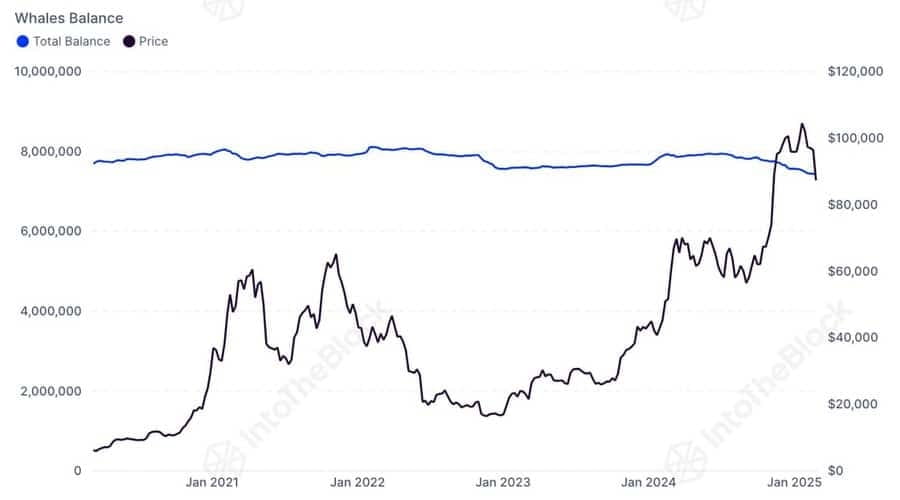
This decline is not just a number but also reflects a significant change in market dynamics. As the supply held by whales decreases sharply, this implies that they are actively engaging in the market to sell. The reason could stem from institutions needing to liquidate assets to cover operational costs as prices drop, or large investors closing entire positions to wait for new buying opportunities.
The significance of the supply change held by whales
This change in supply dynamics brings about several important implications. First, it shows that assets are being redistributed from whales to retail investors. This could promote decentralization in the market while reducing the influence of whales on price trends.
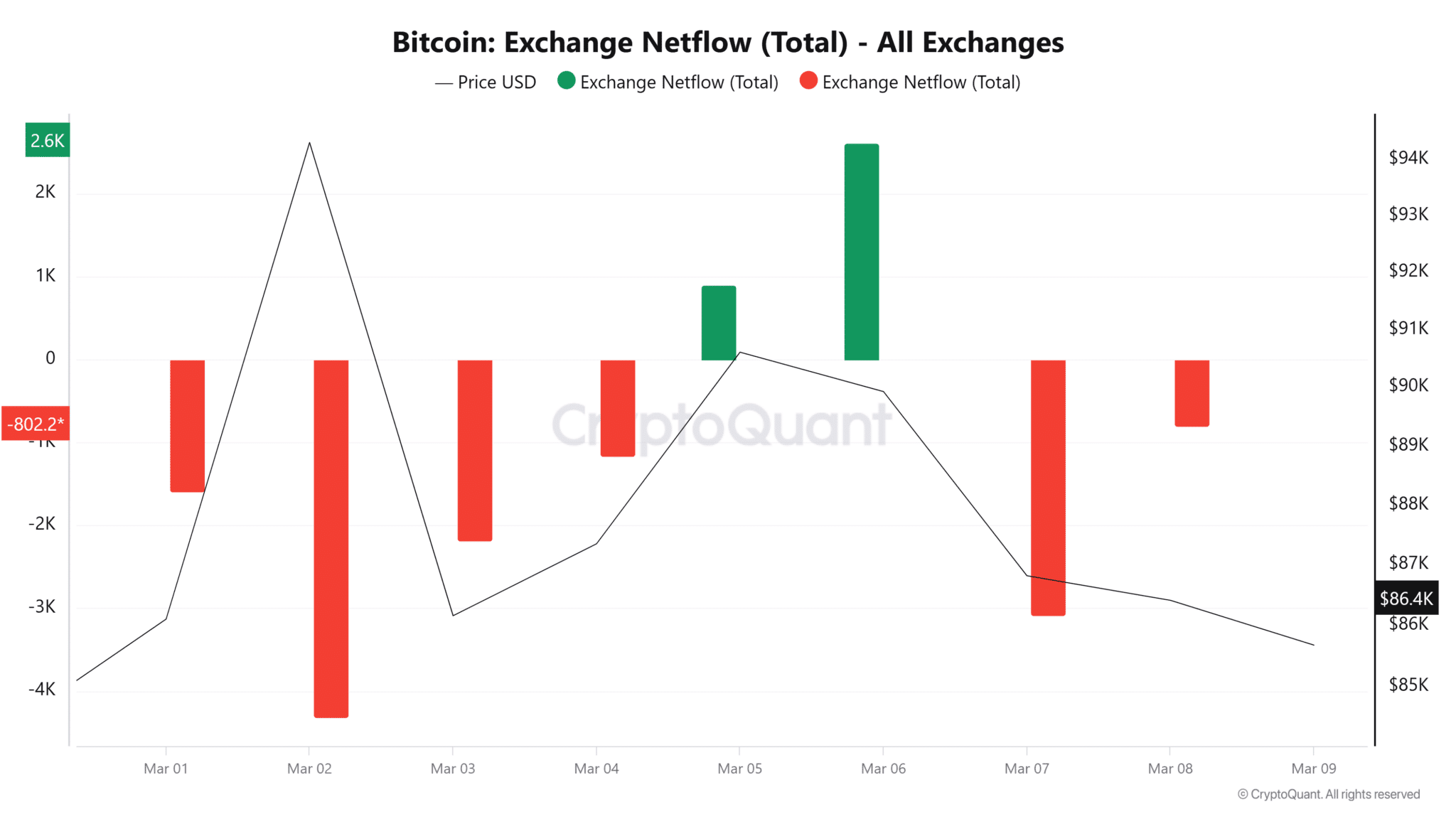
Additionally, if whales sell while market demand remains high, this suggests that supply is being expanded to a broader group of investors. Data on Bitcoin netflows on exchanges also reinforces this observation. The market is currently witnessing more outflows than inflows, reflecting that demand for BTC remains strong. This is crucial for maintaining price stability, even as selling pressure from whales increases.
Forecasting the next price volatility of Bitcoin
With whales shifting to sell, the question arises: What will happen next to BTC prices? Although supply from whales has decreased, Bitcoin is currently not facing strong selling pressure.
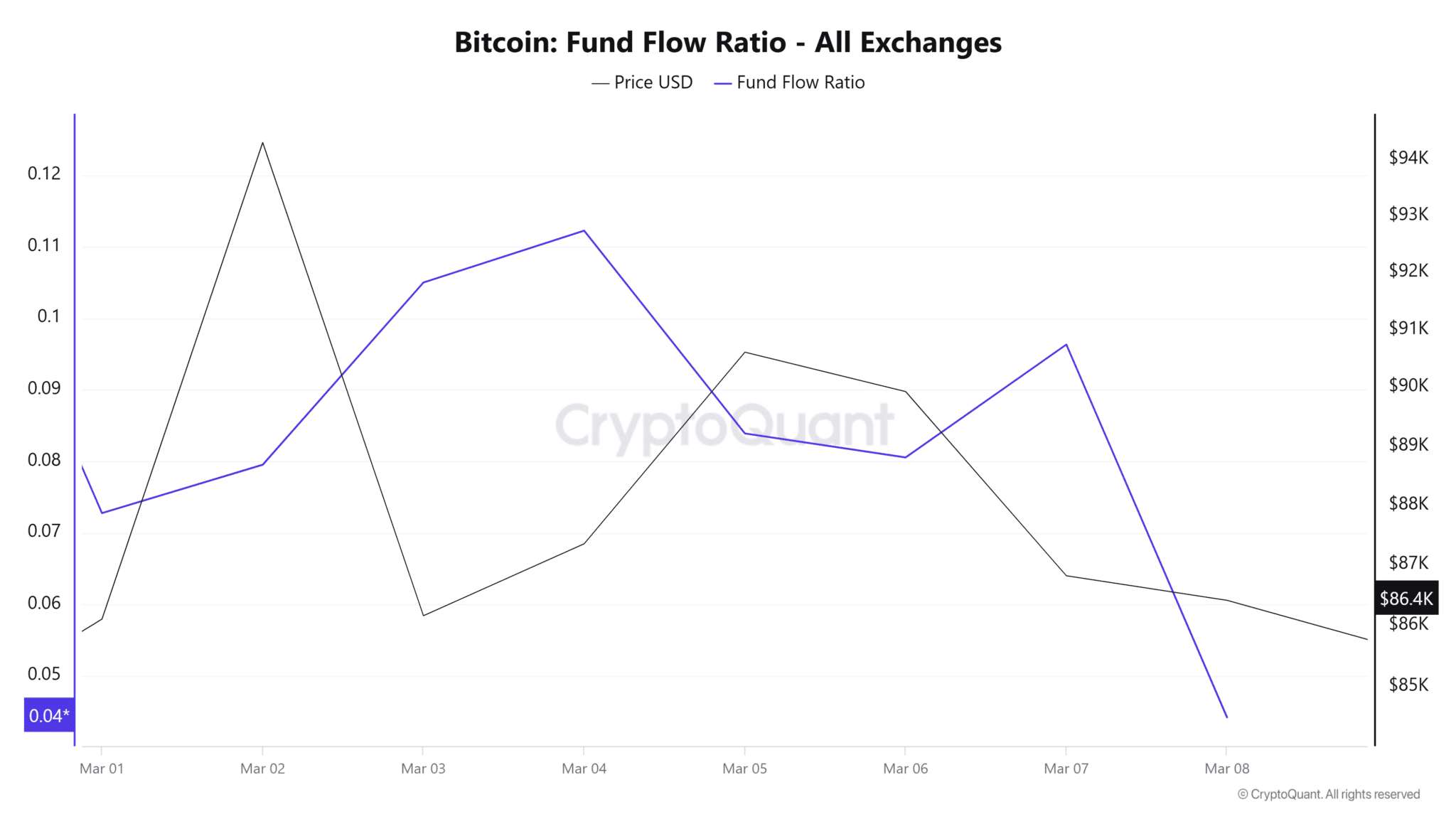
Data shows that the net inflow rate to exchanges has decreased over the past week, meaning that the number of deposits to the exchange is lower. This indicates that current investors have no intention of selling, but instead are holding BTC with a long-term strategy.
As whales sell off while the majority of other investors continue to hold, the market is likely entering an accumulation phase. During this phase, buyers will absorb the selling pressure without driving prices higher. However, the current buying power is not strong enough to absorb the selling pressure while pushing prices beyond larger resistance levels.
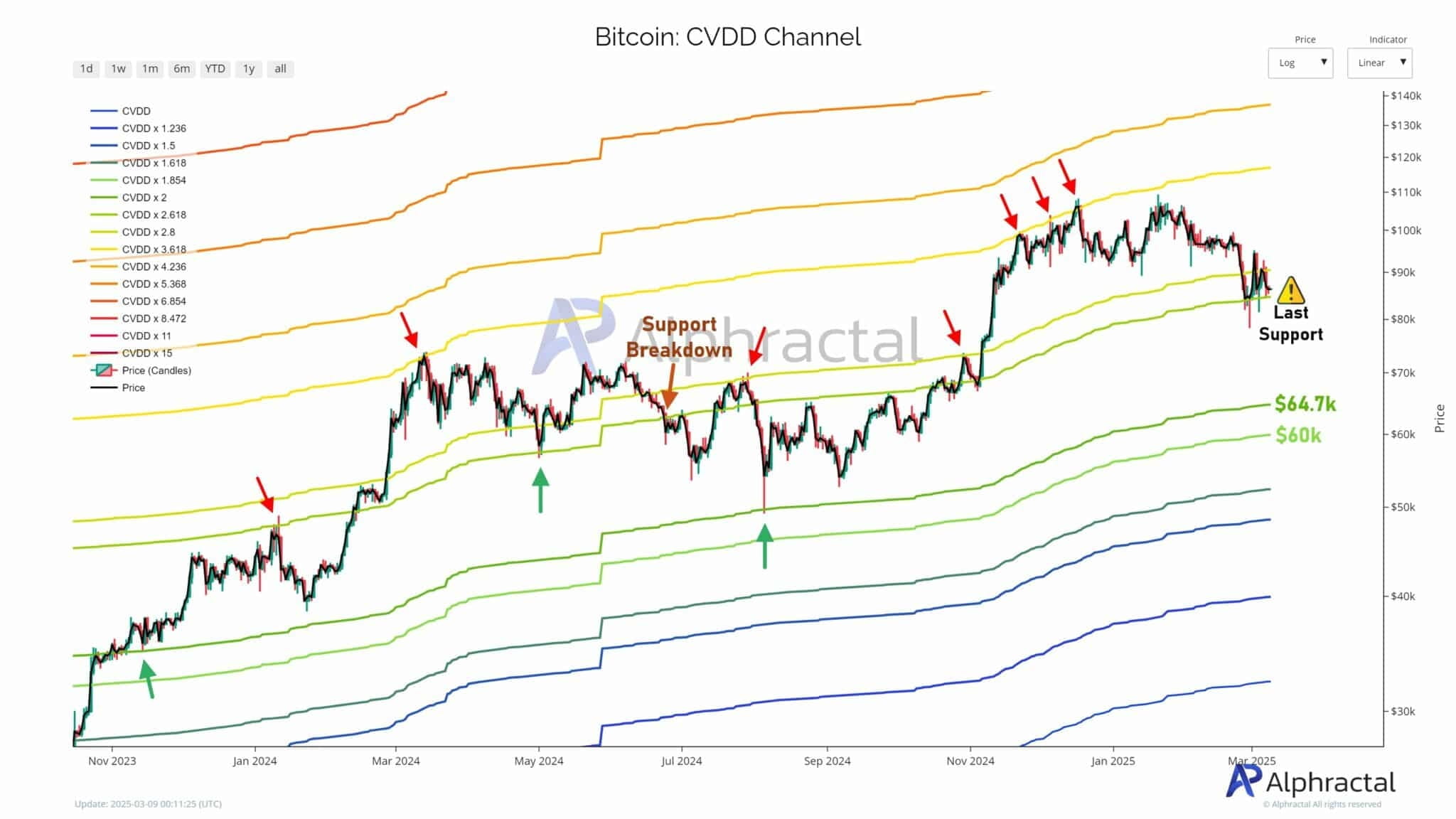
According to analysis from Alphractal, to maintain the accumulation momentum, BTC needs to hold above $84,640. If the price can accumulate above this threshold, Bitcoin is likely to form a local bottom before moving towards new record highs in the near future. Conversely, if the price stays below $84,000 for several days, the next target will be $64,700 – coinciding with the historical peak in April 2021, according to the number of days the cumulative value destroyed (CVDD).
Conclusion
The reduction in supply from whales is an important signal, reflecting both a change in market dynamics and opening up opportunities for retail investors. However, to determine the next trend for Bitcoin, the market needs to wait for clearer signals, especially the ability to hold above key support levels. In this context, the accumulation phase may continue, laying the groundwork for Bitcoin's further advances in the future.$BTC
