
1 Introduction
In the cryptocurrency space, Bitcoin and Ethereum have long been at the forefront of innovation and adoption. While Bitcoin has become digital gold and a store of value, Ethereum has gained recognition for its smart contract capabilities and decentralized applications. However, the two major crypto networks have largely existed in parallel, with little interoperability between them. Now this is changing, as the integration of Bitcoin's Lightning Network with the Ethereum system opens up a realm of possibilities, creating a synergy that could revolutionize the cryptocurrency landscape.

The Lightning Network is Bitcoin's Layer 2 scaling solution that allows instant, low-cost BTC payments, promising to bring new utility to the top cryptocurrency. Ethereum, on the other hand, enables decentralized finance (DeFi) applications through its programmable smart contracts. By connecting these two ecosystems together, we could see faster and cheaper Bitcoin payments executed directly on Ethereum applications, bringing more liquidity and scalability to the network. Ethereum's decentralized finance landscape could be revolutionized by leveraging Bitcoin's liquidity.
Although technical challenges remain, the development team is actively working on ways to integrate Lightning Network payment channels, sidechains, hashed time-locked contracts, and other features with Ethereum. If successful, this could lead to groundbreaking innovations such as trustless cross-chain atomic swaps, Bitcoin-backed Ethereum smart contracts, and more seamless interoperability between the two networks.
In this article, we will analyze the different integration approaches being explored, the potential benefits and use cases, and the challenges faced. We will also provide our opinion on whether the integration of the Lightning Network with Ethereum marks an important milestone that can reshape the cryptocurrency ecosystem as we know it today. The possibilities presented by connecting these two major crypto networks are exciting and point to a more connected future for decentralized blockchain technology.
2. The power of Bitcoin Lightning Network
Bitcoin's Lightning Network is a Layer 2 scaling solution designed to solve Bitcoin's scalability issues. As the first and largest cryptocurrency, Bitcoin faces challenges with transaction speed and cost as its adoption grows. Bitcoin can only process about 7 transactions per second on its underlying blockchain, which leads to network congestion and high fees during peak hours.
The Lightning Network offers a solution to these problems by enabling faster and cheaper off-chain transactions. It works by creating payment channels between users, allowing them to send Bitcoin back and forth instantly without broadcasting each transaction to the main blockchain. Transactions are batched and settled on-chain only when the channel is closed. This helps relieve congestion on the main Bitcoin network.

Lightning payments are significantly faster, typically settling in milliseconds, whereas on-chain Bitcoin transactions can take an hour or more during busy periods. Fees for Lightning Network transactions are also negligible, with typical payments costing just a fraction of a cent. Since Lightning channels remain open indefinitely until manually closed, this creates ample capacity for high transaction volumes between channel participants.
The Lightning Network has gained tremendous traction since its release, with over 12,000 nodes, 80,000 channels, and nearly $3 million in network capacity as of the end of 2022. Adoption by companies such as payment processor Strike and countries such as El Salvador has further increased Lightning Network usage. The network is still expanding rapidly, promising to further scale Bitcoin as a medium of exchange through near-instant, low-cost transactions suitable for everyday payments.
Leveraging the scalability and liquidity of the Lightning Network can bring tremendous utility to integrated applications across platforms such as Ethereum. With advanced Lightning Network features such as multi-path routing and cross-chain swaps, the future of Bitcoin expanding to the level of a global payment network is bright.
3. Enhance Ethereum’s scalability
Ethereum, the second-largest cryptocurrency platform, is also facing scalability challenges due to growing demand for decentralized applications (DApps) and blockchain congestion.
Since its launch in 2015, Ethereum has grown rapidly, and its blockchain has sometimes been overloaded, resulting in slow transaction confirmations and soaring gas fees. The use of decentralized applications in finance, gaming, NFTs, and more has surged, but this has come at the cost of an imperfect user experience.
Ethereum is currently limited to a maximum of 15 transactions per second, which cannot keep up with transaction volumes during peak activity. Users sometimes see gas fees spike to over $50 just to execute a simple transaction during times of network congestion. This hurts adoption and demonstrates the limitations of the current Ethereum infrastructure.

Integrating Bitcoin’s Lightning Network could bring huge scalability benefits to Ethereum by enabling faster and cheaper off-chain transactions. Ethereum users can open payment channels between each other and send payments instantly at negligible cost without having to process every transaction on the blockchain.
This will significantly enhance the user experience of decentralized applications based on Ethereum. From DeFi platforms to NFT markets and blockchain games, Lightning Network integration can enable frictionless micropayments at scale, attracting more users and developers.
While Ethereum 2.0 promises long-term scalability upgrades, Lightning Network integration can provide an immediate Layer 2 scalability boost. By leveraging the liquidity and transaction capacity of the Bitcoin Lightning Network, Ethereum could see a new era of rapid innovation driven by fast and affordable payments.
4. Interoperability and cross-chain transactions
One of the most exciting aspects of Bitcoin Lightning’s integration with Ethereum is the potential for greater interoperability and cross-chain transactions between the two networks.
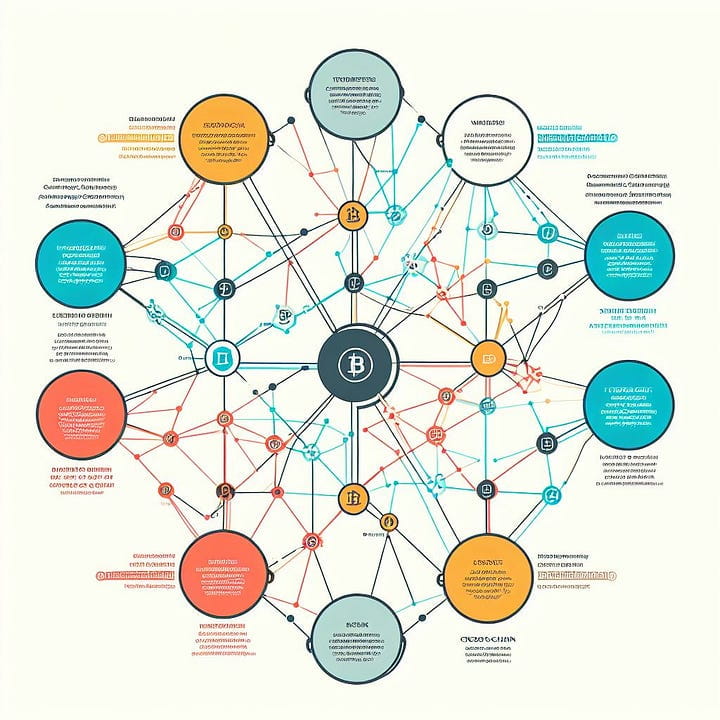
Currently, transferring assets and data between different blockchains is very complicated and usually requires a third-party intermediary as a custodian. For example, wrapping Bitcoin as an ERC-20 Token on Ethereum requires a centralized party to hold the actual BTC at a 1:1 ratio. This leads to fragmentation across chains, limits composability, and requires users to trust the third party that facilitates the transfer.
With Lightning Network integration, Bitcoin and Ethereum can interact directly and trustlessly. Lightning Network’s hashed time-locked contracts (HTLCs) enable cross-chain atomic swaps of assets between chains. Users can instantly exchange Bitcoin for ETH or stablecoins without counterparty risk.
This also unlocks the possibility of decentralized bridges and two-way pegs, using the Lightning Network as a secure medium for back-and-forth transfers. With simple, secure interoperability, liquidity can flow freely between Bitcoin and Ethereum, greatly expanding the possibilities of decentralized finance (DeFi).
The Lightning Network could even allow smart contracts on Ethereum to send and receive Bitcoin payments from users or other contracts. This could lead to the creation of decentralized exchanges (DEXs) that enable direct exchange between Bitcoin/Lightning Network and Ethereum-based tokens.
By leveraging the security and instant settlement of cross-chain Lightning payments, escrow transactions, conditional payments, and other advanced financial transactions are also possible. By unlocking trustless cross-chain interoperability, Bitcoin Lightning integration can connect these previously disconnected worlds into a seamless interactive ecosystem of decentralized finance.
5. Cryptocurrency is a game changer
In my opinion, the integration of the Bitcoin Lightning Network with the Ethereum system has the potential to be an absolute game changer for the cryptocurrency industry. This development could solve the scalability challenges faced by both networks, unlock greater interoperability, and pave the way for a more efficient and interconnected blockchain ecosystem.
Both Bitcoin and Ethereum have been criticized for their limited transaction throughput. Bitcoin can only process 7 transactions per second, while Ethereum currently manages only 15 TPS. This leads to network congestion and fee volatility, which hurts the user experience.
By leveraging the near-instant transactions and ample liquidity of Lightning channels, both networks can greatly enhance scalability. For Ethereum, this has the potential to solve its long-standing capacity issues. For Bitcoin, it opens up the possibility of serving as an efficient medium of exchange.
Just as importantly, Lightning integration enables trustless cross-chain transactions between the two major cryptocurrency networks. This has not been possible before, so assets have remained largely isolated within each chain.
With the help of the Lightning Network's hashed time-locked contracts (HTLCs), the door to frictionless transfer of assets and data between Bitcoin and Ethereum has now opened. This interconnectivity can give rise to new innovations in decentralized finance (DeFi) and drive the development of the entire crypto ecosystem.
However, there are still technical and coordination challenges in reconciling different security models and feature sets. Continued collaboration between developers and community leaders on both sides is required. But if achieved, the rewards in scalability, interoperability, user experience, and cryptocurrency adoption will be huge.
6 Conclusion
In conclusion, the integration of Bitcoin Lightning Network with Ethereum system has great potential to change the cryptocurrency landscape. By connecting these two major crypto networks together, we can witness the rise of faster and cheaper transactions on Ethereum through Lightning Network payment channels. This is expected to promote the adoption of Ethereum-based decentralized applications by enhancing scalability and user experience.
Additionally, Lightning integration could enable groundbreaking new capabilities around trustless cross-chain interoperability. For the first time, assets could be seamlessly transferred between Bitcoin and Ethereum in a decentralized manner using Hashed Timelock Contracts (HTLCs). This could lead to automated atomic swaps, Bitcoin-backed smart contracts, cross-chain decentralized exchanges, and more innovations we can’t yet imagine.
However, this integration is still in its early stages and will require rigorous testing and iteration before going into production. Ensuring security, maintaining the principles of decentralization, and addressing the technical challenges of fusing the two platforms will be key focuses. This will require continued collaboration between developers and community leaders from both the Bitcoin and Ethereum ecosystems.
But if successful, the integration of Bitcoin Lightning Network with Ethereum promises to be a historic milestone for cryptocurrency. The synergies unlocked by connecting these networks could accelerate the growth and maturity of decentralized finance. It demonstrates the power of blockchain interoperability and innovation, moving us toward an open global financial system.
In conclusion, while challenges remain, I believe the integration of Bitcoin Lightning Network with Ethereum has revolutionary potential to take crypto to the next level. As pioneers such as Tesla, SpaceX, and PayPal continue to embrace digital assets, the future of cryptocurrency looks bright, with the potential to scale and provide meaningful utility.


