
Blazewall_
77 Posts

Blazewall_
Frequent Trader
2.6 Years
9 Following
155 Followers
143 Liked
Posts
All
Quotes
#dusk $DUSK @Dusk
It’s not simply a privacy coin that relies on narrative-driven hype. The core is doing privacy and asset tokenization within regulated compliance scenarios. Especially in directions like real-world assets and institutional finance: if on-chain finance truly keeps developing in the future, then “privacy” will definitely not be something optional or unnecessary.
Of course, DUSK is still at an early stage right now, and the market’s attention and liquidity aren’t top-tier—so short-term price volatility is definitely going to be high.
But I think it’s worth putting on the watchlist.
If these narratives—privacy + RWA + compliant finance—are picked up and hyped by the market again later, DUSK may get another chance to be rediscovered.
It’s not simply a privacy coin that relies on narrative-driven hype. The core is doing privacy and asset tokenization within regulated compliance scenarios. Especially in directions like real-world assets and institutional finance: if on-chain finance truly keeps developing in the future, then “privacy” will definitely not be something optional or unnecessary.
Of course, DUSK is still at an early stage right now, and the market’s attention and liquidity aren’t top-tier—so short-term price volatility is definitely going to be high.
But I think it’s worth putting on the watchlist.
If these narratives—privacy + RWA + compliant finance—are picked up and hyped by the market again later, DUSK may get another chance to be rediscovered.
#dusk $DUSK @Dusk
Recently, I’ve noticed quite a few people starting to pay attention to DUSK again. From what I’ve looked into myself, the project does have something to it.
DUSK isn’t the kind of project that merely piggybacks on the RWA concept. What it truly aims to do is bring together compliance, privacy, and the on-chain tokenization of real-world assets. In simple terms: if traditional finance really wants to go on-chain at large scale, many things can’t be fully public like on today’s public chains. An institution’s holdings, trades, and fund flows all need a certain level of privacy, while still meeting regulatory requirements. Dusk is precisely trying to solve this problem.
Now Dusk already has its own L1. DUSK is mainly used for on-chain gas and staking. The maximum supply is 1 billion coins. In the future, some additional portion will enter the market through emissions over the next 36 years.
I think the most worth looking at part of DUSK isn’t actually the three words “privacy coin,” but rather that it’s moving toward financial infrastructure. If, in the future, RWA really transitions from storytelling to real institutional use, then a foundational network that needs to balance privacy, compliance, and settlement may indeed have an opportunity.
Of course, there’s no need to hype it too much right now. There are many projects in the RWA space, and in the end, it will depend on whether real assets, institutions, and capital keep flowing in.
So for DUSK, I currently lean toward paying attention to it rather than blindly chasing it. What’s truly worth watching in a project like this is the actual execution and on-chain data that comes later—not how much it was pumped up in the short term
Recently, I’ve noticed quite a few people starting to pay attention to DUSK again. From what I’ve looked into myself, the project does have something to it.
DUSK isn’t the kind of project that merely piggybacks on the RWA concept. What it truly aims to do is bring together compliance, privacy, and the on-chain tokenization of real-world assets. In simple terms: if traditional finance really wants to go on-chain at large scale, many things can’t be fully public like on today’s public chains. An institution’s holdings, trades, and fund flows all need a certain level of privacy, while still meeting regulatory requirements. Dusk is precisely trying to solve this problem.
Now Dusk already has its own L1. DUSK is mainly used for on-chain gas and staking. The maximum supply is 1 billion coins. In the future, some additional portion will enter the market through emissions over the next 36 years.
I think the most worth looking at part of DUSK isn’t actually the three words “privacy coin,” but rather that it’s moving toward financial infrastructure. If, in the future, RWA really transitions from storytelling to real institutional use, then a foundational network that needs to balance privacy, compliance, and settlement may indeed have an opportunity.
Of course, there’s no need to hype it too much right now. There are many projects in the RWA space, and in the end, it will depend on whether real assets, institutions, and capital keep flowing in.
So for DUSK, I currently lean toward paying attention to it rather than blindly chasing it. What’s truly worth watching in a project like this is the actual execution and on-chain data that comes later—not how much it was pumped up in the short term
#dusk $DUSK @Dusk
I’m recently rewatching DUSK and it feels like the project is actually quite interesting.
When many people mention RWA, their first reaction is to move real-world assets onto the blockchain. But the truly difficult part isn’t putting them on-chain—it’s compliance, privacy, identity verification, and the final settlement of the assets.
What DUSK is doing is precisely addressing these issues.
Its positioning isn’t simply a public blockchain; instead, it’s an infrastructure built for regulated financial markets. It focuses on RWA, compliant asset issuance, private transactions, and on-chain settlement. The team is also currently推进 Dusk Trade, which is used for investor access for tokenized assets, wallet binding, controlled transfers, and settlement flows.
DUSK itself is the native token of the network. It’s used for Gas and Staking, with a minimum staking requirement of 1,000 DUSK and a maximum supply of 1 billion tokens.
One thing I’m particularly interested in is that financial markets can’t forever pursue only transparency. Some things must be transparent, while others must be private.
What DUSK wants to do is find a balance between the two. Using zero-knowledge proofs and selective disclosure, regulators can obtain the necessary information—without exposing every transaction detail on-chain.
Of course, an imaginative sector doesn’t necessarily mean the token will definitely go up.
What’s really worth watching with DUSK going forward is whether the RWA business can actually be implemented, whether institutions continue to adopt it, and whether the ecosystem can generate genuine on-chain demand.
If RWA truly enters the next phase, projects like DUSK that build financial infrastructure may be more worth long-term observation than projects that simply tell a good story.
I’m recently rewatching DUSK and it feels like the project is actually quite interesting.
When many people mention RWA, their first reaction is to move real-world assets onto the blockchain. But the truly difficult part isn’t putting them on-chain—it’s compliance, privacy, identity verification, and the final settlement of the assets.
What DUSK is doing is precisely addressing these issues.
Its positioning isn’t simply a public blockchain; instead, it’s an infrastructure built for regulated financial markets. It focuses on RWA, compliant asset issuance, private transactions, and on-chain settlement. The team is also currently推进 Dusk Trade, which is used for investor access for tokenized assets, wallet binding, controlled transfers, and settlement flows.
DUSK itself is the native token of the network. It’s used for Gas and Staking, with a minimum staking requirement of 1,000 DUSK and a maximum supply of 1 billion tokens.
One thing I’m particularly interested in is that financial markets can’t forever pursue only transparency. Some things must be transparent, while others must be private.
What DUSK wants to do is find a balance between the two. Using zero-knowledge proofs and selective disclosure, regulators can obtain the necessary information—without exposing every transaction detail on-chain.
Of course, an imaginative sector doesn’t necessarily mean the token will definitely go up.
What’s really worth watching with DUSK going forward is whether the RWA business can actually be implemented, whether institutions continue to adopt it, and whether the ecosystem can generate genuine on-chain demand.
If RWA truly enters the next phase, projects like DUSK that build financial infrastructure may be more worth long-term observation than projects that simply tell a good story.
Go for it!!
This stage is too hard right now.
Every time I profit 1–2000 and don’t exit, I end up sitting in a floating loss—it's so disgusting.
I really need to take a cooldown period to calm down, just to calm down.
Every time I profit 1–2000 and don’t exit, I end up sitting in a floating loss—it's so disgusting.
I really need to take a cooldown period to calm down, just to calm down.
From 200 to 67,
then from 67 to 20,000.
Believe in yourself—nothing is impossible.
then from 67 to 20,000.
Believe in yourself—nothing is impossible.
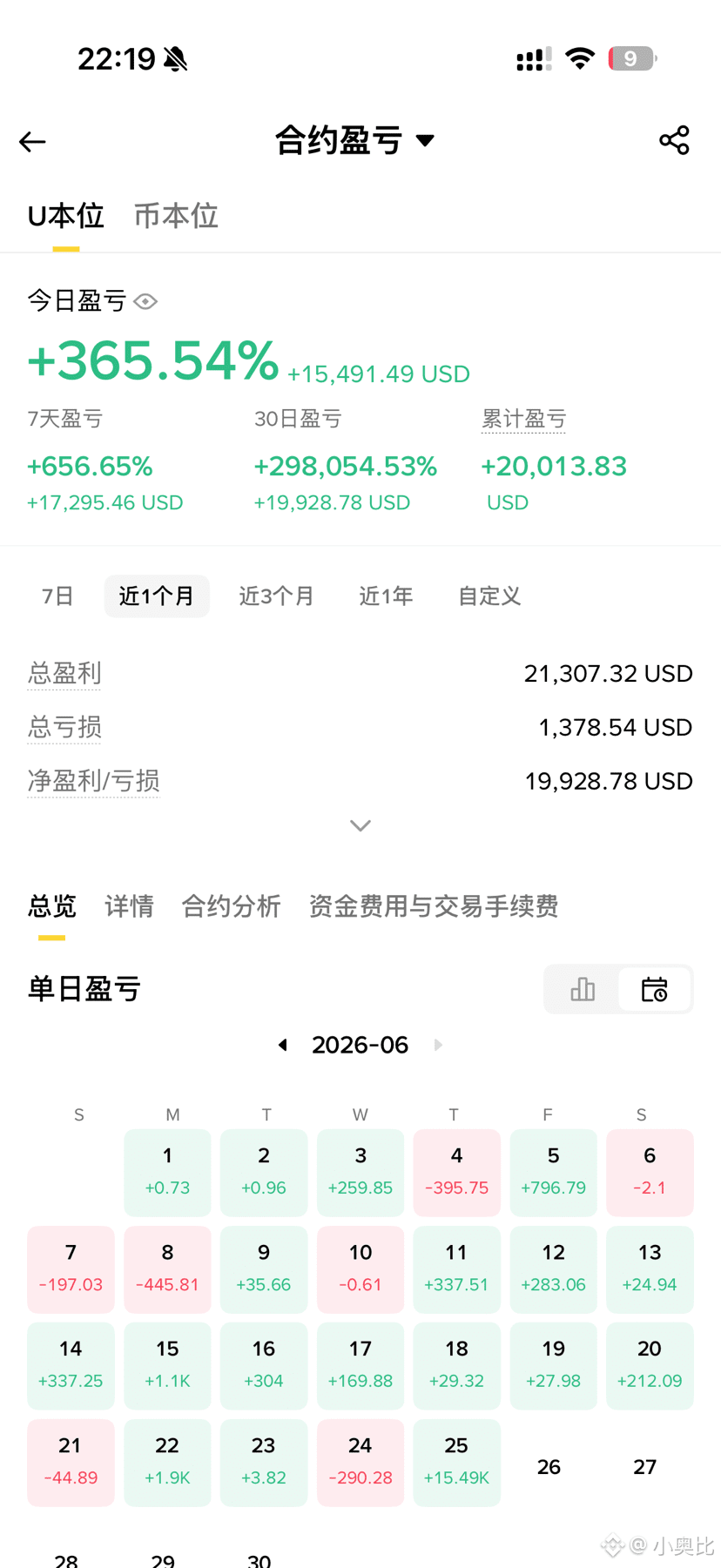
From now on, only the old three will be played. Just went from 100 oil to 1000
Emptying a rave will reset it to zero again 🥺
Emptying a rave will reset it to zero again 🥺
Rescue teammates, don't rescue opponents
1

Pickle Cat
·
--
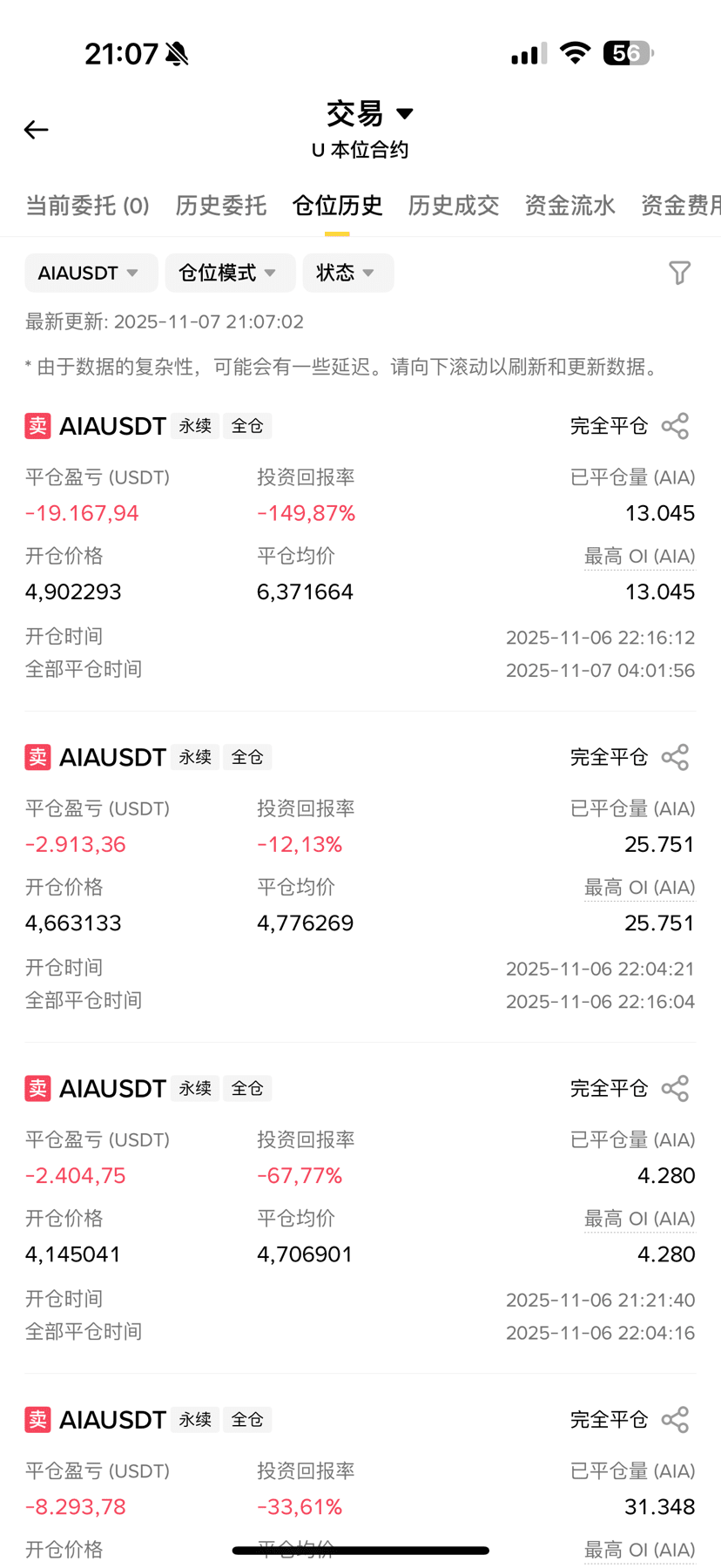
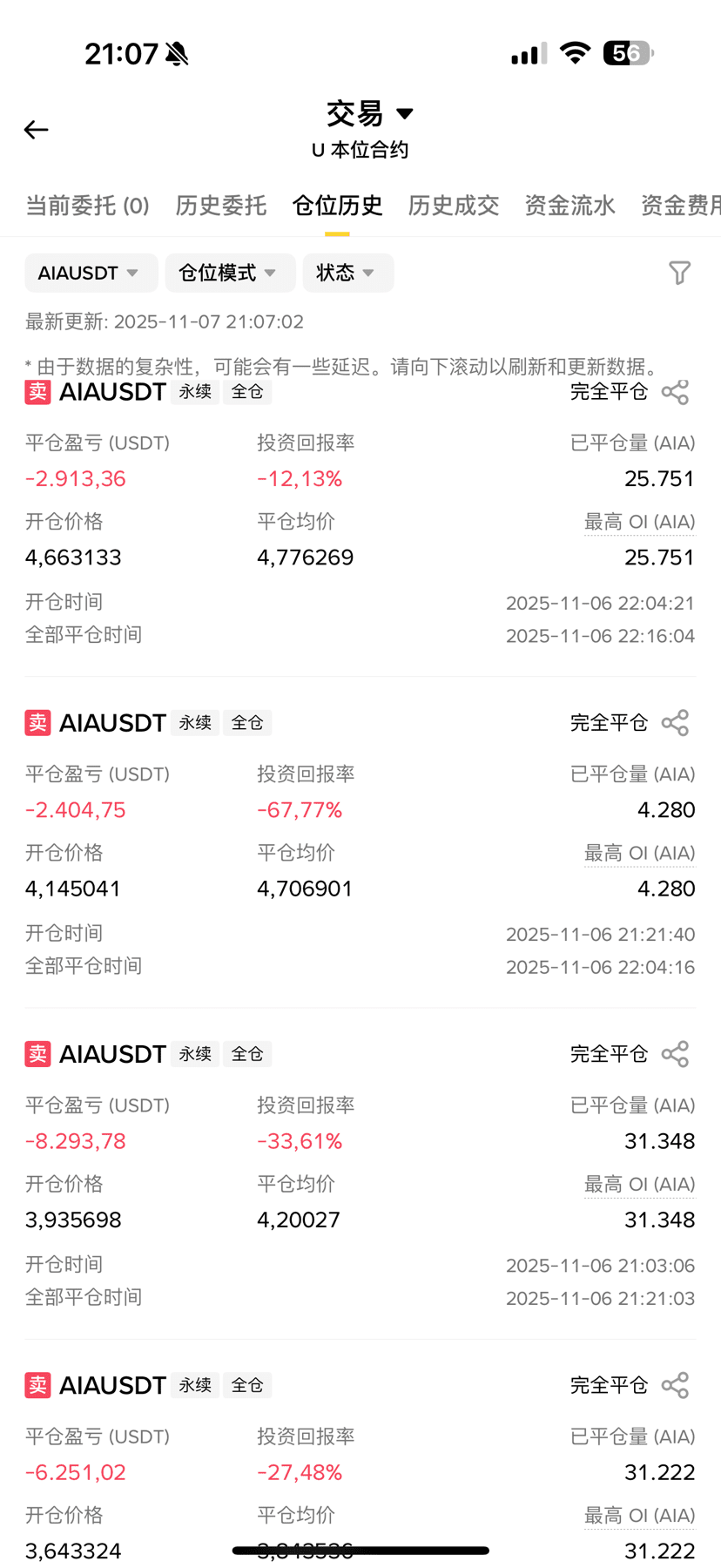
If you want to stop losing money, please stop day trading immediately (this is not clickbait)
Because retail investors are essentially a structural scam.
This article is a bit long, but if you are willing to give me 120 seconds, I guarantee you will thank me in a few years.
I started trading when I was a teenager. I made a lot of money, thinking I was Batman. I also lost even more money, which hurt a lot, and even now I am still fixing the cracks from back then.
I've tried all the strategies that retail investors can access.
I even seriously day traded for a year, thinking I could finally turn things around, but the result was so miserable that just thinking about it still hurts.
How bad was my PNL at that time? Even my grandmother made more money than I did! And she just followed the method I taught her to automatically invest in Bitcoin.
This article is a bit long, but if you are willing to give me 120 seconds, I guarantee you will thank me in a few years.
I started trading when I was a teenager. I made a lot of money, thinking I was Batman. I also lost even more money, which hurt a lot, and even now I am still fixing the cracks from back then.
I've tried all the strategies that retail investors can access.
I even seriously day traded for a year, thinking I could finally turn things around, but the result was so miserable that just thinking about it still hurts.
How bad was my PNL at that time? Even my grandmother made more money than I did! And she just followed the method I taught her to automatically invest in Bitcoin.

What a thrilling battle against the single!
There is a problem with opening the warehouse

平头小哥
·
--
$ETH The end of the contract is a dead end. Why still take a path to the end?
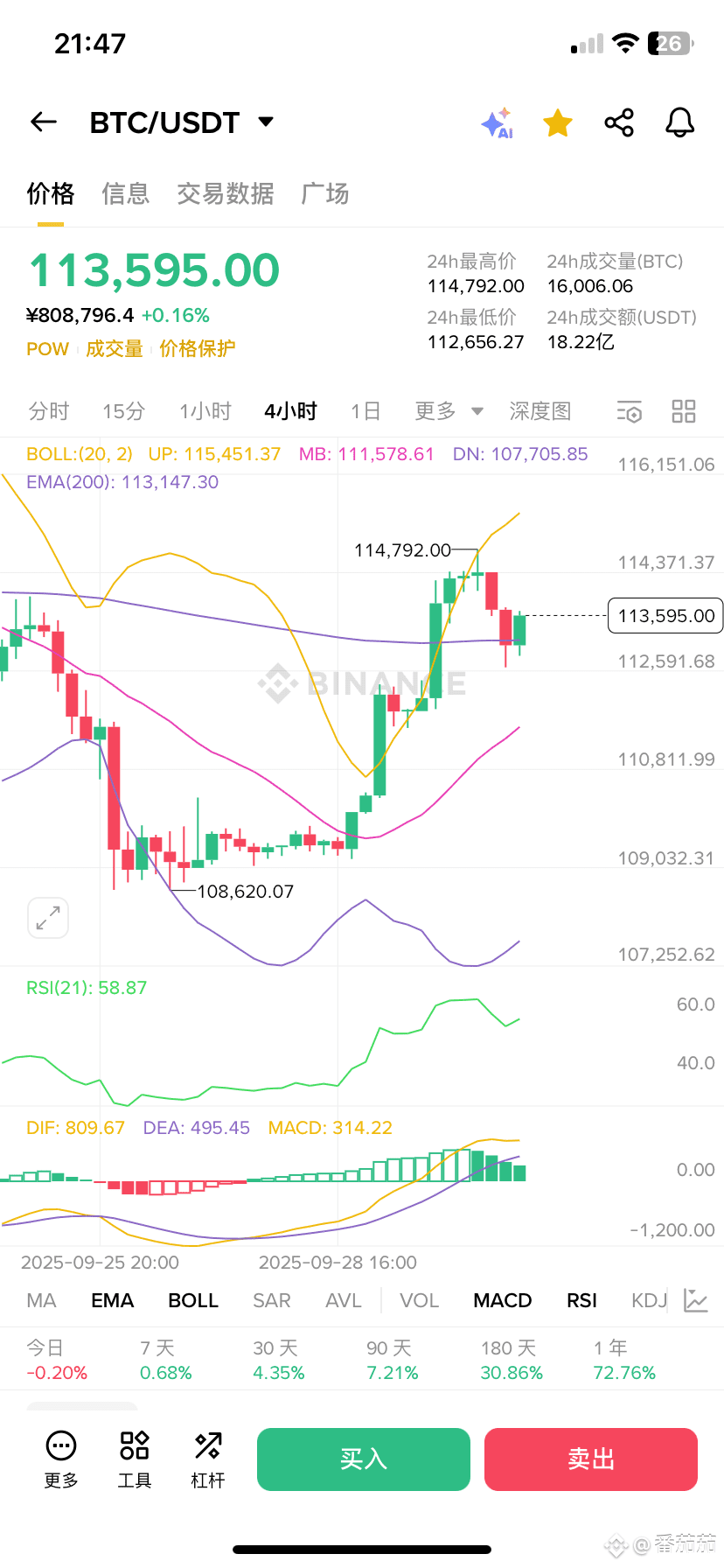
Buy orders near pancake 113516.
Stop loss 113089.
As long as it rebounds without breaking near 113089, you can place buy orders.
Stop loss 113089.
As long as it rebounds without breaking near 113089, you can place buy orders.
Is it suitable to build a position in BNB now?😨
The market rebound range is not broken 113288~113659 near the range, pay attention to short positions, target 111518-111182
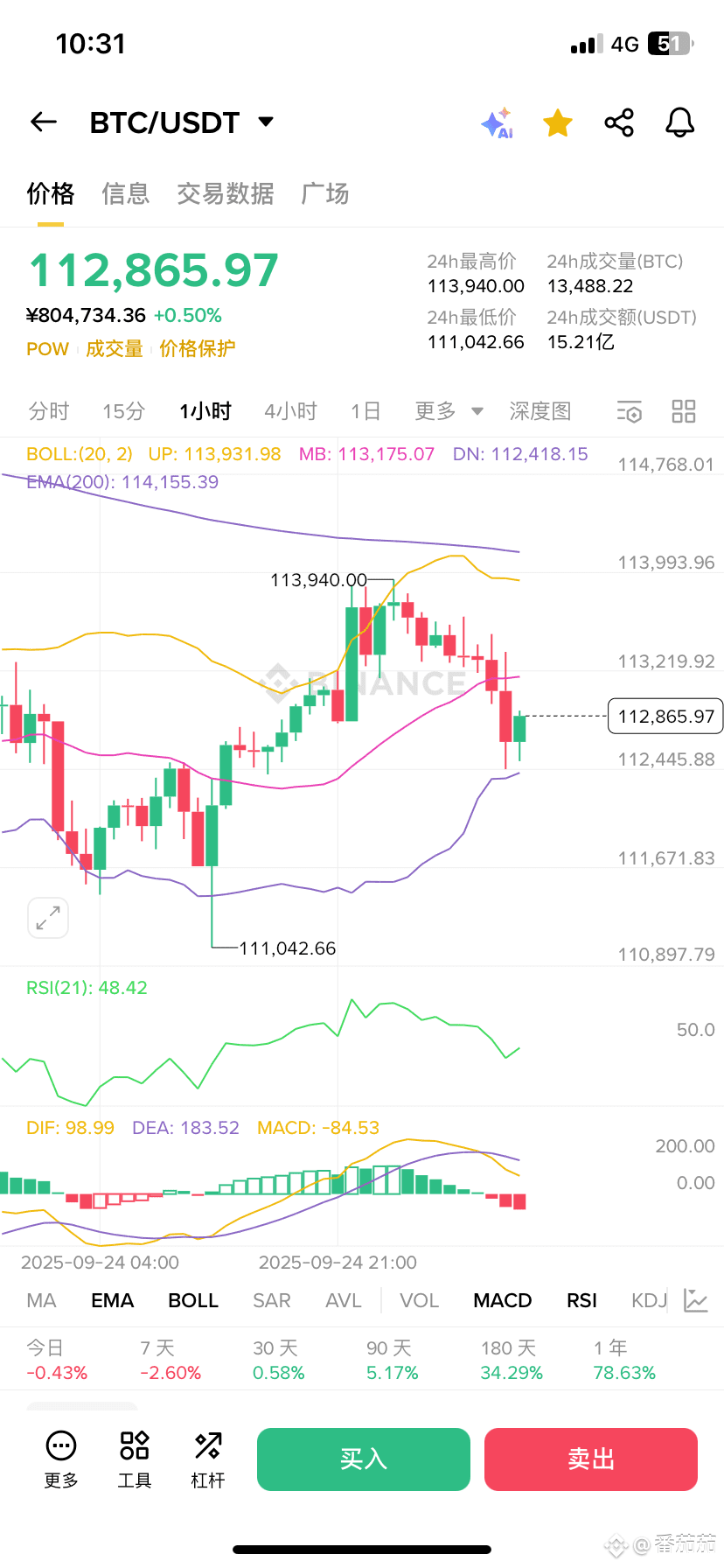
Eat some rebound
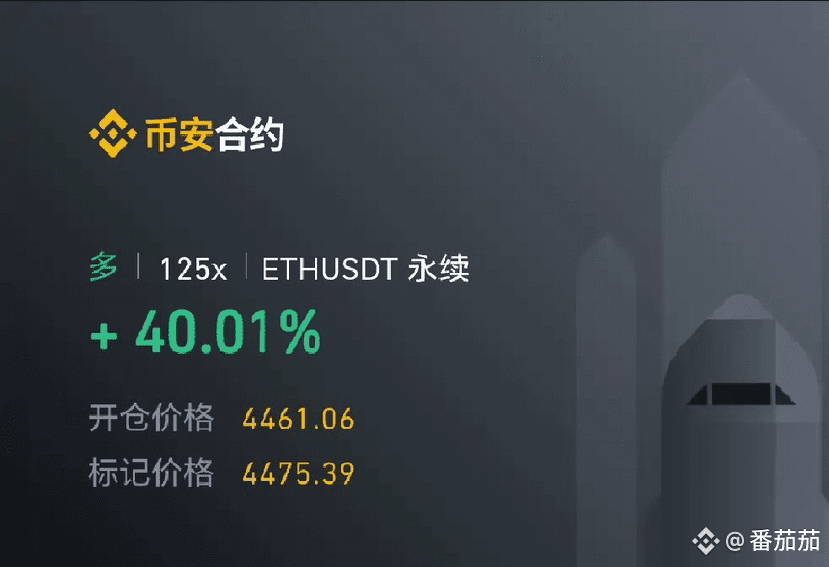
The position is not very heavy
The position is not very heavy
Blazewall_
·
--
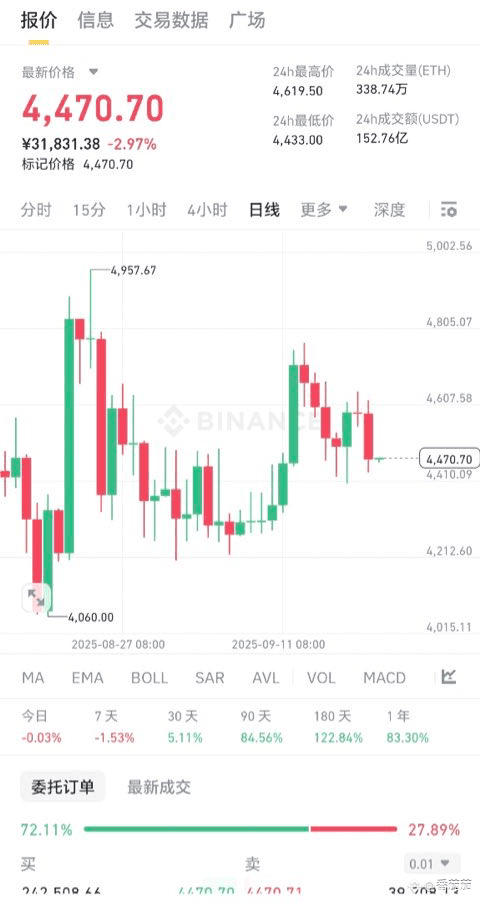
The current price is around 4470 for entering a long position
Stop loss at 4431
Stop loss at 4431
The current price is around 4470 for entering a long position
Stop loss at 4431
Stop loss at 4431
Log in to explore more content