
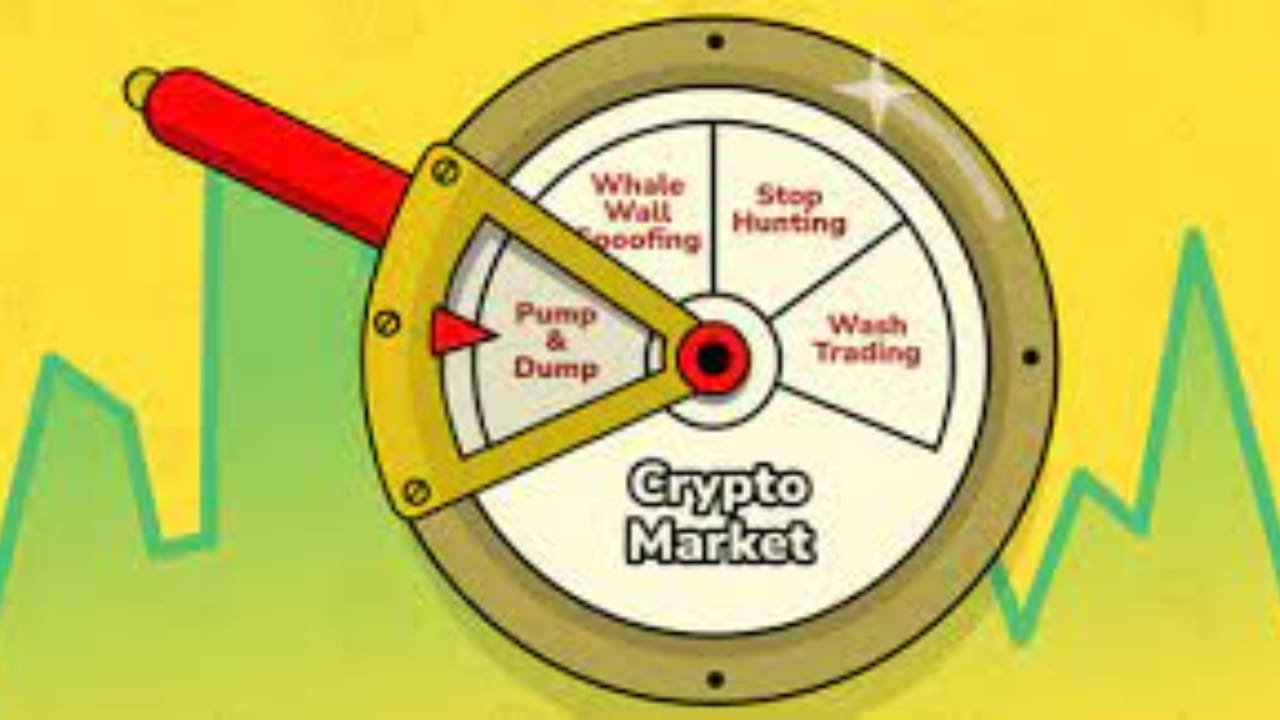

Financial markets provide the opportunity to make significant amounts of money, but if you are unaware of the underlying principles of the market, you can also suffer significant losses.
One of the basic principles is that the market is not always fair and is often irrational. Since it is created by people and traded by people, emotions play an important role. Major players and market makers are aware of this and use various methods to evoke the right emotions among market participants and use them to their advantage to make profits. This phenomenon is called manipulation.
The cryptocurrency market is particularly susceptible to manipulation due to its low capitalization and liquidity, which is one of the reasons for its high volatility. Therefore, in order to successfully make money on cryptocurrencies, you need to learn to recognize manipulative actions and resist them.
Basic types of market manipulation
Market manipulation is dishonest actions carried out in the market to artificially distort asset prices in order to gain profit. Such manipulations may include the dissemination of false information, bulk sales or purchases of assets to create the illusion of supply or demand.
In cryptocurrency markets, four market manipulation tools are used especially frequently and effectively:
1. Wash Trading: This method of trading involves the sale and purchase of a particular asset by the same large holder to create the illusion of activity and attract the attention of retail investors. The essence of this approach is simple: sell the asset, creating a red candle on the chart, and then buy it again to create a green candle. This allows you to create the illusion of active trading and demand. Wash trading is used for two main reasons: firstly, to create the appearance of activity or demand for a certain currency or trading pair, and secondly, to artificially increase trading volumes in order to pay the exchange, covering it up with a commission.
Understanding these types of manipulations allows traders and investors to be more aware and careful in the market, as well as prevent possible financial losses.
2. Pump&Dump: is the dissemination of information by pumpers (persons engaged in market manipulation), which creates the illusion of a promising asset and stimulates demand for it, as a result of which its price increases sharply. When the price reaches the desired level, pumpers sell pre-acquired assets, unloading them on “greedy” investors.
Basic methods of Pump&Dump provocation:
• Creating hype: Posting statements like “This is the next Bitcoin,” “Ethereum Killer,” and other big claims that inspire optimism among investors. However, in most cases, such statements are more likely to be speculation and are presented as red flags rather than reasons to buy.
• Price Spike: If a certain little-known token rises sharply and rapidly in a short period of time, it should cause caution. Parabolic growth may just be bait for retail investors.
• News cycles: Positive news coincides with large purchases from whales, which creates the impression of "smart money", successful event-based trading and "insider whales", which in turn encourages retail investors to buy, imitating the whales.
3. Bearish run: is a manipulation in which large players open short positions (predict the price will fall) and spread negative news about the asset (FUD - Fear, Uncertainty, Doubt), promoting panic among investors and forcing them to close their long-term positions, which in turn intensifies the price fall. Thus, retail investors become "fuel" for short positions.
To counteract bearish runs, it is important to diversify your sources of information, be able to distinguish legitimate negative news from FUD, and be aware of current events in the market.
4. Spoofing is a method of market manipulation based on placing fake orders that are later canceled before they are actually executed. Such fake orders create the illusion of great interest in certain assets and can influence the decisions of traders and investors.
For many traders, the number of buy and sell orders is an important indicator of the market trend. Manipulators use this knowledge and place large fake buy or sell orders that create the illusion of strong demand or supply for a particular asset. This can lead to other traders making quick decisions based on these fake orders, which can ultimately benefit the manipulator. However, when market conditions change and prices move closer to the fake orders, manipulators cancel them, avoiding actual execution. Thus, order falsification contributes to the creation of an illusion and can influence the behavior of other market participants. Spoiler alert: this practice is illegal and subject to relevant market manipulation laws.
How to resist manipulators in the market?
While the existence of manipulators may seem daunting to retail investors, it is encouraging to know that it is not necessary to directly confront and eradicate manipulators in order to profit. It is more important to learn how to defend yourself at your level. To do this, you should adhere to the following rules:
• Verify information: Use multiple independent sources to obtain and verify information. Watch prices on various platforms such as TradingView, Coingecko and Coinmarketcap, and for news, contact famous publications, telegram channels and Twitter accounts. Check every news that may affect your investment decisions.
• DYOR (Do Your Own Research): Thoroughly research the assets you are planning to invest in and follow news related to them. A thorough self-analysis will help build confidence in the selected assets and filter out negative information (FUD). Use the news in the same way as the previous rule to make informed decisions.
• Portfolio diversification: Diversify your portfolio with stablecoins or strong assets to reduce the impact of price manipulation on weaker coins. However, don't overload your portfolio with excess assets to avoid dilution of both capital and attention.
• Be rational: The main goal of manipulators is to provoke emotional reactions. So keep a cool head and healthy skepticism. News and rumors aimed at emotional rather than rational perception should be viewed with caution.
• Use a DCA (Dollar-Cost Averaging) strategy: Market manipulation typically targets speculators and short-term investors. Applying a DCA strategy over a long period of time will help create an optimal entry price for strong assets and resist manipulation.
• Work with a strategy: develop a clear decision-making strategy, determine entry and exit points, consider short-term and long-term horizons, fundamental analysis and faith in the chosen asset. Make decisions according to your strategy.
Following these simple defenses will reduce the influence of manipulators on your investment decisions and make emotional provocations less effective.
conclusions
The main goal of participants in financial markets, including cryptocurrency markets, is to generate income. However, different players are taking different approaches to achieve this goal. Some achieve success through honest methods through research, learning from mistakes and developing long-term strategies, while others deliberately deceive investors by manipulating prices and making easy and quick profits.
To successfully exist in the cryptocurrency sphere, it is important to be able to resist manipulation and rely on verified information and in-depth analysis when making decisions. The main protective tool of a retail investor is a clearly developed strategy and the ability to stick to it. These lifelines will help you avoid being submerged in a sea of fake news (FUD) and irrational price dynamics in the cryptocurrency market.
Through common sense, analysis, and careful preparation, every investor can increase their chances of successfully investing in cryptocurrency and achieving their financial goals.
✅ Web 3.0 News