

According to a survey by the Bank for International Settlements (BIS), 93% of Central Banks are researching CBDC. It is expected that by 2030, there will be 15 retail CBDC projects and 9 wholesale CBDC projects in circulation.
The BIS survey of 86 central banks taking place from October to December 2022 was published on July 10. The report explores the status of CBDC research and development (retail, wholesale or both) by Central Banks around the world while also noting the state of affairs and motivation.
New Financial Era with CBDC
It is expected that by the end of this decade, about 20 central banks in emerging and developed economies will have CBDCs in circulation. In response to the rapid decline of cash, many central banks have researched and developed CBDC versions for retail use to avoid the private sector's monopoly on digital payments.

Emerging markets and geo-economically developing countries are leading the way in CBDC adoption. Their participation in retail (29%) and wholesale (16%) CBDC pilots is nearly double that of developed economies, with only 18% and 10%, respectively.
AE and EMDE central banks (AE = advanced economies; EMDE = emerging markets and developing economies) are planning to issue a retail CBDC. For AE and EMDE, domestic payment efficiency and payment security are becoming almost equally important over time. While central banks have emphasized the importance of financial stability and cross-border payment efficiency.

In 2022, the proportion of central banks planning to issue retail CBDC within the next three years increased from 15% to 18%. Central banks not ready to issue retail CBDC was 68%.
Currently, only four CBDCs are in use in the Bahamas; Eastern Caribbean; Jamaica and Nigeria. However, based on positive feedback from central banks, it is estimated that 15 retail CBDCs and 9 wholesale CBDCs will be operational by the end of this decade.
In late June, the Reserve Bank of India said it was in talks with 18 central banks about the prospect of making cross-border payments using its CBDC – a “digital rupee.” In July, the Federal Reserve Bank of New York’s Innovation Center also completed a Proof-of-Concept testing mechanism for a regulated liability network for a CBDC.
Two ways
Previously, central banks’ involvement in wholesale CBDC was driven by incentives from retail CBDC activities. However, in contrast to retail CBDC, central banks’ efforts in wholesale CBDC are driven by the aim of improving cross-border payments in both AEs and EMDEs rather than prioritizing improving financial inclusion.
Project Dunbar Dunbar, announced in 2022, is an example of a cross-border wholesale CBDC initiative. The Reserve Bank of Australia; Central Bank of Malaysia; Monetary Authority of Singapore; South African Reserve Bank and the BIS Innovation Hub have collaborated on this project to explore how a common platform for multiple CBDCs could enable cheaper, faster and more secure cross-border payments.
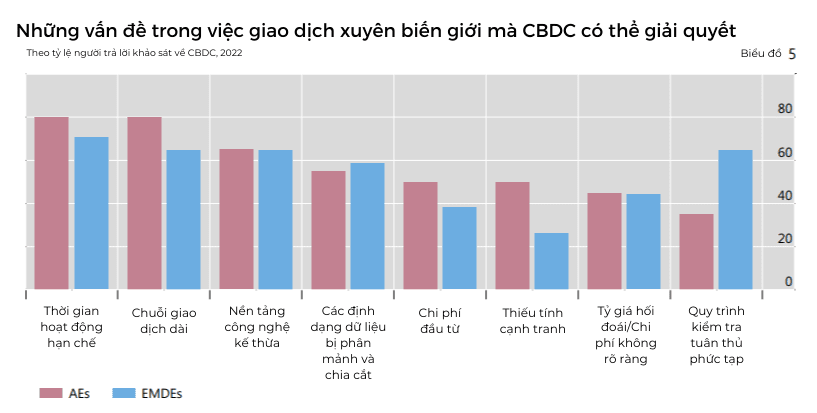
The likelihood of central banks issuing wholesale CBDCs in the near future has also increased compared to last year: 16% believe it is likely they will have a wholesale CBDC within the next 3 years, double the rate last year (8%).

Additionally, 58% are likely to issue bonds in the medium term, up from 54% last year. In addition, the likelihood of issuing wholesale CBDCs is generally higher in EMDEs than in AEs.
According to the report, a legal framework giving central banks the authority to issue CBDCs is needed. The proportion of central banks with this legal authority increased slightly from 26% to 27% last year. In addition, about 8% of central banks are currently amending or clarifying similar applicable laws.
In the second quarter of 2023, the European Commission plans to propose regulations to establish a digital euro (ECB, 2023). However, a quarter of central banks lack the necessary legal foundation, and around 40% of central banks say they are uncertain.

As CBDCs grow, central banks’ skepticism about issuing short-term CBDCs will gradually fade. There is a clear divide from last year, with some central banks more likely to issue retail CBDCs within the next three years, while others are less likely.
PCB Assembly