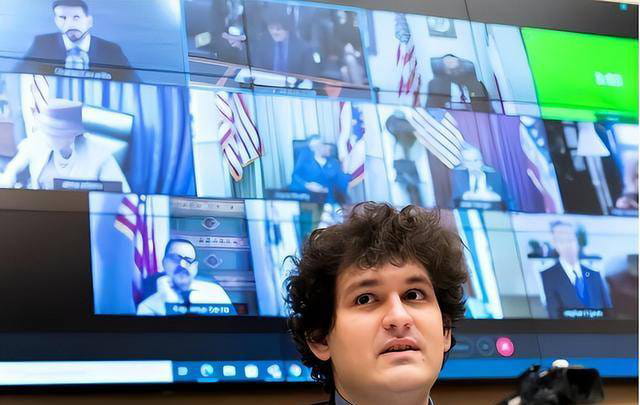
Sam Bankman-Fried, known as the "Musk of the cryptocurrency world", is a foreign entrepreneur and investor, and the former CEO of the cryptocurrency exchange FTX. FTX recently experienced a crisis that made its native cryptocurrency FTT unacceptable. During the crisis, Bankman-Fried announced the end of AlamedaResearch's business, and FTX also filed for bankruptcy protection.
At its peak, Bankman-Fried’s net worth was $26 billion. During FTX’s solvency crisis, his net worth plummeted from $15 billion to $0 in just one day. What happened to Bankman-Fried?
1. Why is FTX’s trend so unacceptable?
Bankman-Fried is one of the richest people in the cryptocurrency space, thanks to his FTX exchange and Alameda Research trading firm. In the space of five days in early April, the 30-year-old went from industry leader to bankrupt and the target of foreign Securities and Exchange Commission and Justice Department investigations.
The news shocked the entire crypto world. He is the son of two law professors at Stanford University, studied physics at MIT, and worked as a trader at a quantitative firm. He turned to cryptocurrency trading in late 2017. He launched FTX in 2023 and developed it into one of the leading exchanges for buying and selling cryptocurrency derivatives.
At the beginning of 2023, investors valued FTX and its foreign business at a total of $40 billion. He was once "on par" with financial giants such as Morgan and Buffett, but a run on users' deposits caused a gap of $8 billion in FTX, forcing the company to file for bankruptcy and go bankrupt.
FTX's bankruptcy has affected the entire cryptocurrency industry, shaken the stability of the industry and deepened the public's distrust of it. Whether he embezzled FTX's funds to establish Alameda Research is still under investigation, but it is an established fact that Alameda borrowed billions of funds from FTX and maintained close contact with it.
Bankman-Fried expanded his business interests too quickly across the industry and ignored the risks of FTX's development. During this year's frenzy of acquisitions, the company's main management did not receive key information that the investment was in trouble. He also rejected other members' proposals to hire more employees to deal with the risks of over-expansion.
In addition to the billions of dollars of investment from venture capital firms, there are no external investors on FTX's board of directors. Bankman-Fried lives on New Providence Island in the Bahamas and often spends time with about 15 close colleagues. He has been questioned for over-reliance on a close circle of colleagues. Investors within FTX can borrow money to "bet" on the future value of cryptocurrencies.
When FTX was on the verge of bankruptcy, Binance CEO Changpeng Zhao initially agreed to buy FTX as a bailout for FTX, but the deal fell through after Binance soon discovered huge problems with its finances.
2. What will FTX’s failure leave behind?
After experiencing a lucrative asset bubble in 2023, the cryptocurrency industry suffered a severe reversal in 2023. A series of high-profile crashes such as Terra-Luna, Celsius Network, Voyager Digital, and Three Arrows Capital left investors with heavy losses. But FTX's sudden plunge caught almost everyone off guard.
Bankman-Fried likes to promote himself as an eccentric genius. In fact, his image distracts people from what is happening inside FTX. For example, Bankman-Fried claims that he did not realize that $8 billion was "missing", an amount that is more than half of the money the company holds. He attributes this to an internal account that was "improperly labeled."
FTX also strives to promote itself as a trustworthy financial institution run by a dynamic, genius, like a company of Jobs or Musk. In fact, FTX is an offshore exchange, and like Binance and other exchanges, it deliberately avoids placing itself under strict regulatory regimes.
This means that in the event of FTX bankruptcy, the company will become a shell, and more foreign customers will eventually be hurt by FTX's bankruptcy. The Forbes billionaire list once warned that most of Bankman-Fried's wealth is "half of FTX and part of FTT tokens."
And the balance sheet of his company, Alameda, looks equally porous. Perhaps it has been relying on FTX and using it as a cash machine: depositing the exchange’s own tokens as collateral in order to transfer more reliable, valuable cryptocurrencies to Alameda for trading.
These reveal how cryptocurrencies are interconnected and the loopholes that this brings. Alameda, as a shadow bank, tried to fill this loophole with customer funds. In fact, all of this makes Bankman-Fried's behavior look like a "financial scam."
When a major project goes wrong, it’s enough to shut down a hedge fund and two lending platforms. That, in turn, was enough to bankrupt FTX, one of the largest cryptocurrency exchanges. More related businesses may follow.
3. Conclusion
Other financial activities have also created young geniuses and billionaires in the past. But cryptocurrency trading takes place in an unfashionable and unregulated environment, and Bankman-Fried has positioned himself as the unquestioned leader of the industry. FTX's experience seems like a financial prank.
The details of what went wrong with FTX will be revealed in the bankruptcy proceedings and possible criminal prosecutions in the coming months and years. But all the speculations at the moment can only mean that FTX's bankruptcy will involve more victims sooner or later. So are you affected by the FTX collapse?