

By Andre Cronje
Translated by Katie Gu, Odaily
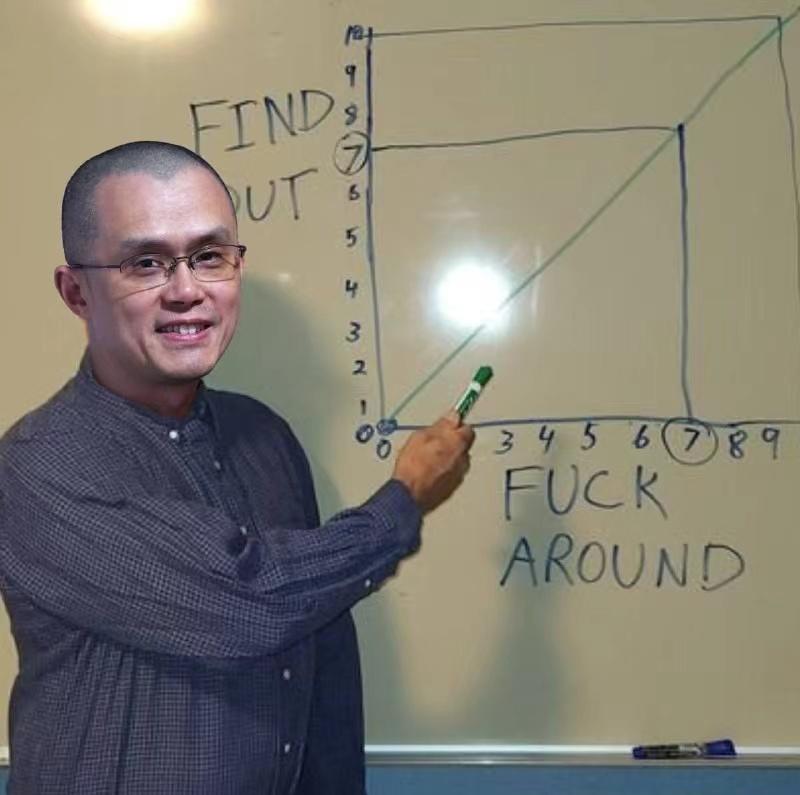
Recently, Andre Cronje, the founder of Yearn.finance, posted a picture on his social platform, hinting that he might make a comeback. In addition, Andre Cronje updated his position on his LinkedIn page, showing that he started working as Vice President of Memes at Fantom Foundation in November 2022. AC, who has been silent for a long time, spoke out today and summarized a lot of past lessons (and used CZ's photo as the cover photo). Is he going to provide some industry advice for Binance and FTX?
The pits I stepped on
Fantom — Token economy. The team itself does not have enough funds, and the "top 10" projects are all highly centralized and controlled token economies. Investors (especially retail investors) should plan for this.
Yearn — I feel more like someone planting the seeds than a founder, cultivating a more capable community to take over.
Eminence - Don't test in the production phase. Testing is effective in the early stages, but it becomes ineffective when the product is fully launched. I used the same testing method when I built a project from 0 to 1.
Keep3r — Managing expectations. I knew from day one that Keep3r would never reach the scale that Fantom aspired to, it was supposed to be a small, accessible, decentralized Devops platform. It did that, but people were expecting another Yearn or Keep3r. People were happy with the results, but disappointed with the expectations and pressure it put on the token economy.
Fixedforex — It performed well in the beginning and maintained strong principles, but it was issued in the same cycle as USDN, UST, etc., and ultimately failed in its attempt to replicate the success of its competitors. The current team is still trying to recover.
Solidly — its AMM was great and I’m still very happy and proud of its design, but decentralization is the failure point, you can’t have both decentralization and complexity. The successful forks from Solidly’s codebase all centralized user participation in some way. Simple cases can be decentralized, but complex cases can’t. Participants are irrational and their behavior is not in the best interest of the ecosystem. If you don’t build in penalties, chaos will ensue.
Don’t get caught up in other people’s narratives
The Fantom Foundation wallets were worth over 1.5 billion euros at one point. Then there were rumors that I had withdrawn $1 billion from crypto due to my connection to these wallets. This was false, but because I didn’t refute these false claims on Twitter, people assumed it was true. I posted a meme about the Metaverse, and next I was supposed to build the Metaverse on Fantom.
Social media tends to fuel rumors, so the most ridiculous stories become true stories, unless you are prepared to defend anyone in a violent and aggressive manner.
Beware of those who will violently and aggressively attack anyone who speaks out against their lies. I wish I could block this narrative, but the problem is, blocking them is also a narrative.
Don't deify people or projects, accept blame and discuss shortcomings, it's the only way to grow.
Don't assume that what works on a small scale will work on a large scale.
Every time we tried to follow another team's narrative, or tried to play by their rules, we failed. What really worked was hard work on the product.
When I spent 20 hours a day building the Fantom consensus, or 20 hours a day trying to perfect the Yearn strategy, I never thought about the end result, I was just enjoying the process. When the Fantom & Yearn projects progressed to a certain point, I became more concerned about the results rather than the process. If you are obsessed with the results, it will make you busy, which will lead to mistakes, which will take away the fun of the process.
Feedback loop
Be careful about the feedback others give you.
After Solidly, the feedback I received was that my reputation was completely ruined and the best thing I could do was to distance myself from any ventures I was still working on.
Analyze the feedback you get carefully and try to find the most objective feedback. Avoid the typical "survivor bias".
Lessons I Learned
Stick to your own pace.
Don’t seek attention. The crypto industry loves to kill off its “protagonists.”
Enjoy the process, not the result.
Avoid feedback loops that are too subjective.
Don’t get caught up in competitor narratives, if you don’t think something will work but you see it working for a competitor, let it go.
Don't assume that they are wrong just because their design currently works.
Go back to the basics, maintain a mindset of long-term improvement, and continue to challenge yourself at work.
We applied all of the above at Fantom, and we tried several times to replicate the narrative of competing L1s, but failed every time.
I’ve always loved a quote from one of the greatest DeFi founders I consider, who told me when we were discussing most of the narratives that have happened over the past 4 years: “It works, until it doesn’t.”
There are no shortcuts and no overnight success.