

NVIDIA has just unveiled a new computing platform for robots, delivery, and inspection equipment, and AWS and NVIDIA are also extending their collaboration toward agents and physical AI. Meanwhile, Wall Street’s attention is slowly shifting from the trade-show booth to the warehouse floor: can the equipment navigate obstacles, can edge devices respond in time, will a machine swerve around a casually left paper box—or will it stand patiently in place and wait for humans to finish a meeting? No one wants to keep paying long-term bills just for a pretty demo. Everyone is starting to inspect the casing, ask about warranty coverage, and check whether it can reliably repeat ordinary tasks well.
Tech companies are rushing to bring machines into the real world, and ordinary people’s calendars have quietly flipped to September.
How coincidental. Machines are learning how to enter life, while humans prepare to step back into their own second half.
“Golden September and Silver October” sounds like a slogan invented together by job boards, real-estate listings, and auto showrooms. September is full of opportunities, October still has lingering warmth—like an autumn breeze, contracts, positions, and orders just tumble into your arms like sweet osmanthus.
But anyone who has truly lived in it knows: the first piece of gold in “Golden September” usually doesn’t look much like gold.
It could be a message received only at night: “Is it convenient to chat lately?”
Maybe it’s a resume that’s been revised seven times and you still feel like you’re writing a missing-person flyer for strangers.
Maybe it’s sales reopening a sleeping client spreadsheet, discovering that in the notes it says “contact after the holidays,” but for a moment they can’t remember which holiday exactly.
It could also be a freelancer saying “let’s go hard in September,” while first spending half a day chasing down that August invoice that still hasn’t been settled. The boss is the client, attendance is the platform, and the year-end bonus is the other side finally confirming “received.”
Factories need to queue new orders, stores have to wait for foot traffic, couriers must remember the access control of a new residential area, teachers need to take attendance again, and parents have to stack their own meeting schedules on top of their kids’ class timetables into a single unreadable subway map. Some people change jobs, some people keep their jobs, some people lead a team for the first time, and some decide to stop working overtime for a relationship that has already broken.
Early on in September, the city often realizes who’s ready to start over before the person does. A breakfast stall has a few people wearing shirts but not having time to fasten their cufflinks; suits that the dry cleaner has pressed are lined up one after another; in the back seat of a ride-hailing car, someone practices self-introduction softly, pausing for too long when they mention their biggest weakness—the driver, being considerate, turns down the navigation volume. On the subway, someone holds a portfolio, while next to them a person deletes and restores a resignation email on their phone. They don’t know each other, yet both treat today like some kind of gateway.
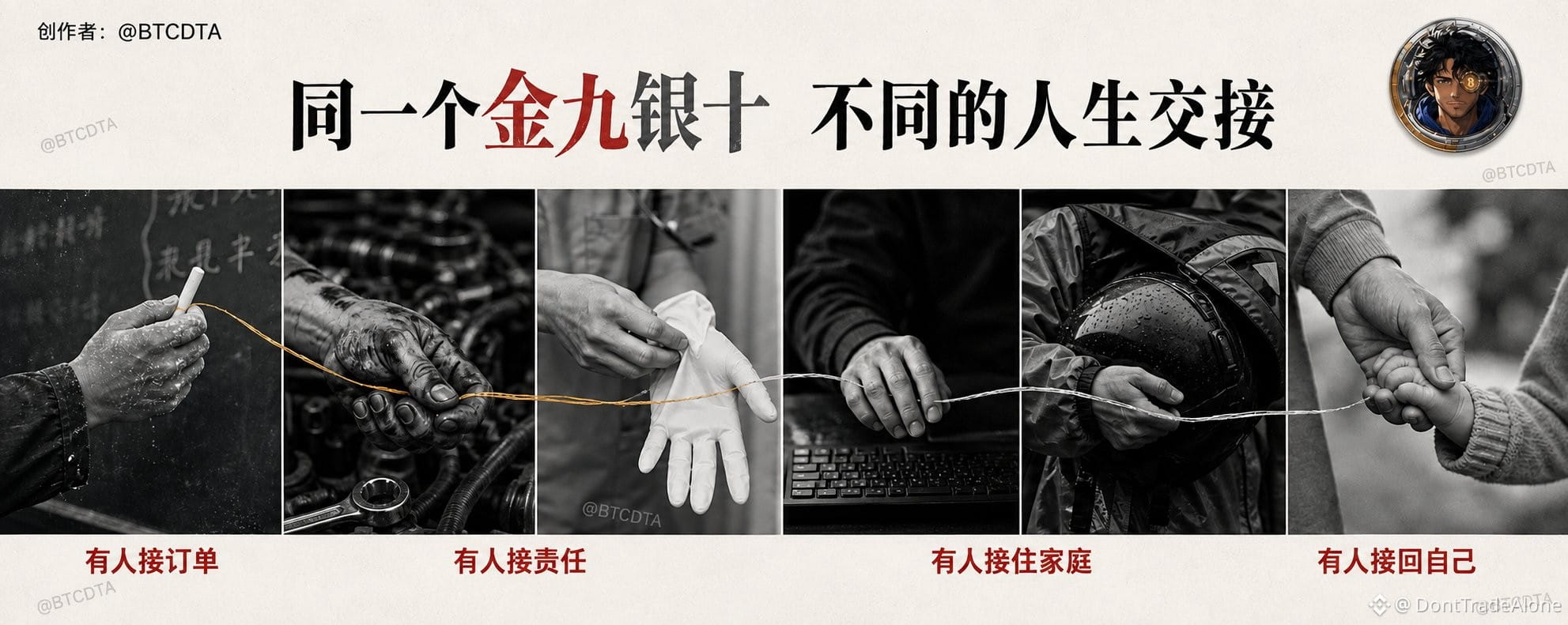
When a person’s job changes, they often need help from half a city just to get through it. Someone makes breakfast for them, someone gets them downstairs on time, someone watches the kids, someone wipes the meeting room clean. That opportunity that looks like it belongs only to one individual in an office building actually has many unnamed hands pressing on it. If “Golden September and Silver October” leaves only hiring notices posted by winners, then don’t overlook the quiet labor that made those outcomes possible.
So I’m increasingly convinced that “Golden September and Silver October” isn’t a guaranteed harvest period—it’s one of the few windows during the year when adults are allowed to start over.
A new plan for January is too grand, March still carries the sluggishness from after the New Year. By September, summer has already dried up the excuses. The weather isn’t as temperamental, and the end of the year is faintly looming in the distance. At last you’re willing to sit down and ask yourself: of the remaining time this year, what do I actually want to finish?
Note: finish, not start twelve things at the same time.
We’re so quick to mistake busyness for progress. Schedules are packed, group chats are pinned, emails are answered before midnight, walking while listening to podcasts, eating while watching industry reports. By the last day, it feels like twenty web pages are opened at the same time—but none of them have loaded. The fan is loud, yet not a single page finishes loading.
What AI is best at is exactly this state of always being online. It doesn’t get tired, doesn’t feel awkward, and doesn’t need to go take a deep breath in a restroom after meetings end. If people insist on racing machines to see who can look more like a machine, winning only earns a more stable kind of fatigue.
Robots really will take on some repetitive labor, and AI will make certain skills that used to be valuable quickly become cheap. Saying you don’t need to worry at all is like smearing anxiety with the taste of mint; saying everyone will be unemployed right away is like selling umbrellas with a loudspeaker. A more practical question is: when execution gets cheaper and cheaper, what still deserves to have others hand you the responsibility?
What I think of isn’t writing better prompts—it’s a few very dumb things.
Understand the part behind a sentence that isn’t said. Realize that the goal itself was set wrong. Know when to keep going and when you must stop. Be willing to stay and explain when the results aren’t good, instead of gently putting the blame on the algorithm’s head. And when everyone is urging you to answer quickly, keep a little slowness that refuses to agree at random.
These abilities aren’t suitable for cutting into a fifteen-second demo, but they fit perfectly for a long working life.
If September really brings gold, I hope it won’t be in longer working hours, but in clearer choices.
Revise your resume, but don’t turn yourself into an all-purpose plug. Organize clients, but also delete partnerships that only consume your dignity. Learn new tools, but don’t try to prove you haven’t been left behind by the times—memorize every new term like it’s mental debt. Go after raises, opportunities, and orders, and also leave a seat for sleep, for your family, and for that version of yourself who hasn’t produced anything yet.
Some people get promoted in September, some leave in September, some have an overflowing order backlog, and some just finally get the health checkup appointment they’ve delayed for two months sorted out. They may not all make it onto social media posts, but they all move life forward by one step.
Adults don’t get a uniform pay raise season. Other people’s “Golden September” might be your repair month; other people’s “Silver October” might be when you quietly build the foundation. As long as you’re not performing according to someone else’s schedule, it doesn’t count as missing out.
September shines new opportunities; October brings out the fingerprints. No matter how far commuting really is, whose weekends really belong to, whether the promised growth turns three people’s full workloads into one position—these questions usually aren’t written in the welcome email. Getting an opportunity is of course worth celebrating, but only choosing it after seeing the true cost is how you really secure the opportunity.
The goals I leave for this autumn are small: finish something truly important, refuse something that clearly isn’t worth it, and then sincerely thank someone who once caught you.
As for whether gold will come, I can’t promise.
But when September’s alarm clock goes off, at least you can first tie your shoelaces. Not to run faster than everyone else, but to stop tripping over yesterday when you’re walking your own path.
