
叮当 Doraemon
228 Posts

叮当 Doraemon
5年炒币亏成狗,2026埋头苦干web3
486 Following
29.9K+ Followers
31.4K+ Liked
Posts
All
Quotes
Videos
PINNED
Bitcoin and U.S. stocks are significantly decoupling, similar to the prelude to the 2017 Bitcoin bull market
On September 6, crypto analyst Willy Woo posted that Bitcoin's trend is significantly decoupling from that of U.S. stocks. The last time such a degree of decoupling occurred was in 2015, which was the prelude to the 2017 Bitcoin bull market.
In 2014, the stock market was still in a bull market, while BTC experienced a bear market unrelated to stock market trends. From 2015 to 2016, the stock market fluctuated weakly for two consecutive years, but BTC entered a bull market; then in 2017, when the stock market also turned bullish, BTC rose further and sharply.
Willy Woo believes the current market structure is similar to that time: BTC liquidity continues to strengthen, while the stock market is beginning to show signs of fragility.
This time, the bull market is really here
On September 6, crypto analyst Willy Woo posted that Bitcoin's trend is significantly decoupling from that of U.S. stocks. The last time such a degree of decoupling occurred was in 2015, which was the prelude to the 2017 Bitcoin bull market.
In 2014, the stock market was still in a bull market, while BTC experienced a bear market unrelated to stock market trends. From 2015 to 2016, the stock market fluctuated weakly for two consecutive years, but BTC entered a bull market; then in 2017, when the stock market also turned bullish, BTC rose further and sharply.
Willy Woo believes the current market structure is similar to that time: BTC liquidity continues to strengthen, while the stock market is beginning to show signs of fragility.
This time, the bull market is really here

PINNED

奕澤YiiiiiZze
·
--
🧧🎁
The wind sweeps across the mountains and fields, rushing toward the next mountains and seas.
All perseverance will eventually meet the light that belongs to itself.
——Lucic
The wind sweeps across the mountains and fields, rushing toward the next mountains and seas.
All perseverance will eventually meet the light that belongs to itself.
——Lucic

666

币圈淘金小旋风
·
--
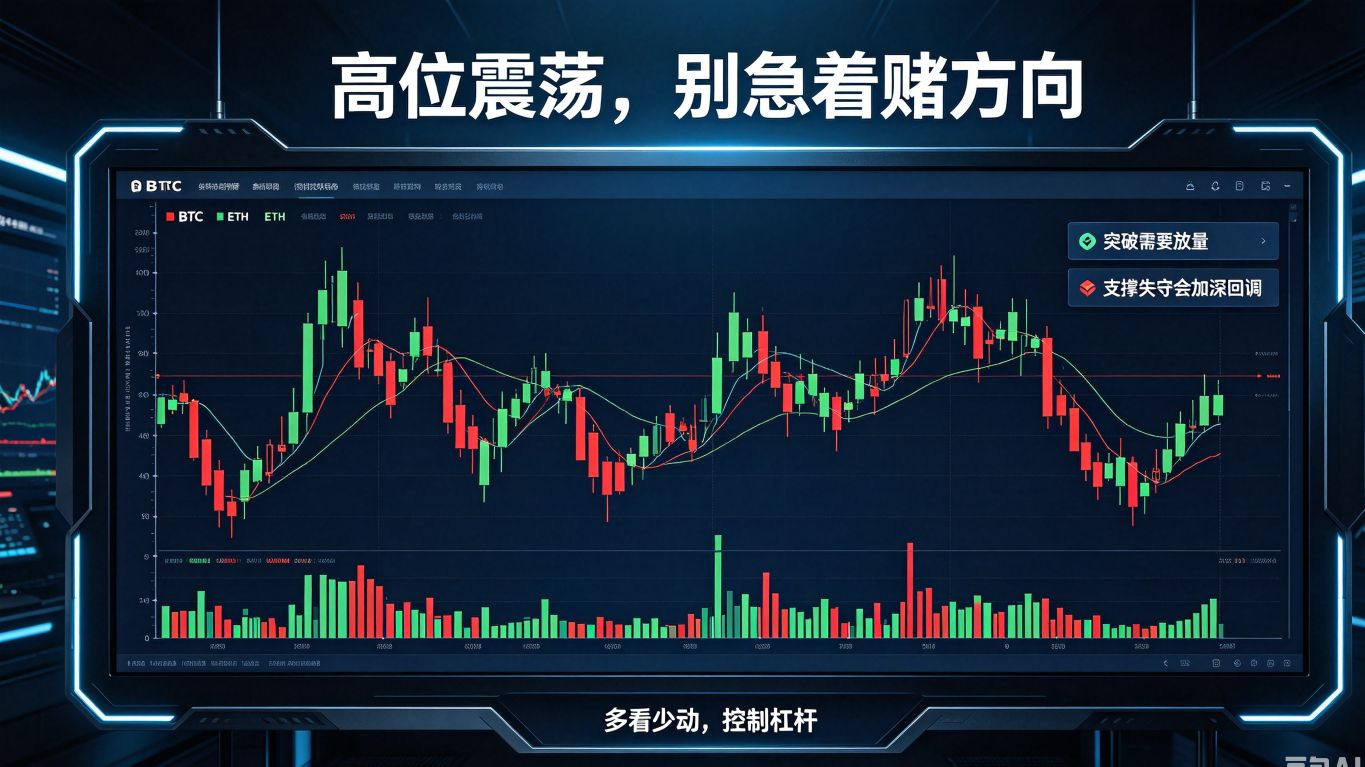
Today’s market is basically just grinding around at high levels. $BTC is now repeatedly tugging back and forth near the 80,000 mark, and $ETH is oscillating along with it. Neither bulls nor bears have gained the upper hand. A lot of friends are asking whether it can directly break to a new high. To be honest, it’s not easy to surge up in one go right now. 💥
A few days ago, the non-farm payroll data came in above expectations, and expectations for the Fed to raise rates suddenly rose. This is a sword hanging over the crypto market. Looking at the chart now, support is still holding, and the decline hasn’t continued with heavy volume, which means long-term funds haven’t fled on a large scale, and the overall bull-market structure hasn’t been broken for now. But the upward momentum has clearly weakened. Every time price tries to push higher, sell orders come in to knock it back down. This is a typical consolidation-and-build-up range. 💥
If we really want to break to a new high, there’s a key point: it must break above the resistance level with strong volume and hold there. Otherwise, it’s all false breakouts—price pops up and then pulls back, and chasing the rally easily leaves you trapped at the top. If the current support level can’t hold, then a deeper correction will follow. 💥
At this stage, it’s not recommended to blindly take a heavy position and bet on direction. Whether going long or short, don’t use high leverage. Before the market shows a clear direction, watch more and trade less. Crypto is extremely volatile, and news can change at any time, so don’t blindly enter just because others are shouting signals. 💥#伊朗将设霍尔木兹海峡限制区 #美国空袭伊朗油轮德黑兰限制霍尔木兹海峡 #ZEC续刷历史新高
A few days ago, the non-farm payroll data came in above expectations, and expectations for the Fed to raise rates suddenly rose. This is a sword hanging over the crypto market. Looking at the chart now, support is still holding, and the decline hasn’t continued with heavy volume, which means long-term funds haven’t fled on a large scale, and the overall bull-market structure hasn’t been broken for now. But the upward momentum has clearly weakened. Every time price tries to push higher, sell orders come in to knock it back down. This is a typical consolidation-and-build-up range. 💥
If we really want to break to a new high, there’s a key point: it must break above the resistance level with strong volume and hold there. Otherwise, it’s all false breakouts—price pops up and then pulls back, and chasing the rally easily leaves you trapped at the top. If the current support level can’t hold, then a deeper correction will follow. 💥
At this stage, it’s not recommended to blindly take a heavy position and bet on direction. Whether going long or short, don’t use high leverage. Before the market shows a clear direction, watch more and trade less. Crypto is extremely volatile, and news can change at any time, so don’t blindly enter just because others are shouting signals. 💥#伊朗将设霍尔木兹海峡限制区 #美国空袭伊朗油轮德黑兰限制霍尔木兹海峡 #ZEC续刷历史新高



路飞社区糖宝Luffy
·
--
Hello, Sugar Baby appears with dazzling brilliance $SOL . Take a breath of fresh air first, the show starts on time at 13.30. Welcome, mwah mwah.


必按666 势不可挡
·
--
Damn, even this thing called 3Y2 has been listed on Binance. Next up are Geely, Great Wall, and Changan—are they going to get listed too? Will other brands all go there in a while to compete as well? Ordinary Chinese people aren’t allowed to play up there, but they can openly play. Xiaomi, UBTECH Robotics, and BYD are all here now. I don’t believe the people above don’t know what this means. So the implication is only that you can make money, and we can only keep honestly being wage slaves, working the assembly line, and paying a 30-year mortgage, right? I’m going to the damn... those who get it, get it 😫😫😫
#BTC触及80000美元
#BTC触及80000美元




晚风Vesper_1688
·
--
🌙As night falls and the colors of dusk spread, seek a sense of inner peace🍃
Market ups and downs are the norm📊,
so there is no need to let a single day’s gains or losses sway your emotions.
Trading is a journey of inner cultivation; learn to step back at the right time and let yourself settle🕯️.
Set aside the noise and distractions from the outside world, and hold on to your own rhythm and judgment✨.
Stay calm, build your strength, and time will eventually reward every steady act of persistence💎.
To fellow travelers walking side by side🌌
#交易心理
#ZEC续刷历史新高
#1688家族family
Market ups and downs are the norm📊,
so there is no need to let a single day’s gains or losses sway your emotions.
Trading is a journey of inner cultivation; learn to step back at the right time and let yourself settle🕯️.
Set aside the noise and distractions from the outside world, and hold on to your own rhythm and judgment✨.
Stay calm, build your strength, and time will eventually reward every steady act of persistence💎.
To fellow travelers walking side by side🌌
#交易心理
#ZEC续刷历史新高
#1688家族family




静心1688
·
--
💥Everyone in the world competes for the high ground, for fame and profit, for victory and defeat, yet they do not realize that by not competing, one can never be competed against. In life, arguing over right and wrong, obsessing over gains and losses, and fighting for superiority will ultimately only drain yourself and breed trouble. True strength is never being aggressive or sharp-edged; rather, it is like water—soft, inclusive, steady, and open-minded. Treat others with tolerance and generosity, know how to step back and let go when facing matters, stay low-key and restrained, and nourish things silently. Accumulate strength in quiet refinement, and achieve yourself in calm composure. This is the highest realm of “non-contention.”
#ZEC市值超越DOGE #比特币ETF创1月以来最大单日流入
#ZEC市值超越DOGE #比特币ETF创1月以来最大单日流入

@阿波罗1111 罗1111

阿波罗1111
·
--
With light as our guide, we move toward clarity. LUCIC, witness the power of authenticity.
Take light as our creed, march toward clarity. LUCIC, witness the power of truth.
Take light as our creed, march toward clarity. LUCIC, witness the power of truth.

Early

@钞机八蛋
is speaking[LIVE] 🎙️ Bitcoin is at 80,000 / Is this a buying opportunity?
7.5k listens

@叮当 Doraemon 🧧🧧🧧🧧🧧
叮当 Doraemon
·
--
BullishBitcoin and U.S. stocks are significantly decoupling, similar to the prelude to the 2017 Bitcoin bull market
On September 6, crypto analyst Willy Woo posted that Bitcoin's trend is significantly decoupling from that of U.S. stocks. The last time such a degree of decoupling occurred was in 2015, which was the prelude to the 2017 Bitcoin bull market.
In 2014, the stock market was still in a bull market, while BTC experienced a bear market unrelated to stock market trends. From 2015 to 2016, the stock market fluctuated weakly for two consecutive years, but BTC entered a bull market; then in 2017, when the stock market also turned bullish, BTC rose further and sharply.
Willy Woo believes the current market structure is similar to that time: BTC liquidity continues to strengthen, while the stock market is beginning to show signs of fragility.
This time, the bull market is really here
On September 6, crypto analyst Willy Woo posted that Bitcoin's trend is significantly decoupling from that of U.S. stocks. The last time such a degree of decoupling occurred was in 2015, which was the prelude to the 2017 Bitcoin bull market.
In 2014, the stock market was still in a bull market, while BTC experienced a bear market unrelated to stock market trends. From 2015 to 2016, the stock market fluctuated weakly for two consecutive years, but BTC entered a bull market; then in 2017, when the stock market also turned bullish, BTC rose further and sharply.
Willy Woo believes the current market structure is similar to that time: BTC liquidity continues to strengthen, while the stock market is beginning to show signs of fragility.
This time, the bull market is really here

@叮当 Doraemon 🧧🧧🧧🧧🧧
叮当 Doraemon
·
--
The Dawn of the Fomo Dynasty The Collapse of Smart Money and the Ticket Scalper
After MEME exploded on RobinHood and Fomo, these past few days X has been flooded with tools for tracking Fomo addresses. Click any post at random and it’s all KOLs “summarizing Fomo-related tools” for everyone: for example, enter a Fomo username to resolve the address it’s linked to, then copy it with one click; or, conversely, take an on-chain address and look up which Fomo account it corresponds to. You can even batch-identify them on block explorers and various chart pages; there are leaderboards, profit stats, APIs, and Chrome extensions.
There’s even a “prehistoric method” — open the other person’s profile, press F12, and check the address field directly in the network request response. The comments are full of thanks, and the people reposting it call it “godlike.” From 2017 to now, stuff like this has appeared in every rally, but this time, everyone failed to realize that this thing is already useless.
There’s even a “prehistoric method” — open the other person’s profile, press F12, and check the address field directly in the network request response. The comments are full of thanks, and the people reposting it call it “godlike.” From 2017 to now, stuff like this has appeared in every rally, but this time, everyone failed to realize that this thing is already useless.

@叮当 Doraemon 🧧🧧🧧🧧🧧
叮当 Doraemon
·
--
BullishBitcoin and U.S. stocks are significantly decoupling, similar to the prelude to the 2017 Bitcoin bull market
On September 6, crypto analyst Willy Woo posted that Bitcoin's trend is significantly decoupling from that of U.S. stocks. The last time such a degree of decoupling occurred was in 2015, which was the prelude to the 2017 Bitcoin bull market.
In 2014, the stock market was still in a bull market, while BTC experienced a bear market unrelated to stock market trends. From 2015 to 2016, the stock market fluctuated weakly for two consecutive years, but BTC entered a bull market; then in 2017, when the stock market also turned bullish, BTC rose further and sharply.
Willy Woo believes the current market structure is similar to that time: BTC liquidity continues to strengthen, while the stock market is beginning to show signs of fragility.
This time, the bull market is really here
On September 6, crypto analyst Willy Woo posted that Bitcoin's trend is significantly decoupling from that of U.S. stocks. The last time such a degree of decoupling occurred was in 2015, which was the prelude to the 2017 Bitcoin bull market.
In 2014, the stock market was still in a bull market, while BTC experienced a bear market unrelated to stock market trends. From 2015 to 2016, the stock market fluctuated weakly for two consecutive years, but BTC entered a bull market; then in 2017, when the stock market also turned bullish, BTC rose further and sharply.
Willy Woo believes the current market structure is similar to that time: BTC liquidity continues to strengthen, while the stock market is beginning to show signs of fragility.
This time, the bull market is really here
@叮当 Doraemon 🧧🧧🧧🧧🧧
叮当 Doraemon
·
--
The Dawn of the Fomo Dynasty The Collapse of Smart Money and the Ticket Scalper
After MEME exploded on RobinHood and Fomo, these past few days X has been flooded with tools for tracking Fomo addresses. Click any post at random and it’s all KOLs “summarizing Fomo-related tools” for everyone: for example, enter a Fomo username to resolve the address it’s linked to, then copy it with one click; or, conversely, take an on-chain address and look up which Fomo account it corresponds to. You can even batch-identify them on block explorers and various chart pages; there are leaderboards, profit stats, APIs, and Chrome extensions.
There’s even a “prehistoric method” — open the other person’s profile, press F12, and check the address field directly in the network request response. The comments are full of thanks, and the people reposting it call it “godlike.” From 2017 to now, stuff like this has appeared in every rally, but this time, everyone failed to realize that this thing is already useless.
There’s even a “prehistoric method” — open the other person’s profile, press F12, and check the address field directly in the network request response. The comments are full of thanks, and the people reposting it call it “godlike.” From 2017 to now, stuff like this has appeared in every rally, but this time, everyone failed to realize that this thing is already useless.
Follow @叮当 Doraemon 🧧🧧🧧🧧🧧
叮当 Doraemon
·
--
BullishBitcoin and U.S. stocks are significantly decoupling, similar to the prelude to the 2017 Bitcoin bull market
On September 6, crypto analyst Willy Woo posted that Bitcoin's trend is significantly decoupling from that of U.S. stocks. The last time such a degree of decoupling occurred was in 2015, which was the prelude to the 2017 Bitcoin bull market.
In 2014, the stock market was still in a bull market, while BTC experienced a bear market unrelated to stock market trends. From 2015 to 2016, the stock market fluctuated weakly for two consecutive years, but BTC entered a bull market; then in 2017, when the stock market also turned bullish, BTC rose further and sharply.
Willy Woo believes the current market structure is similar to that time: BTC liquidity continues to strengthen, while the stock market is beginning to show signs of fragility.
This time, the bull market is really here
On September 6, crypto analyst Willy Woo posted that Bitcoin's trend is significantly decoupling from that of U.S. stocks. The last time such a degree of decoupling occurred was in 2015, which was the prelude to the 2017 Bitcoin bull market.
In 2014, the stock market was still in a bull market, while BTC experienced a bear market unrelated to stock market trends. From 2015 to 2016, the stock market fluctuated weakly for two consecutive years, but BTC entered a bull market; then in 2017, when the stock market also turned bullish, BTC rose further and sharply.
Willy Woo believes the current market structure is similar to that time: BTC liquidity continues to strengthen, while the stock market is beginning to show signs of fragility.
This time, the bull market is really here
@叮当 Doraemon 🧧🧧🧧🧧🧧
叮当 Doraemon
·
--
The Dawn of the Fomo Dynasty The Collapse of Smart Money and the Ticket Scalper
After MEME exploded on RobinHood and Fomo, these past few days X has been flooded with tools for tracking Fomo addresses. Click any post at random and it’s all KOLs “summarizing Fomo-related tools” for everyone: for example, enter a Fomo username to resolve the address it’s linked to, then copy it with one click; or, conversely, take an on-chain address and look up which Fomo account it corresponds to. You can even batch-identify them on block explorers and various chart pages; there are leaderboards, profit stats, APIs, and Chrome extensions.
There’s even a “prehistoric method” — open the other person’s profile, press F12, and check the address field directly in the network request response. The comments are full of thanks, and the people reposting it call it “godlike.” From 2017 to now, stuff like this has appeared in every rally, but this time, everyone failed to realize that this thing is already useless.
There’s even a “prehistoric method” — open the other person’s profile, press F12, and check the address field directly in the network request response. The comments are full of thanks, and the people reposting it call it “godlike.” From 2017 to now, stuff like this has appeared in every rally, but this time, everyone failed to realize that this thing is already useless.
@叮当 Doraemon Follow to receive 🧧🧧🧧🧧🧧
叮当 Doraemon
·
--
BullishBitcoin and U.S. stocks are significantly decoupling, similar to the prelude to the 2017 Bitcoin bull market
On September 6, crypto analyst Willy Woo posted that Bitcoin's trend is significantly decoupling from that of U.S. stocks. The last time such a degree of decoupling occurred was in 2015, which was the prelude to the 2017 Bitcoin bull market.
In 2014, the stock market was still in a bull market, while BTC experienced a bear market unrelated to stock market trends. From 2015 to 2016, the stock market fluctuated weakly for two consecutive years, but BTC entered a bull market; then in 2017, when the stock market also turned bullish, BTC rose further and sharply.
Willy Woo believes the current market structure is similar to that time: BTC liquidity continues to strengthen, while the stock market is beginning to show signs of fragility.
This time, the bull market is really here
On September 6, crypto analyst Willy Woo posted that Bitcoin's trend is significantly decoupling from that of U.S. stocks. The last time such a degree of decoupling occurred was in 2015, which was the prelude to the 2017 Bitcoin bull market.
In 2014, the stock market was still in a bull market, while BTC experienced a bear market unrelated to stock market trends. From 2015 to 2016, the stock market fluctuated weakly for two consecutive years, but BTC entered a bull market; then in 2017, when the stock market also turned bullish, BTC rose further and sharply.
Willy Woo believes the current market structure is similar to that time: BTC liquidity continues to strengthen, while the stock market is beginning to show signs of fragility.
This time, the bull market is really here
@叮当 Doraemon 🧧🧧🧧🧧🧧
叮当 Doraemon
·
--
The Dawn of the Fomo Dynasty The Collapse of Smart Money and the Ticket Scalper
After MEME exploded on RobinHood and Fomo, these past few days X has been flooded with tools for tracking Fomo addresses. Click any post at random and it’s all KOLs “summarizing Fomo-related tools” for everyone: for example, enter a Fomo username to resolve the address it’s linked to, then copy it with one click; or, conversely, take an on-chain address and look up which Fomo account it corresponds to. You can even batch-identify them on block explorers and various chart pages; there are leaderboards, profit stats, APIs, and Chrome extensions.
There’s even a “prehistoric method” — open the other person’s profile, press F12, and check the address field directly in the network request response. The comments are full of thanks, and the people reposting it call it “godlike.” From 2017 to now, stuff like this has appeared in every rally, but this time, everyone failed to realize that this thing is already useless.
There’s even a “prehistoric method” — open the other person’s profile, press F12, and check the address field directly in the network request response. The comments are full of thanks, and the people reposting it call it “godlike.” From 2017 to now, stuff like this has appeared in every rally, but this time, everyone failed to realize that this thing is already useless.
@叮当 Doraemon 🧧🧧🧧🧧🧧
叮当 Doraemon
·
--
BullishBitcoin and U.S. stocks are significantly decoupling, similar to the prelude to the 2017 Bitcoin bull market
On September 6, crypto analyst Willy Woo posted that Bitcoin's trend is significantly decoupling from that of U.S. stocks. The last time such a degree of decoupling occurred was in 2015, which was the prelude to the 2017 Bitcoin bull market.
In 2014, the stock market was still in a bull market, while BTC experienced a bear market unrelated to stock market trends. From 2015 to 2016, the stock market fluctuated weakly for two consecutive years, but BTC entered a bull market; then in 2017, when the stock market also turned bullish, BTC rose further and sharply.
Willy Woo believes the current market structure is similar to that time: BTC liquidity continues to strengthen, while the stock market is beginning to show signs of fragility.
This time, the bull market is really here
On September 6, crypto analyst Willy Woo posted that Bitcoin's trend is significantly decoupling from that of U.S. stocks. The last time such a degree of decoupling occurred was in 2015, which was the prelude to the 2017 Bitcoin bull market.
In 2014, the stock market was still in a bull market, while BTC experienced a bear market unrelated to stock market trends. From 2015 to 2016, the stock market fluctuated weakly for two consecutive years, but BTC entered a bull market; then in 2017, when the stock market also turned bullish, BTC rose further and sharply.
Willy Woo believes the current market structure is similar to that time: BTC liquidity continues to strengthen, while the stock market is beginning to show signs of fragility.
This time, the bull market is really here
Has the bull market started?
叮当 Doraemon
·
--
BullishBitcoin and U.S. stocks are significantly decoupling, similar to the prelude to the 2017 Bitcoin bull market
On September 6, crypto analyst Willy Woo posted that Bitcoin's trend is significantly decoupling from that of U.S. stocks. The last time such a degree of decoupling occurred was in 2015, which was the prelude to the 2017 Bitcoin bull market.
In 2014, the stock market was still in a bull market, while BTC experienced a bear market unrelated to stock market trends. From 2015 to 2016, the stock market fluctuated weakly for two consecutive years, but BTC entered a bull market; then in 2017, when the stock market also turned bullish, BTC rose further and sharply.
Willy Woo believes the current market structure is similar to that time: BTC liquidity continues to strengthen, while the stock market is beginning to show signs of fragility.
This time, the bull market is really here
On September 6, crypto analyst Willy Woo posted that Bitcoin's trend is significantly decoupling from that of U.S. stocks. The last time such a degree of decoupling occurred was in 2015, which was the prelude to the 2017 Bitcoin bull market.
In 2014, the stock market was still in a bull market, while BTC experienced a bear market unrelated to stock market trends. From 2015 to 2016, the stock market fluctuated weakly for two consecutive years, but BTC entered a bull market; then in 2017, when the stock market also turned bullish, BTC rose further and sharply.
Willy Woo believes the current market structure is similar to that time: BTC liquidity continues to strengthen, while the stock market is beginning to show signs of fragility.
This time, the bull market is really here
Log in to explore more content