


Today, the crypto sphere has been swept by an explosive warning: the CEO of the gold investment app Vaulted and well-known “gold veteran” David McAlvany has made terrifying remarks—that quantum computing will completely end Bitcoin within the next 4 years!

Once quantum computers become powerful enough to instantly crack the encryption algorithms protecting Bitcoin private keys, the underlying logic of the entire crypto world will be breached. Is this spreading panic (FUD), or is it an unavoidable gray rhinoceros?
For you, a deep breakdown of the three hard-core truths and the wealth game behind this “quantum crisis”:
⚠️ 1. A fatal threat: has 30% of Bitcoin already gone “half-naked”?
Currently, the security foundation of Bitcoin is public-key cryptography. However, based on on-chain data estimates by Galaxy Digital and Glassnode, there are now approximately 6 million to 7 million BTC (about 30.2% of total supply, worth an astonishing $470 billion) that have already had their public keys exposed. What does this mean? While public-key exposure does not equal assets being stolen, in the face of quantum computers, these addresses are like “transparent safes.” Once quantum computing breakthroughs are achieved, hackers could derive your private key directly from the public key and instantly drain your assets!
⚔️ 2. A community rift: to prevent hackers, should we “seize” Satoshi’s coins?
Faced with the quantum Damocles’ sword hanging overhead, Bitcoin’s core developers are in uproar. At the moment, there are mainly two proposed approaches to counter it:
The moderates (BIP-360): Add a brand-new anti-quantum address, so everyone can gradually move their coins over.
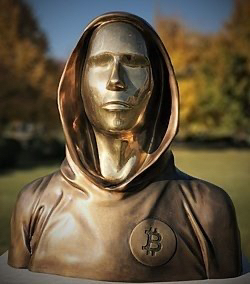
The radicals (BIP-361): Set a final deadline and stop supporting old addresses in stages. If you don’t migrate in time, your assets will be permanently frozen! The most shocking point of controversy is this: those early sleeping whale addresses, including the hundreds of thousands of BTC held by Satoshi himself, most likely will not proactively migrate. If BIP-361 is executed, it’s effectively a forced “seizure” of those early holdings. Supporters say this is protecting the market from a hacker-caused selloff, while opponents are furious, calling it a betrayal of Bitcoin’s spirit of “private property is sacred and inviolable.”
💰 3. The smart money’s instincts: capital has long been positioning itself for an “anti-quantum track”
Don’t just panic—look at what Wall Street is doing. At its core, this crisis is a showdown between traditional safe-haven assets (gold) and protocol-based assets (Bitcoin). Right now, no quantum computer exists that can crack BTC, and the 4-year timeline is only McAlvany’s personal speculation. But that hasn’t stopped capital: startups focused on cross-chain anti-quantum solutions (e.g., American Fortress) have recently easily raised $8 million in a seed round. Capital is always profit-driven—they’re not selling in panic; they’re betting early on infrastructure and technology paths related to “quantum defense.”
💡 Summary and takeaway: Gold supporters always crush Bitcoin with the argument of “it exists for 5,000 years.” But Bitcoin has never been a stationary stone—it’s a piece of live code that can keep evolving. The quantum threat is real, but an anti-quantum upgrade is inevitable too. The next epic Bitcoin hard fork or major network upgrade is very likely to revolve around “anti-quantum migration.”
For ordinary investors like us: you don’t need to rush to sell your BTC, but you should definitely closely monitor BIP upgrade developments on the Bitcoin network in the coming years. Once the anti-quantum upgrade kicks off, the related technology service providers and underlying narratives will inevitably generate an entirely new set of wealth-passwords—100 times the fortune!
Do you think Satoshi’s Bitcoin will one day be forcibly frozen because of an “anti-quantum upgrade”? Share your thoughts in the comments!
