


When two veterans of the alliance chain and traditional finance decide to tackle real-world asset issues with Web3.
Written by: Eric, Foresight News
On April 28, 2026, at 6 PM, Wish Wu announced the launch of the Pharos mainnet in the work group, and Pharos officially released a statement saying, 'Pacific Ocean Mainnet is LIVE.' This not only marks the birth of a new public chain but also signifies that a group of tech talents who left China's largest fintech company have finally rewritten their compliance experience from the alliance chain era into public chain primitives.
At this moment, it has been exactly 20 months since he and Alex Zhang left Ant Group to start their venture.
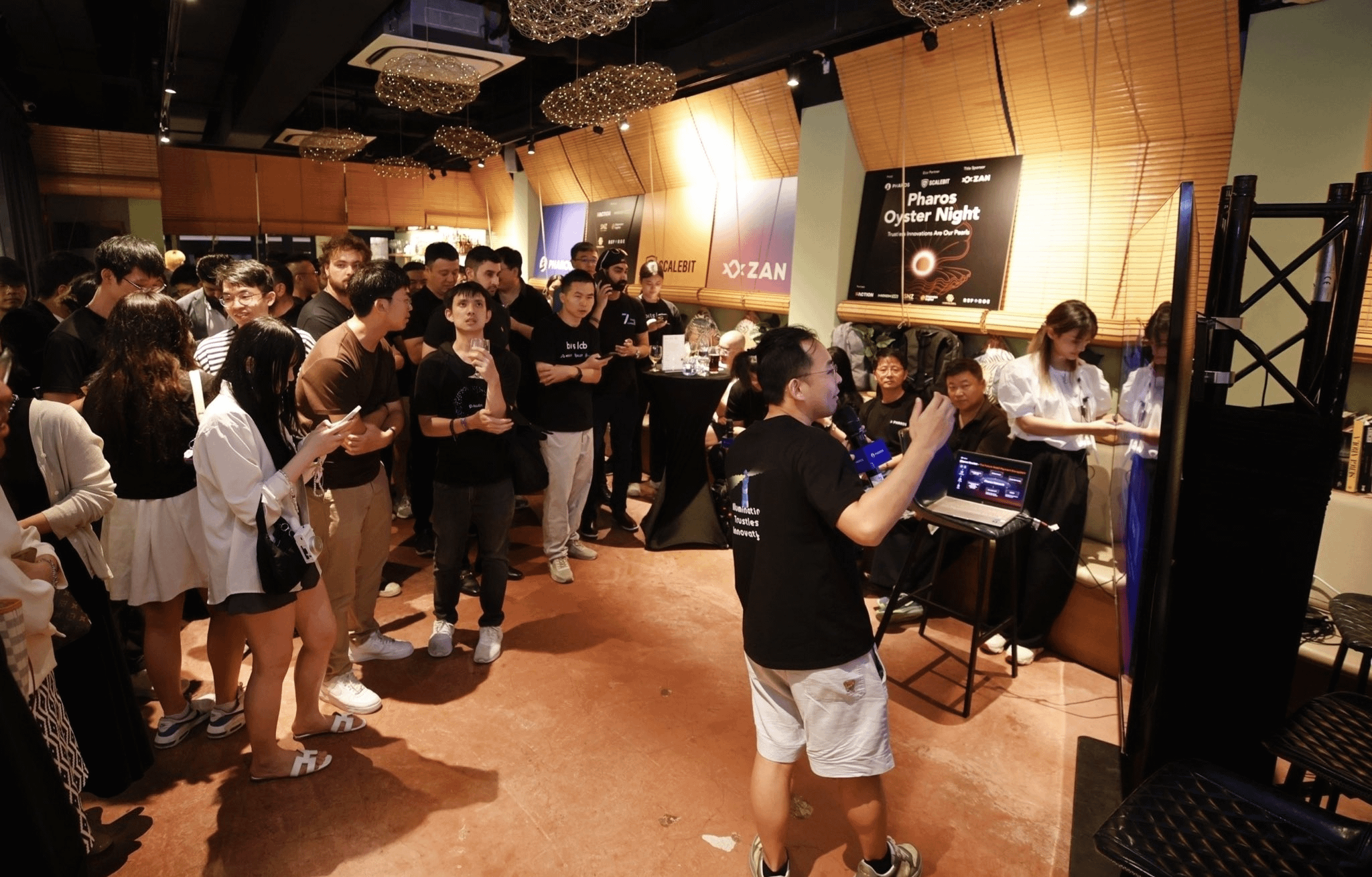
In September 2024, Pharos held its first offline event, where Wish introduced the project to attendees.
Institutional blockchain aspirations
If you attended any crypto finance summit in Singapore or Hong Kong in the past two years, you may have noticed a subtle change: bankers, asset management institutions, and regulatory representatives on stage no longer discuss the old topic of 'is blockchain a scam?'. They discuss another more specific dilemma: we really like the settlement efficiency and transparency of blockchain, but can we not bring over all its features intact?
This seemingly contradictory demand is precisely the core tension in the RWA tokenization space over the past three years.
In July 2025, the passage of the U.S. (GENIUS Act) acted as a key, unlocking the floodgates of institutional capital into tokenized assets. According to data from RWA.xyz, the total market value of on-chain tokenized assets skyrocketed from about $8.8 billion in April 2025 to nearly $30 billion in April 2026, with an annual growth rate exceeding 240%. Names like BlackRock's BUIDL fund, Circle's USYC, and Franklin Templeton's on-chain money market fund, which once only appeared in traditional finance, are now frequently seen in blockchain explorers' contract addresses.
Yet behind the shiny figures, a structural dilemma always looms.
Public chains on the market present two extremes: on one end are permissionless public chains like Ethereum and Solana, which advocate complete transparency and decentralization but fail to meet the basic requirements of financial institutions for privacy protection, compliance checks, and trade secrets; on the other end are consortium chains like Hyperledger Fabric and R3 Corda, which allow for fine-grained control of access and permissions but sacrifice the liquidity aggregation and composability of an open network. Yet it is precisely this composability that has driven incredible financial innovation in DeFi over the past few years.
This 'dilemma' has been heard too many times by Wish Wu and Alex Zhang during their tenure at Ant Group.
"At that time, we were in Ant's Web3 business line ZAN, where we almost interacted with all major institutional clients wanting to enter on-chain finance - traditional enterprises, cross-border payment platforms, banks, and asset management companies," Wish Wu recalled. "They repeatedly mentioned the same pain point: it's not that they reject blockchain; they just can't find a public chain truly designed for institutional compliance and privacy needs."
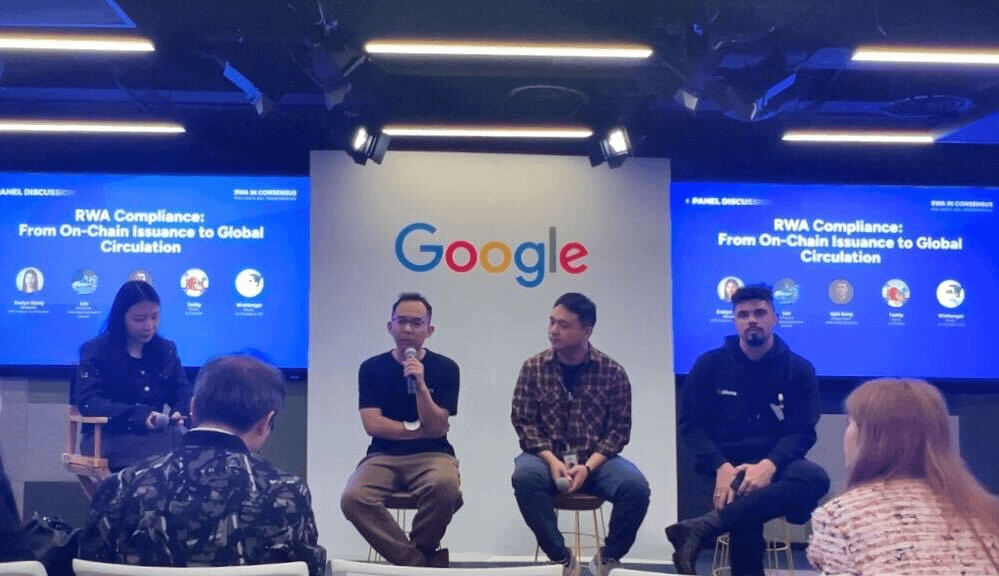
In February 2025, Wish participated as a guest in the RWA in Consensus Panel.
During their time at Ant Group, they gradually formed a clearer judgment: the compliance experience of consortium chains and the open liquidity of public chains should not be an either-or issue. The market urgently needs a 'middle ground': one that can share liquidity, be composable and verifiable like public chains, while embedding compliance and privacy protection mechanisms at the protocol level.
This judgment ultimately prompted them to make a decision in 2024 that garnered significant attention: leaving Ant Group and starting from scratch to build a public chain.
They named the chain Pharos, derived from the ancient Greek word for 'lighthouse'.
Starting from Ant, aiming for real-world finance.
Pharos has a team with a unique blend of academic depth, industry experience, and financial background.
The two co-founders mentioned above were both senior executives at Ant Group's Web3 business company ZAN. Wish Wu was the Chief Security Officer (CSO) of ZAN and had previously worked at Microsoft Research Asia, specializing in distributed systems and network security protocols, and studied at Shanghai Jiao Tong University, Virginia Tech, and the University of Southern California; Alex Zhang was the CTO of Ant Digital and the CEO of ZAN, also serving as vice-chair of the IEEE Blockchain Standards Committee, making significant contributions to international blockchain standardization.
Even with such an experienced configuration, the difficulties faced in the early stages of entrepreneurship were far more tangible than imagined.
"The education cost is extremely high," Wish Wu admitted, "Traditional financial institutions need to understand what 'privacy-preserving' means. It's not 'complete anonymity', but 'selective disclosure under the premise of compliance and auditability'. This concept is counterintuitive, and we've spent a lot of time breaking it down, demonstrating, and educating." Meanwhile, the team must also find its answer to the industry-level dilemma of survival on public chains: what to do, what not to do, and how to position.
However, these challenges ultimately transformed into Pharos's technical moat. As Wish Wu stated, 'These things were refined through countless discussions and modifications with institutions and enterprises.'
In November 2024, Pharos completed a $8 million seed round financing led by Lightspeed Faction and Hack VC, with participation from institutions like SNZ Capital, Dispersion Capital, and Hash Global. This funding provided a solid foundation for the team's high-intensity development phase. Subsequently, in March 2025, the public developer online launched, followed by the public testnet in May, and by October, the AtlanticOcean testnet achieved full alignment with the mainnet environment, maintaining a tight and steady pace.
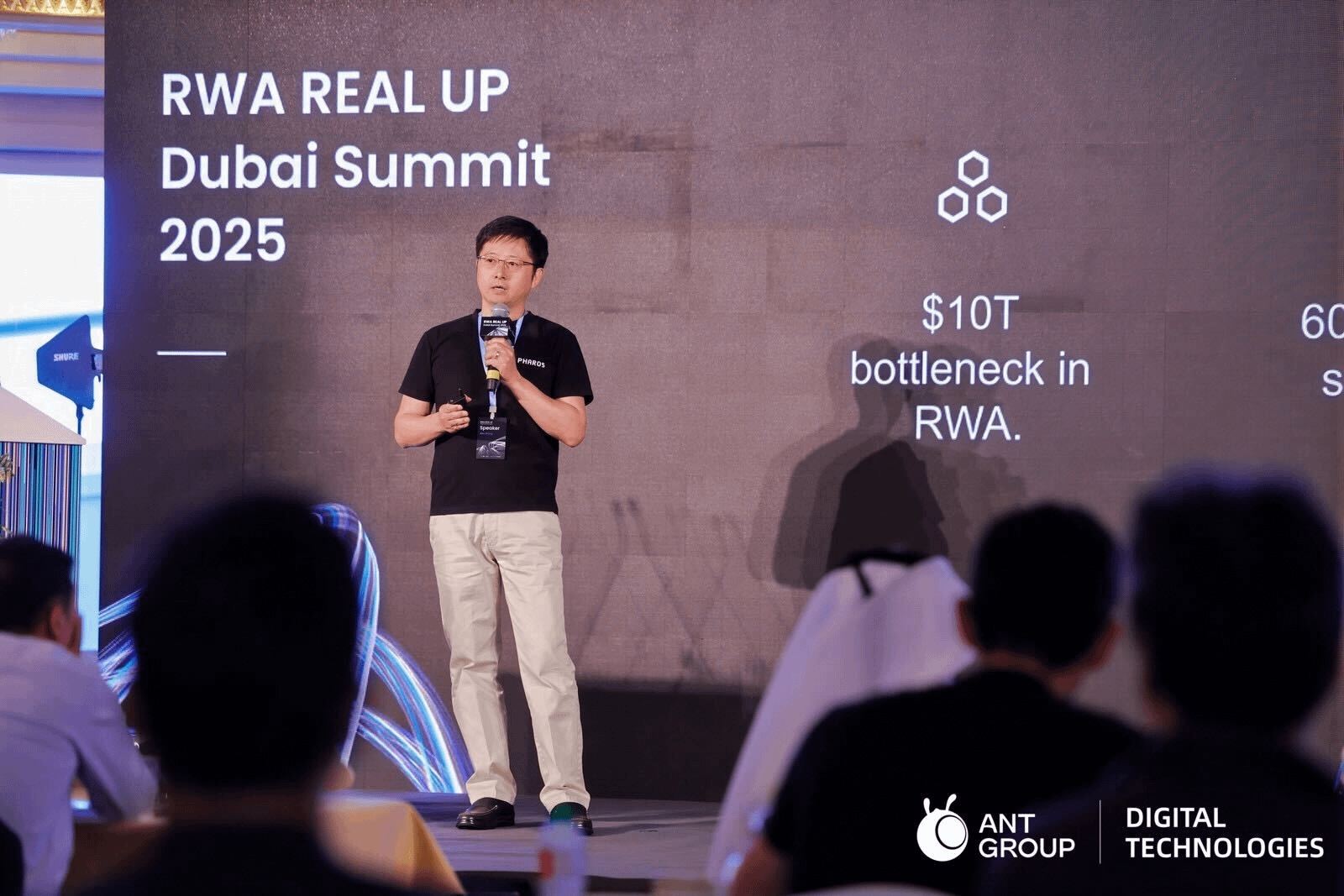
On April 30, 2025, Alex delivered a keynote speech at the RWA Real Up Dubai Summit, just two weeks before the public testnet of Pharos went live.
What truly made the market reassess Pharos was the announcement of a $44 million Series A financing on April 8, 2026. This round was led by multiple institutions from traditional tech, finance, and crypto sectors, and even more notably, GCL-Poly Energy Holdings, a publicly listed energy company in Hong Kong, entered into a strategic capital partnership, directly pushing Pharos's valuation close to the $1 billion mark.
Pharos's list of investors includes leading crypto funds like Hack VC and Faction VC, as well as traditional finance and industrial capital like Sumitomo Corporation and Flow Traders. As Wish Wu puts it, there is a core consensus: RWA is not a short-term narrative but a long-lasting migration of financial infrastructure.
"Our relationship with our investors is genuinely one of 'running alongside' rather than 'exit immediately after launch'," Wish Wu said.
After repeated refinements, the team positioned Pharos as 'real-world finance on-chain + RWA tokenization + composable DeFi' infrastructure, and the technical architecture design fully adhered to this fundamental idea:
First is the SPN (Special Processing Networks). This is the most recognizable design in Pharos's overall architecture. Simply put, SPN is a modular dedicated subnet layer that allows different business scenarios, such as compliant stablecoins, institutional lending, energy-related RWA, and cross-border payments, to run in their own independent execution environments while sharing the security and liquidity of the Pharos mainnet. Each SPN can independently configure its own virtual machine, node admission policies, compliance parameters, and even fee settlement logic. This design allows Pharos to maintain the openness of a public chain while providing customizable 'sandboxes' for institutions operating under different jurisdictions and business types.
Secondly, there's the built-in zk-AML and KYC modules. This is also what sets Pharos apart from other RWA chains. The primary concern for institutions has never been whether 'the chain works' but whether 'on-chain activities can be compliant without exposing trade secrets'. Pharos's approach is to use zero-knowledge proofs to achieve 'verifiable compliant identities and transaction behaviors', making on-chain actions auditable for regulators and private for the market. Two originally conflicting goals have been compressed into the same protocol layer. This is no mere theory; the team has translated the compliance experience accumulated during the consortium chain era into native capabilities of a public chain.
Third is sub-second finality consensus. The actual performance bottleneck of on-chain finance has never been the TPS figure itself but the certainty of finality. A repurchase, a settlement, or a clearing that requires waiting several seconds or even a minute for confirmation simply cannot match the rhythm of real financial markets. Pharos uses a Pipelined BFT consensus protocol, breaking down the proposal, voting, and finalization of blocks into parallel pipeline stages, compressing the final confirmation time for transactions at the mainnet level to under one second.
Finally, there's the deep parallel architecture. In the institutional RWA scenario, a single transaction often involves multiple assets, accounts, and contracts, making traditional serial EVM a bottleneck under such loads. Pharos retains complete EVM compatibility while introducing a parallel execution engine based on transaction dependency graph analysis: non-conflicting transactions can settle in parallel, and trades of different asset categories can be routed through different processing channels via the SPN architecture. Pharos even proposed a 'DP (Degree of Parallelization)' framework, categorizing the blockchain's parallel capabilities from DP0 to DP5, with Ethereum positioned at the lowest DP0 and Pharos at the highest DP5.
From actual data, Pharos's public testnet processed nearly 4.3 billion transactions in less than a year, covering over 200 million wallet addresses, with on-chain monthly active users stabilizing between 2 to 3 million and block time maintained at 0.5 seconds. This data provided ample pressure testing samples for the mainnet launch and, to some extent, validated the stability of this architecture under high loads.
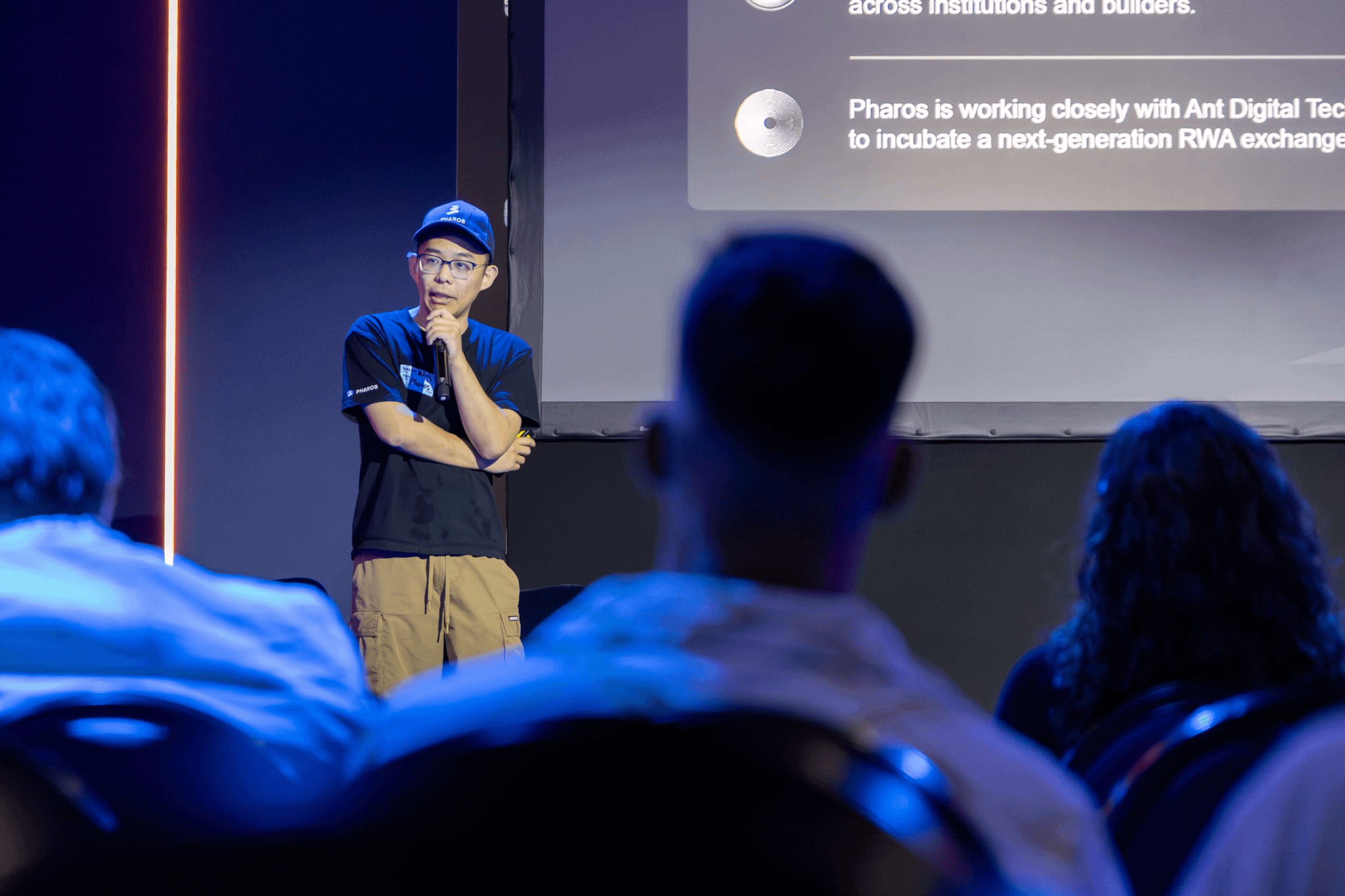
On July 1, 2025, Wish introduced Pharos to developers at EthCC Cannes, by which time the Pharos testnet was already live.
Eco's beachhead
For a public chain positioned in RWA tokenization, the design must have its unique attributes. Aside from technical aspects, another crucial question is whether it can attract genuine institutional clients and players. While the RWA market is large enough, once institutions choose a chain as a partner, as long as there are no security or efficiency issues, they are unlikely to 'move' easily.
Unlike crypto-native projects that can be redeployed across multiple chains, RWA tokenization projects (like corporate bond issuance) have no need to repeat the process on Solana once they choose Ethereum. Thus, no matter how beautiful the technical architecture is, a public chain without an ecosystem and liquidity is merely a ghost town. The Pharos team clearly understands this.
Before the mainnet launch, Pharos had already invested tremendous effort in ecological layout. In early 2026, they initiated the RealFi Alliance, with the first batch of members including key industry players like Chainlink, Centrifuge, LayerZero, Asseto Finance, and Ember, covering multiple segments such as oracle networks, asset issuance platforms, cross-chain protocols, institutional wallets, and risk management. The alliance later brought in 'smart partners' like Dune, Four Pillars, Anchorage Digital, and Alchemy to provide data transparency and research coverage for institutional capital entry.
"RWA cannot be completed by a single public chain alone; it must be a collaborative effort among 'assets - protocols - liquidity - channels - data'," Wish Wu explained the underlying logic of the RealFi Alliance.
On the same day the Pacific Ocean mainnet launched, over 50 ecological DApps were deployed simultaneously, covering core tracks such as asset issuance, trading, lending, derivatives, and stablecoins. The previously launched 'Native to Pharos' global incubator program, totaling $10 million, will provide developers with funding, technical support, and business guidance, further accelerating the ecosystem's rapid development.
But what truly reflects market confidence is the data from the high-yield RWA pre-staking activity. Before the mainnet launch, Pharos opened a $50 million RWA treasury for pre-staking, which was quickly filled within days, with the $10 million public round being filled in just an hour. This means that on the first day of the Pacific Ocean mainnet's birth, there were already substantial quality assets and ample liquidity on-chain, rather than a shell network that needed to be cold-started from scratch.
In terms of infrastructure integration, Pharos also presented a quite complete 'financial ecosystem stack' at the mainnet launch: Circle's USDC and cross-chain transfer protocol CCTP are natively integrated to ensure seamless circulation of compliant stablecoins; Chainlink provides decentralized oracle price feeds and cross-chain messaging services; Morpho brings mature money market primitives; Centrifuge introduces on-chain private credit assets; and wallet infrastructures like OKX Wallet and TopNod are simultaneously integrated, allowing millions of existing users to participate without needing to re-register.
As Wish Wu said on the day of the mainnet launch: 'Institutional participation, which was once just a concept, is now a reality. The momentum is there, and the capability is there.'
Differentiated competitive strategy
The heat of the RWA track in 2026 needs no elaboration, but it also means intense competition.
In the Western markets, Canton Network has established a solid foothold, amassing over $340 billion in off-chain asset associations thanks to its deep ties with traditional financial giants like Goldman Sachs, Deloitte, and BNY. Its privacy-first architecture and Daml smart contract language have created a strong moat in institutional settlement scenarios. The Ethereum ecosystem, bolstered by flagship cases like BlackRock's BUIDL and Société Générale's tokenized bonds, continues to solidify its presence in the institutional RWA space. Networks like Avalanche and XRP Ledger are also vying for market share through their subnet architectures and cross-border payment advantages.
Facing such a competitive landscape, Pharos's choice is not to go head-to-head but to clearly define its differentiated territory: an RWA ecosystem centered in the Asia-Pacific, radiating globally.
The logic behind this choice is clear. The Asia-Pacific region has a unique asset supply structure: large-scale renewable energy assets, complex supply chain finance networks, active cross-border trade scenarios, and increasingly open regulatory policies. Hong Kong's licensing framework, Singapore's Project Guardian, and Dubai's virtual asset regulatory system are all providing institutional soil for tokenized assets. Meanwhile, energy-related physical assets such as photovoltaic plants, carbon credits, and energy storage facilities are extremely rare on Western chains but are substantial and steadily growing in the Asia-Pacific market, supported by real cash flows.
GCL-Poly Energy's strategic investment is a highly representative signal. This publicly listed energy company not only brings capital but also a massive demand for real energy assets to be tokenized, a resource endowment that Western competitors will find hard to replicate in the short term.
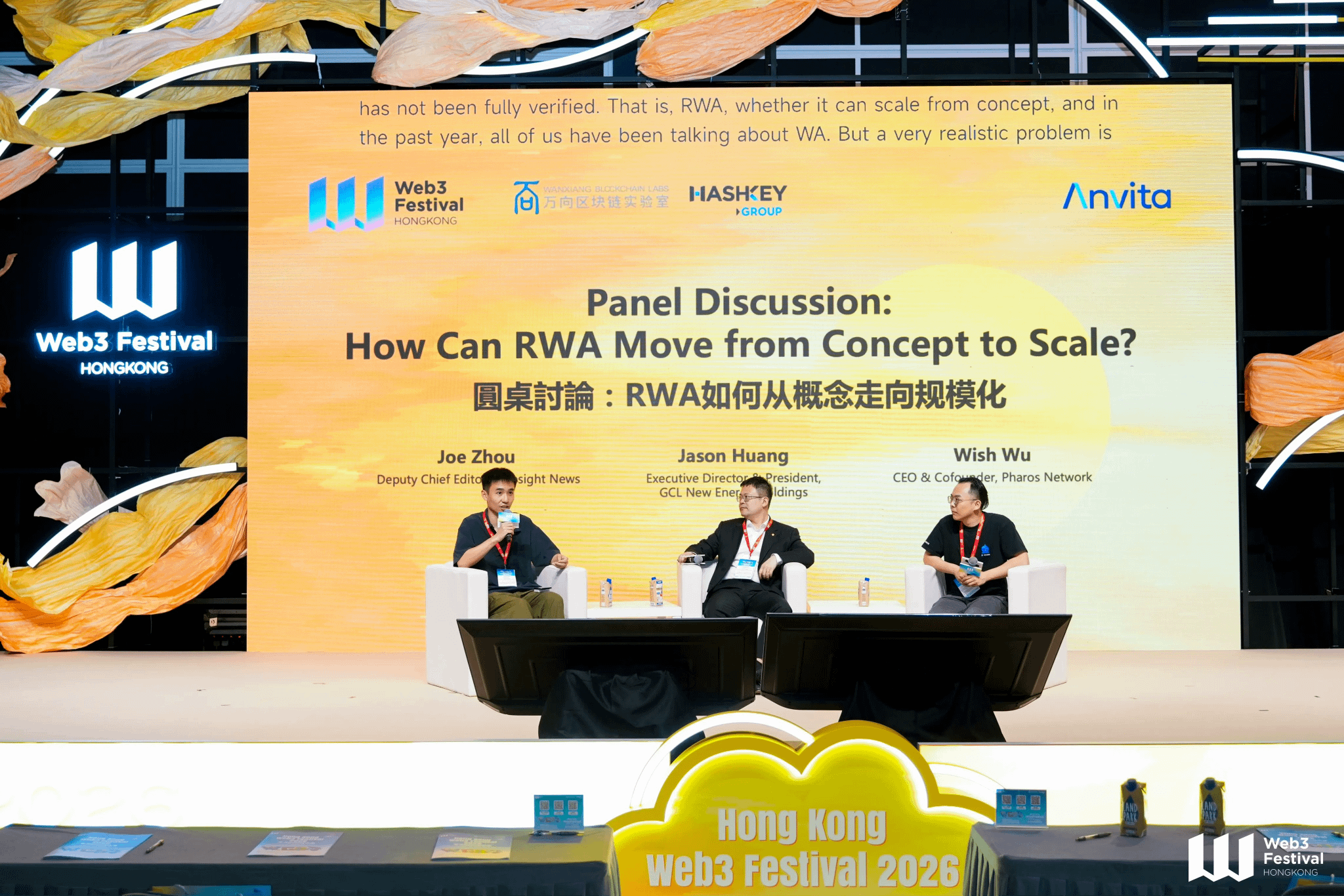
On April 24, 2026, Wish participated in a roundtable discussion at the HK Web3 Festival alongside Jason Huang, Executive Director & President of GCL-Poly Energy Holdings, and Joe Zhou, Deputy Editor of Foresight News.
Moreover, Pharos's other ace in the hole is the composability of DeFi and RWA. Since compliance capabilities are embedded in the protocol, real assets on Pharos can safely enter DeFi scenarios such as lending, derivatives, and structured products, unleashing financial value far beyond simple tokenization. This is something many RWA chains that focus solely on asset issuance cannot achieve.
Of course, the road ahead is not entirely smooth. Pharos needs to continue proving the reliability and security of its architecture in actual operations post-mainnet launch, as well as gradually build recognition and trust in markets outside the Asia-Pacific. After all, competition among public chains has never been a one-off deal, but a multi-year endurance race.
The PROS token economic model also reflects this design philosophy.
PROS has a total supply of 1 billion tokens, with 21% allocated to the ecosystem and community (of which 6% is for community airdrops), 20% each for the team and investors, 16% for the foundation, 9% for the lab, and 4% for node and liquidity incentives. But the real highlight is the release rhythm: both the core team and private investors must adhere to a strict plan of 12 months of lock-up followed by 36 months of linear release, with some treasury and incentive allocations extending to 48 to 60 months.
This means that for a full year post-mainnet launch, there will be no tokens unlocked by any team or investors flowing into circulation. Regarding the staking mechanism, Pharos has set an exceedingly rare precondition: for the first six months post-mainnet launch, the staking inflation rate is 0%, introducing an annualized 5% staking incentive starting from the seventh month, which will be dynamically adjusted based on network conditions.
This phased design of 'initial deflation buffer, followed by inflation incentives' is almost contrary to the trend in the crypto industry. Most projects, in order to attract early stakers, will release high inflation yields on the first day of TGE. Pharos's choice clearly sacrifices some short-term attention economy for a healthier value discovery environment in the early stages of the mainnet launch.
In addition to regular gas fees, staking, and governance functions, PROS was also designed with deeper RWA-directed purposes: as collateral for minting compliant stablecoins, obtaining priority access to specific financial primitives, and even participating in network security through staking RWA. 'What we want to express is one thing: we hope users grow together with the network,' Wish Wu said.
From the previous countercyclical rise of the Canton Network token CC, we can see that institutions are willing to pay a high cost when trading such products, due to the inefficiency of the prior financial infrastructure and the numerous involved costs. But when transactions shift on-chain, even if a single transaction incurs costs higher than gas fees, it becomes very cost-effective for institutions.
This is a unique advantage of public chains in the RWA tokenization space; Canton has already successfully navigated this logic, and Pharos can serve as an exemplary target to observe whether this logic can be replicated in markets outside the U.S.
How far are we from an era belonging to RealFi?
Returning to the question at the beginning of the article: When Wish Wu and Alex Zhang left Ant Group, they faced an industry that was fracturing: institutions wanted the efficiency of blockchain but feared its transparency; entrepreneurs chased after the narrative of RWA but few were willing to delve into the underlying protocols; investors shouted long-termism yet cashed out in the first month after the TGE.
Two years later, Pharos has transformed from an idea in an office into an active public chain that has processed 4.3 billion transactions and has over 200 million addresses. The launch of the Pharos mainnet is not just a technical milestone but a vote of confidence in industry values: it proves that a public chain model focusing on slow construction, long-term locking, and institutional orientation can still thrive in today's hectic crypto market.
How much longer will the RWA tokenization wave continue? From the perspective of market size, the $30 billion in on-chain assets is still just a drop in the bucket compared to the hundreds of trillions of traditional finance. BlackRock's Larry Fink predicts that tokenized assets will reach tens of trillions by the 2030s, and Standard Chartered's prediction is even higher at $30 trillion. Even if only half of these figures are realized, it would be enough to support the coexistence of several public chains at the Pharos level.
The current RWA tokenization track is somewhat reminiscent of AI three to four years ago; industry insiders have already seen limitless possibilities, yet there are still many hesitant onlookers. Pharos was not launched during the hottest time for RWA tokenization, but this foresight is enough to make us hopeful for it to open a new chapter in RealFi in the Asia-Pacific region.