

Hong Kong, February 10, 2026 — During the Consensus Hong Kong 2026 conference, the "Institutional Payment and On-chain Financial Infrastructure Summit" co-hosted by enterprise-level blockchain infrastructure and fintech service provider Cregis, Stable, Jsquare, and FutureCloud was successfully held at the Hong Kong Harbour Grand Hotel on the afternoon of February 9. This closed-door summit brought together industry leaders from organizations such as Conflux, SlowMist, Hex Trust, Tevau, Interlace, AWS, BlockOffice, Cynopsis, Vesta Capital, among others, to engage in in-depth discussions on core topics such as stablecoins, institutional payments, on-chain financial infrastructure, security, and compliance.
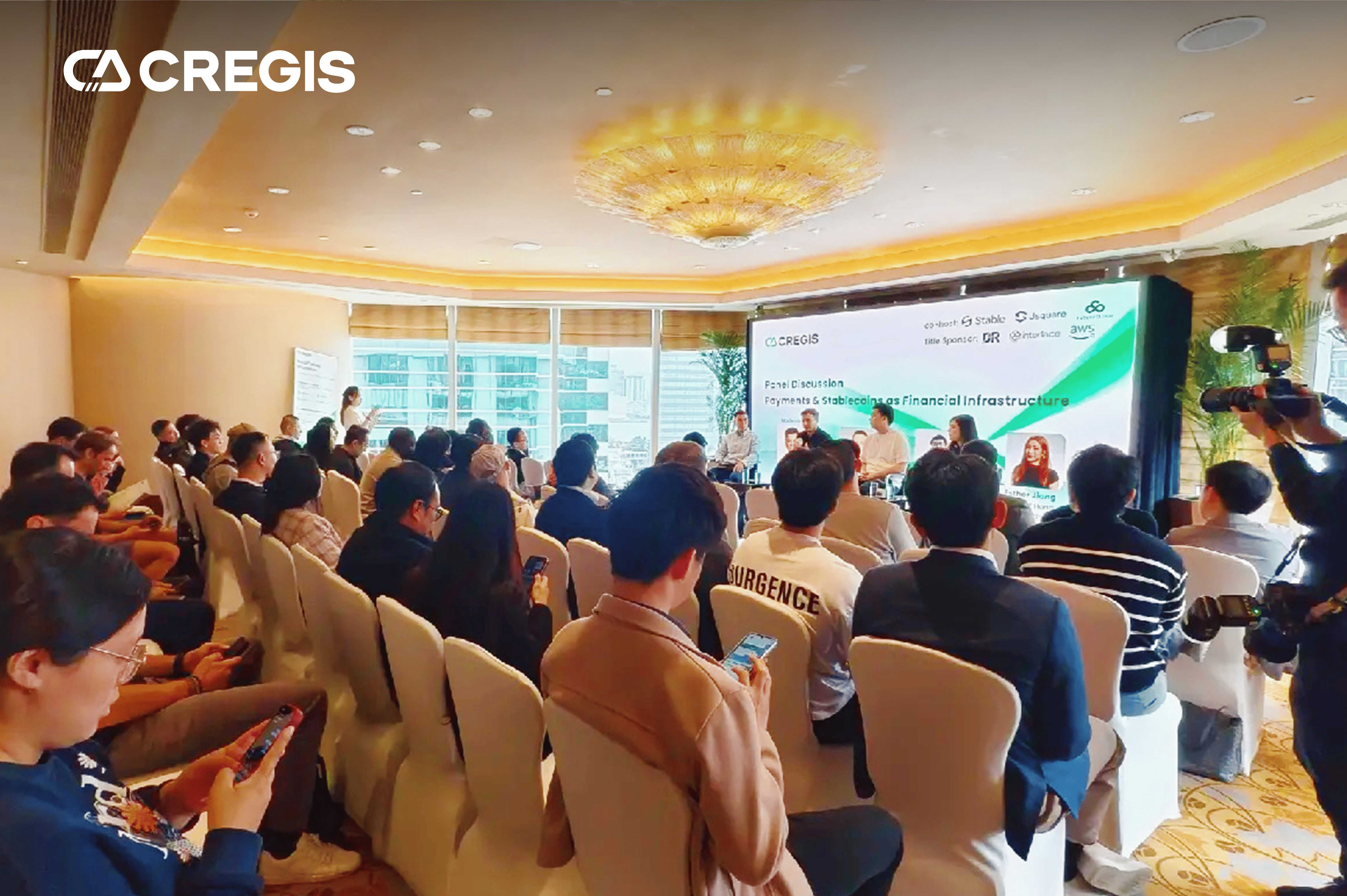
From exploration to expansion: cryptocurrency infrastructure enters the scaling era
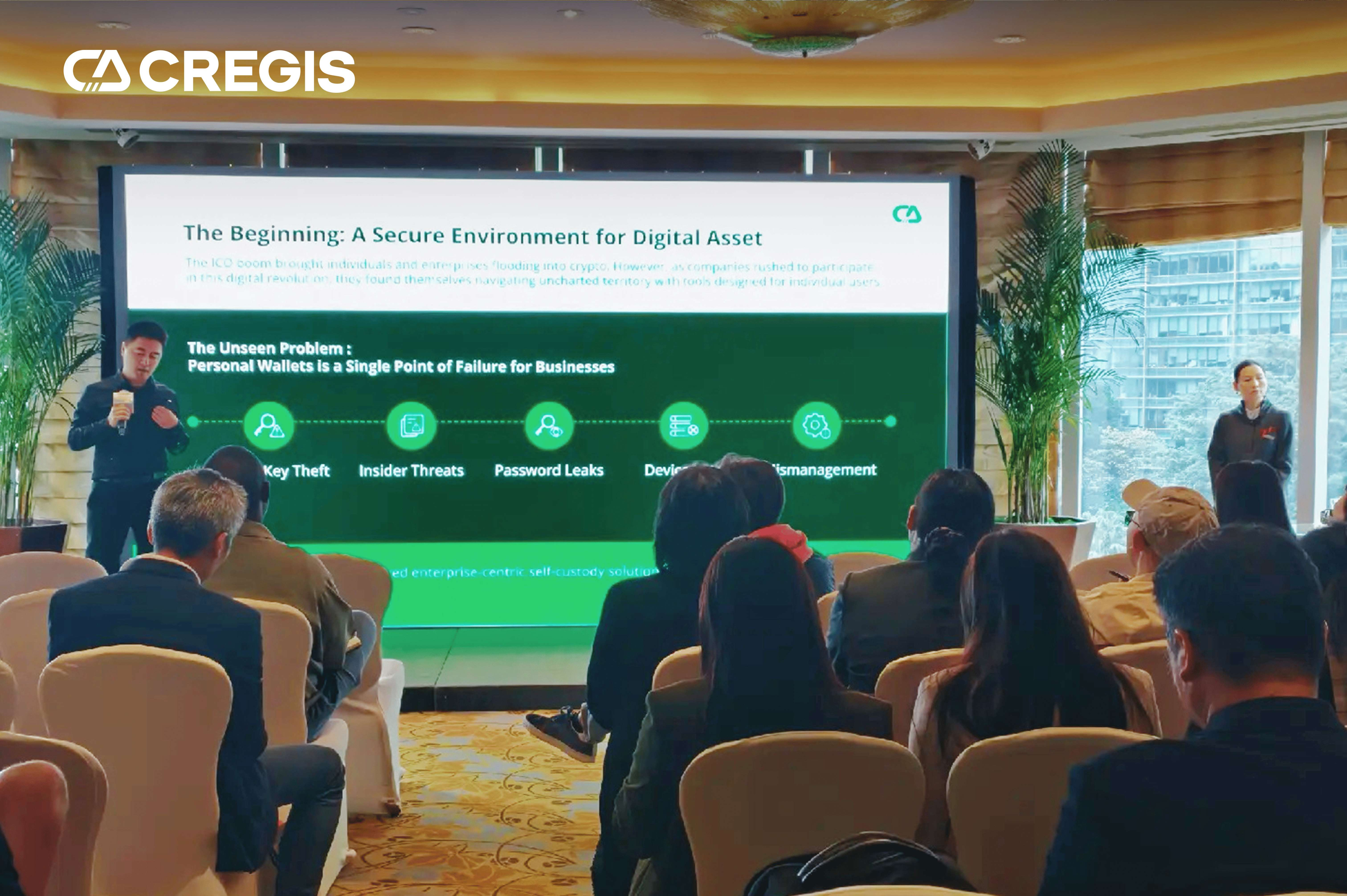
As the market value of stablecoins surpasses the $100 billion mark, on-chain payments are transitioning from early adoption to the mainstream financial system. Cregis CTO Aaron Zhang pointed out in his opening remarks: 'We are at a critical historical juncture: on-chain financial infrastructure is no longer a technical question of 'feasibility,' but an engineering and governance question of 'how to scale.' Today's discussion will directly influence the evolution direction of the global financial system in the future.'
Aaron recalled that the early market was only familiar with personal wallets like MetaMask, yet struggled to understand the value of 'enterprise wallets.' He pointed out that to truly integrate cryptocurrency into the business world and become a stable circulating 'currency,' enterprises must be able to manage and use digital assets securely and compliantly, which fundamentally differs from personal asset management.
Based on this understanding, Cregis has constructed a three-layer technical architecture system supported by security, compliance, and easy integration:
Underlying security layer: adopting advanced technologies such as MPC, HSM to ensure private key security like a 'vault.'
Middle access and audit layer: achieving traceability and auditability of all key accesses through unique infrastructures like DIG, integrating risk analysis and control.
Upper-level asset management and business layer: providing flexible workflows, multi-chain support, and blockchain risk management, seamlessly integrating with enterprise systems such as payment engines, ERP, OA, empowering asset management, cross-border payments, and multiple business scenarios such as trading.
Aaron emphasized that this robust infrastructure enables customers to securely access global digital assets through a single platform, which is the foundation for Cregis's stable expansion to over 50 countries, serving nearly 3,500 enterprise clients and achieving zero security incidents.
Looking ahead, Cregis's strategy will go beyond 'enterprise wallets' and move towards a grander vision: promoting the global adoption and application of stablecoins. The company has begun laying out custody services and actively obtaining relevant licenses such as VASP, aiming to provide bank-like SaaS custody services for enterprises. The longer-term goal is to build a blockchain settlement system connecting various banks and replacing traditional clearing networks, even innovating card payment networks, ultimately achieving 'allowing enterprises to focus solely on business without worrying about the technical details of asset management, freely using globally issued stable currencies.' Aaron stated that Cregis's mission is to continuously build critical infrastructure and work hand in hand with partners to promote the integration of the crypto economy into the real business society for large-scale application.
Stablecoins: from payment tools to foundational financial infrastructure
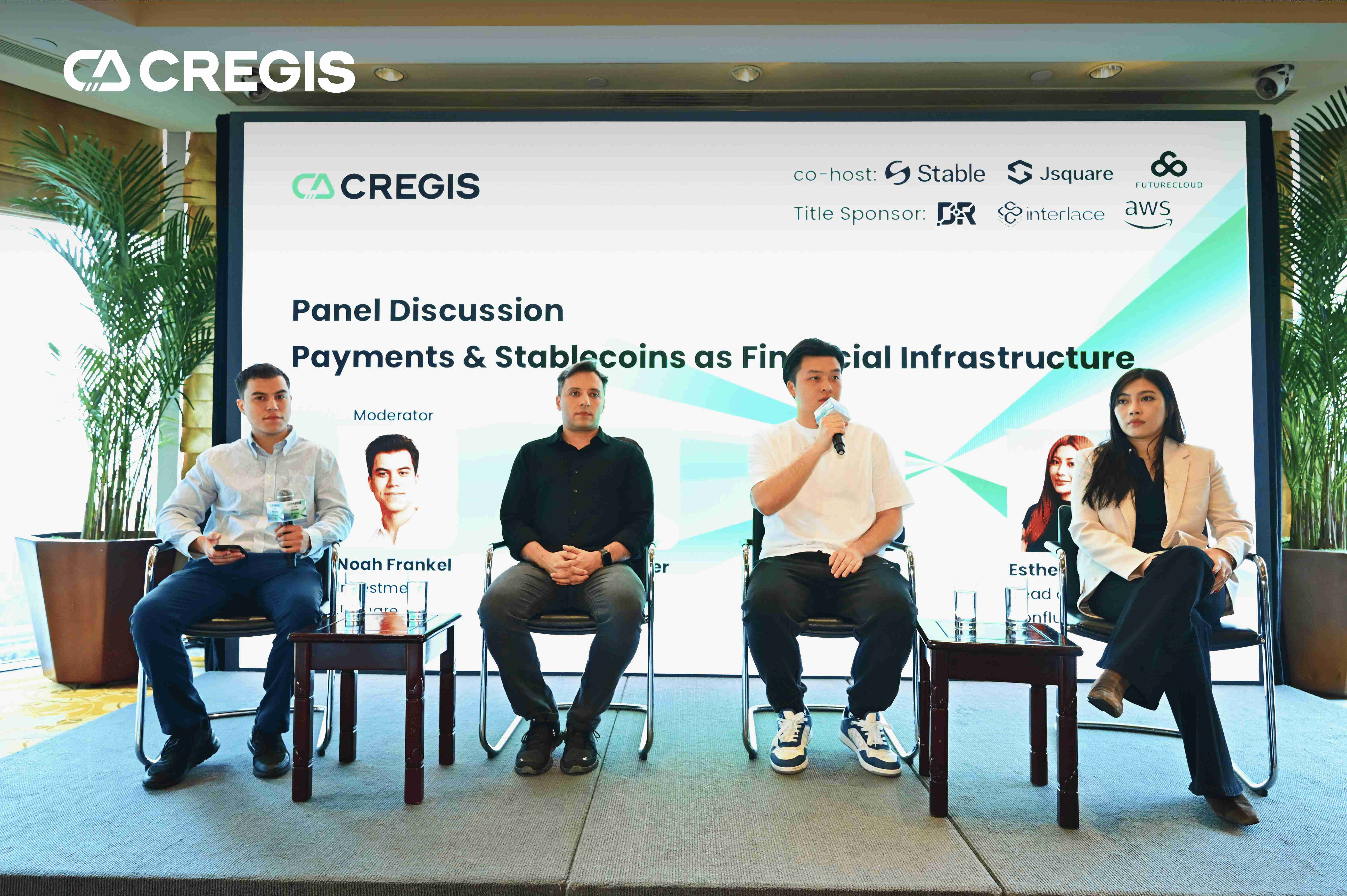
In the first roundtable discussion titled 'Payments and Stablecoins as Financial Infrastructure,' Jsquare investment analyst Noah Frankel served as host, engaging in deep discussions with Stable CEO Brian Mehler, Tevau co-founder Andy Liu, and Conflux Hong Kong head Esther Jiang.
Brian Mehler shared observations from Stable regarding institutional adoption: the 'last mile' issue of stablecoins in cross-border payments remains prominent, particularly in emerging markets, where the on-chain liquidity of local currencies is insufficient, and transaction fees are too high. Stable is building a native Layer 1 payment network, with the core mechanism allowing users to directly use transferred assets (such as USDT) to settle network fees, thereby completely eliminating reliance on independent, volatile Gas tokens. This greatly enhances the predictability of payment costs and user experience.
Andy Liu pointed out that one of the biggest obstacles facing stablecoins today is the lack of regulatory licenses. For example, in Hong Kong, USDT has not yet become a legal payment tool, which instead creates market space for us in issuance and payment gateways. In the next five years, emerging markets will launch locally compliant stablecoins, forming a parallel pattern of 'global stablecoins + local stablecoins.' At the same time, an increasing number of SMEs are using stablecoins for high-frequency turnover payments because they offer high liquidity yield products with a 24-hour lock-in period, better than traditional banks' 7-day fixed deposits.
Esther Jiang emphasized that Conflux, as a compliance-oriented Layer 1, not only supports major USD stablecoins but also actively integrates long-tail stablecoins such as KRW, JPY, and offshore RMB to meet diverse cross-border settlement scenarios. Stablecoins should not merely be speculative or savings tools but should serve as the settlement infrastructure supporting physical trade exchanges like the 'Belt and Road Initiative.' Furthermore, the recent guidance from the CFTC on stablecoins is an important signal, marking the transition of stablecoins from 'crypto assets' to 'regulated financial instruments,' where banks may eventually become issuance nodes, fundamentally changing the game rules.
Security compliance: building a trustworthy on-chain financial system
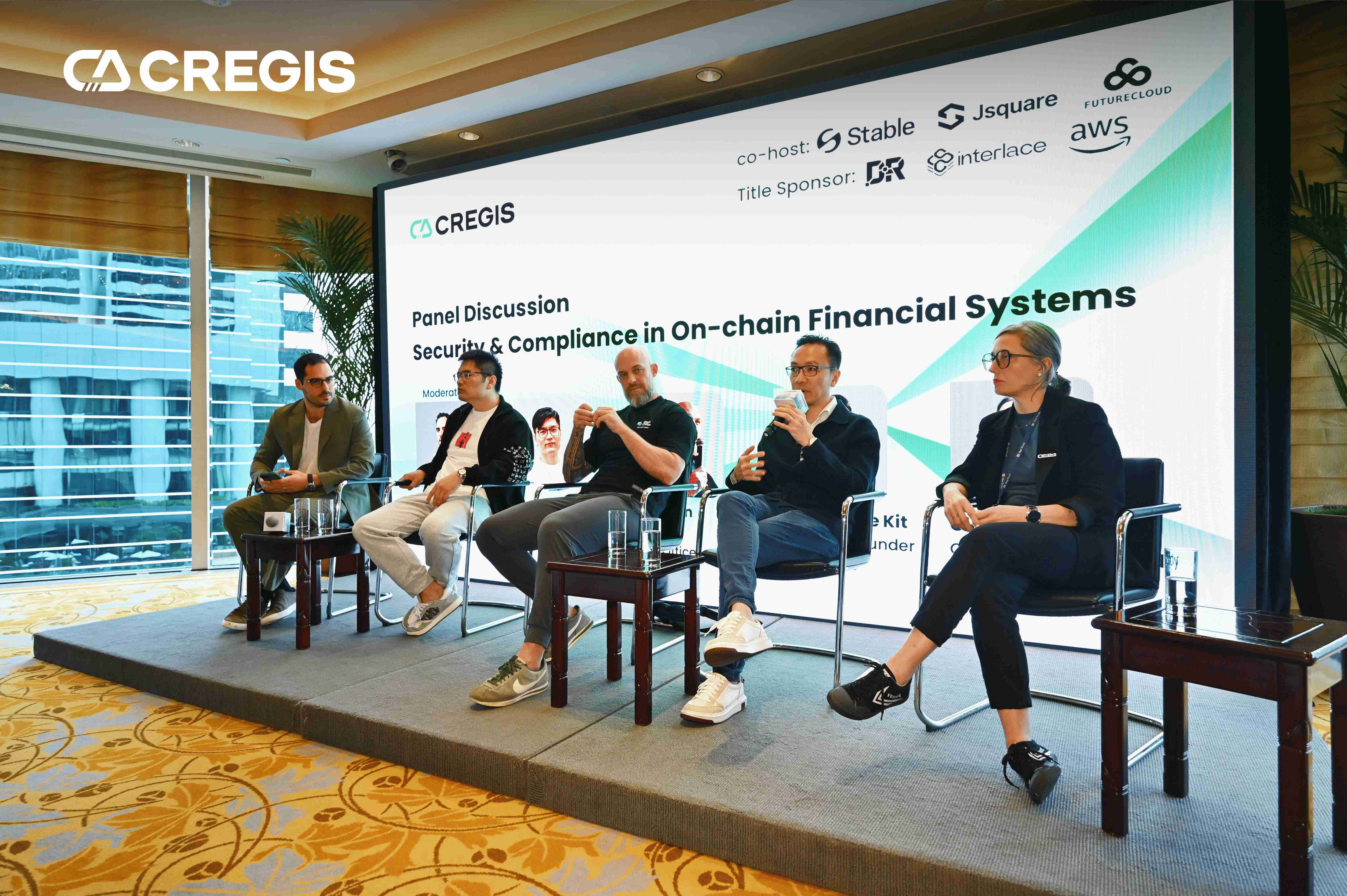
The second roundtable 'Security and Compliance in On-chain Financial Systems' was hosted by Rony Dahan, founder and CEO of Vesta Capital, focusing on the most critical security systems in institutional deployment. SlowMist CTO Blue Yang, Hex Trust Chief Product Officer Giorgia Pellizzari, BlockOffice CFO Christian Corrigan, and Cynopsis co-founder and CEO Chionh Chye Kit shared insights from their respective fields.
Blue Yang pointed out that most enterprise-level security incidents do not stem from complex technical attacks, but rather from operational errors, improper permission configurations, poor key management, or human errors. At the DeFi protocol level, there is currently a lack of effective real-time risk prediction and AML interception systems, allowing hackers to quickly transfer assets through cross-chain bridges, making it difficult to freeze them. He proposed that in the future, oracle systems may need to be introduced to integrate AML/CFT risk controls, achieving risk prediction and interception before transactions. Additionally, the industry urgently needs to establish a set of recognized security standards and certification systems to provide clear guidance on compliance through collaboration among project parties, auditing agencies, and regulatory departments.
Giorgia Pellizzari stated that there is a fundamental contradiction in the operational framework between traditional fiat currencies and cryptocurrencies: the former emphasizes identity verification and transaction reversibility, while the latter is based on anonymity and technical irreversibility. The core pain point of current compliance construction lies in mechanically applying traditional financial requirements like the 'Travel Rule' to the crypto world, making the process cumbersome and inefficient (such as requiring users to 'screenshot proof of wallet ownership'). She pointed out that what the industry truly lacks are native standards tailored to Web3 characteristics, such as cross-chain interoperability and security interaction specifications for institutional-grade DeFi. These standards need to be developed collaboratively by the private sector and policymakers, but the speed of technological iteration far exceeds the standard formation cycle, which is a significant challenge.
Christian Corrigan suggested that even startup projects must adopt multi-signature, MPC, or professional custody services to manage funds, eliminating single-person control. On the compliance front, he sharply pointed out that certain existing rules (such as proving wallet ownership) are 'very foolish' operationally and easy to circumvent. He believes that the ideal of Web3 (permissionless, trustless) has evolved in reality towards necessary regulation and mature infrastructure; good compliance and security practices are not constraints, but the cornerstone for the industry to go mainstream and safeguard users.
Chionh Chye Kit stated that the future will be a world where Web 2 and Web 3 services are deeply integrated, and compliance must be forward-looking, avoiding a binary choice of a single track. He systematically pointed out that institutions need to build a comprehensive compliance system that spans three vertical areas: information security (such as ISO 27001), data privacy, and AI governance. Obtaining and maintaining these international certifications is time-consuming and labor-intensive, yet key to building trust. He also reminded the industry to be vigilant against creating another heavy and inefficient compliance burden like the 'Travel Rule' while calling for standards.
Enterprise-level digital asset infrastructure evolution path
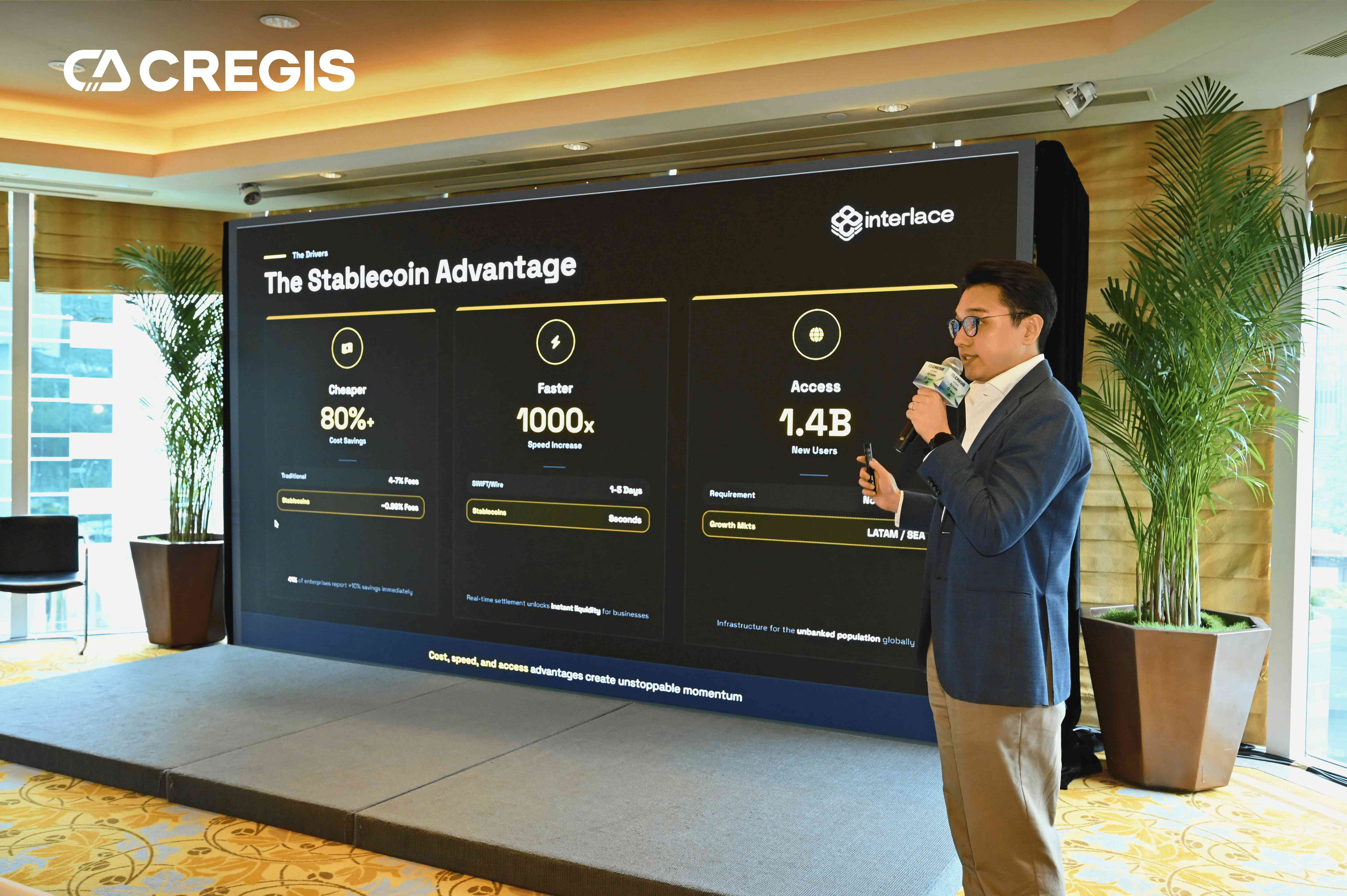
During the keynote speech, Interlace strategy and operations head Henry Chan pointed out that the current penetration rate of global stablecoins in real payments is only about 1%, but the market size is expected to grow from $35 trillion to $200 trillion over the next four years, with most growth coming from real scenario payments, representing a hundredfold growth opportunity. Interlace provides a one-stop platform for issuance, bank accounts, QR codes, wallet-as-a-service, fund management, and acquiring capabilities, serving over 7,000 global enterprise clients, and obtaining key licenses in Europe, Dubai, and other places to lay the foundation for global expansion.
AWS Web3 solutions architecture head Kong Lei shared how AWS empowers the construction of secure and highly available digital financial infrastructure. He introduced AWS's stablecoin reference architecture, analyzed the case of USDC achieving cross-chain on AWS, and demonstrated how to leverage AWS Gen AI solutions to create intelligent digital financial businesses.
Focusing on industry consensus: building secure, efficient, and compliant infrastructure
The summit ultimately formed several industry consensus: the final form of stablecoins will be a hybrid system of 'globally universal stablecoins + locally compliant stablecoins,' gradually integrating with traditional payment networks; institutional-level infrastructure requires unified industry standards and data specifications to reduce integration costs; a regular dialogue mechanism between regulatory bodies, industry associations, and technology providers needs to be established; compliance should not be an afterthought but the first principle of architectural design; the core of security lies in systems and processes, not solely relying on technology.
Cregis co-founder Aaron Zhang stated in summary: 'Today's discussion has validated our judgment: the industry is shifting from 'why we need on-chain financial infrastructure' to 'how to better build it.' Cregis will continue to collaborate with ecosystem partners to promote the construction of interoperable, compliance-first, and institution-ready infrastructure.'
This summit was co-hosted by Cregis, Stable, Jsquare, and FutureCloud, with strong support from organizations such as Interlace, DR, and AWS. Participants unanimously agreed that as the regulatory framework becomes clearer, technical architecture matures, and institutional adoption accelerates, on-chain financial infrastructure is ushering in a historic development opportunity, profoundly reshaping global capital flows and business settlement paradigms.