

Source: Bitcoin Magazine; Translated by Wuzhu, Golden Finance
Currently, Bitcoin and even the global economy are shrouded in a vortex of pessimism and macroeconomic uncertainty, yet miners remain so optimistic, which may come as a surprise. This article will analyze some data that indicate Bitcoin miners are not only sticking to their original strategies but are also accelerating development, doubling down as many miners retreat. What critical information might they know that the broader market seems to overlook?
Bitcoin's hash rate is rising parabolically
Despite Bitcoin's poor price performance recently, the Bitcoin hash rate has soared to new historical highs, seemingly unaffected by macroeconomic headwinds or price sluggishness. Typically, the hash rate closely correlates with Bitcoin prices; when prices drop significantly or stagnate, the hash rate often stabilizes or declines due to the economic pressure faced by miners.
However, today, facing global tariff increases, economic slowdown, and price consolidation of Bitcoin, the hash rate is accelerating upwards. Historically, such a degree of divergence between hash rate and price is very rare and often very significant.
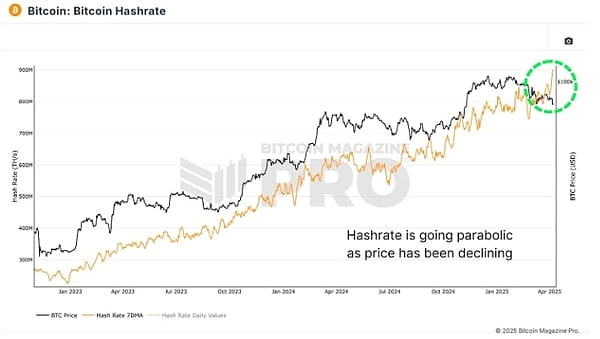
Figure 1: There is a significant disparity between the current hash rate and price.
Bitcoin mining difficulty (closely related to hash rate) has just experienced one of the largest single adjustments in history. This metric automatically adjusts to maintain consistent Bitcoin block times, increasing only when more computing power floods into the network. Such a scale of difficulty surge, especially in the context of poor price performance, is nearly unprecedented.
This again indicates that even if Bitcoin prices seem unable to support miners' decisions in the short term, miners are still heavily investing in infrastructure and resources.
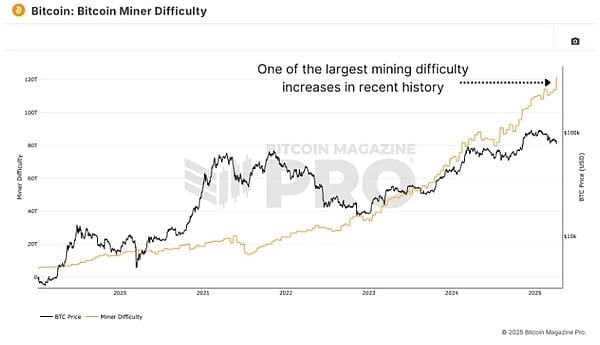
Figure 2: Recent surge in mining difficulty.
More interestingly, the Hash Ribbons Indicator—a metric that combines short-term and long-term hash rate moving averages—has recently issued a classic buy signal for Bitcoin.
When the 30-day moving average (blue line) re-crosses above the 60-day moving average (purple line), it marks the end of miners' capitulation and the beginning of a resurgence in miner strength. Visually, when this crossover occurs, the background of the chart changes from red to white. This typically signifies a strong turning point for BTC prices.
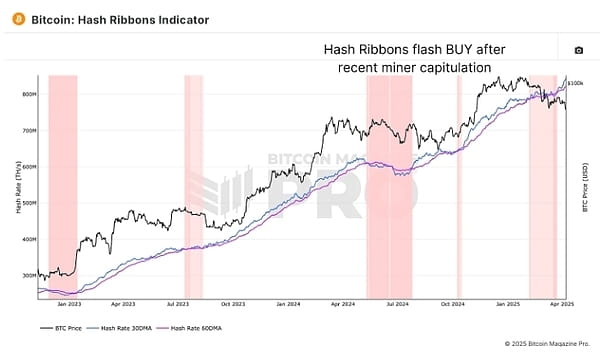
Figure 3: Mining machine prices have strengthened again recently, triggering a buy signal.
What is noteworthy this time is the significant deviation of the 30-day moving average from the 60-day moving average. This is not just a mild recovery, but a reflection of mining companies betting heavily on the future.
Tariff factors
So, what has fueled this mining frenzy? A reasonable explanation is that miners, especially U.S. miners, are trying to act before the impending tariff impacts. As the main producer of mining machines, Bitmain is now at the center of trade policy, with equipment prices possibly soaring by 30% to 50%, or even over 100%!
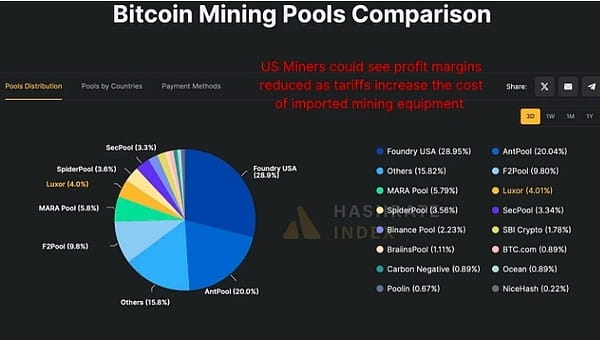
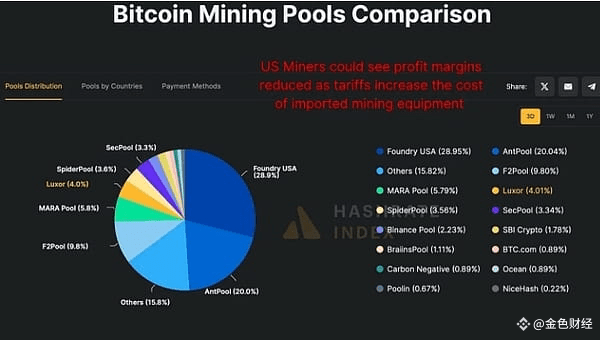
Figure 4: Distribution of Bitcoin's hash rate across various mining pools.
Given that over 40% of Bitcoin's hash rate is controlled by American mining pools like Foundry USA, Mara Pool, and Luxor, any cost increases will significantly reduce profit margins. Miners may currently be actively scaling up because hardware remains (relatively) cheap and available.
Bitcoin miners continue to mine
Hash price (revenue per terahash of computing power in BTC) is at a historical low. In other words, the revenue per terahash for operating a Bitcoin mining machine has never been this bleak. Typically, as competition gradually weakens and weaker participants exit the market, we see hash prices rise towards the end of a bear market.
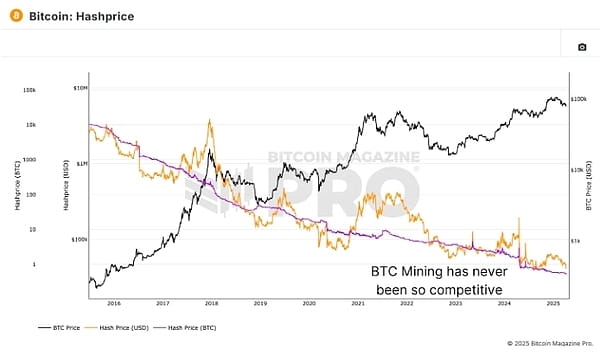
Figure 5: The profitability of miners per terahash of computing power continues to decline.
But this situation has not occurred. Despite poor profitability, miners are not only continuing operations but are also deploying more computing power. This could mean one of two things: either miners are competing with declining profit margins to accumulate Bitcoin early; or, more optimistically, they are confident in Bitcoin's future profitability and are actively buying on dips.
Conclusion
So, what exactly has happened? Either miners are desperately seizing hardware costs, or more likely, they are sending one of the strongest collective confidence signals regarding Bitcoin's future in years. We will continue to track these indicators in future updates to see if this confidence among miners proves to be justified.