
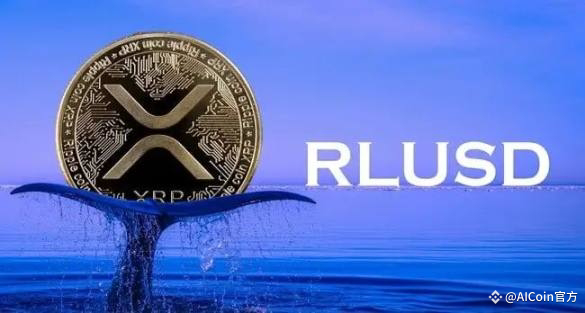


According to Aiying Payment, the highest cryptocurrency regulatory authority in New York—the New York Department of Financial Services (NYDFS)—is about to approve the issuance of the new stablecoin RLUSD by the cross-border payment company Ripple Labs. This news once again puts Ripple in the global spotlight, especially ahead of the product's official launch on December 4. The approval of RLUSD not only allows Ripple to legally provide services in New York and further expand its influence in the regulated digital financial market, but also makes it an important participant in the broad stablecoin ecosystem. This move signals that Ripple will directly compete with well-known U.S. stablecoin issuers like Circle, Paxos, and Gemini, highlighting Ripple's ambitions and strategic layout in the global payments and fintech sectors. The launch of RLUSD can be seen as a core step for Ripple to further deepen its global payment network strategy, responding to market demand and exploring the integration of technology and regulatory frameworks.
I. New Changes in the Stablecoin Market: Can RLUSD Stand Out?
For many years, Ripple has been known in the industry for its blockchain payment network RippleNet, whose real-time payment solutions have completely transformed the way cross-border payments are made. However, with the continuous increase in global compliance requirements, Ripple's biggest challenge lies in how to adapt its core technology to the complex regulatory environment and effectively integrate into the fiat financial system. The launch of RLUSD represents a new transformation for Ripple—from merely pursuing technological breakthroughs to focusing on compliance and stability. The construction of RLUSD is not just about innovation; it is also a re-understanding of the essence of the financial system.
The emergence of Ripple's RLUSD directly enters a highly competitive market. Among existing stablecoins, Tether (USDT) and USD Coin (USDC) dominate the majority share, with these stablecoins having far greater liquidity and popularity on exchanges than their competitors. So, what qualifies Ripple's RLUSD to claim a share in this landscape?
Firstly, Ripple's core advantage lies in its existing payment network RippleNet, which serves as an alternative to the existing banking system SWIFT. This network connects hundreds of banks and financial institutions worldwide, allowing RLUSD to be quickly integrated into existing cross-border payment and corporate payment scenarios through RippleNet. This network effect gives RLUSD more application scenarios compared to other stablecoins, not limited to trading pairs on cryptocurrency exchanges but also applicable in real scenarios such as cross-border settlements and corporate payments.
Secondly, RLUSD's advantages in compliance and transparency should not be underestimated. Stablecoins often face scrutiny regarding the transparency of their asset reserves in the cryptocurrency market. Ripple announced that RLUSD will be backed by 100% dollar deposits, government bonds, and cash equivalents, and will be regularly audited by an independent third party to ensure the security and transparency of reserve assets. These measures undoubtedly establish a new compliance and transparency standard in the market, making RLUSD more attractive to corporate users and financial institutions. However, challenges remain. Market trust is never built overnight, especially in a stablecoin market that is already dominated by strong players. Meanwhile, through partnerships with payment providers such as Bitstamp, MoonPay, and Uphold, Ripple hopes to quickly achieve market coverage in the early stages of RLUSD's launch.
II. The Game and Survival in the Compliance Storm: Ripple's Policy Strategy
Ripple's launch of RLUSD comes against the backdrop of the global cryptocurrency market's fluctuations amid policy turbulence. Especially with Trump's return to the presidency, the market anticipates potential loosening of regulations on cryptocurrencies and even encouragement for the creation of national-level Bitcoin reserves. Over the past few years, Ripple's legal battles with the U.S. Securities and Exchange Commission (SEC) have cost it dearly, leading to significant fluctuations in XRP's price.
Compliance has always been a huge obstacle for Ripple and a common challenge faced by all blockchain projects globally. Trump's return to office brings potential policy loosening, naturally boosting optimistic sentiment in the market, but this does not mean all challenges will be easily resolved. Therefore, obtaining a license from New York State is not only a victory for Ripple in the policy game. At the same time, the launch of RLUSD marks Ripple's gradual transformation from a cross-border payment solution provider relying on a single bridge currency, XRP, to a stablecoin issuer. This change signifies that Ripple is gradually moving away from its dependence on XRP, towards a diversified, stable, and more regulatory-compliant business development path.
III. The NYDFS Regulatory Framework: Thresholds and Opportunities for Compliance Innovation
The New York Financial Services Agency is known for its stringent cryptocurrency regulation, and Ripple's ability to obtain its approval indicates that RLUSD's issuance has met high regulatory requirements in terms of transparency, security, and consumer protection. The approval from NYDFS not only recognizes Ripple's efforts in compliance but also sets a higher entry barrier for the entire stablecoin market. In recent years, NYDFS has continually strengthened its regulatory efforts on stablecoins, aiming to ensure the transparency and stability of the cryptocurrency market through a strict regulatory framework.
For Web3 payment companies, the NYDFS regulatory framework presents both a challenge and a huge opportunity. On the one hand, higher compliance requirements mean that companies need to invest more resources in funding, technology, and governance structures to meet the high standards of regulatory agencies; on the other hand, strict compliance requirements are also a shortcut to gaining market trust.
The development of the stablecoin market cannot be separated from the promotion of policies. Although the current regulation of stablecoins in the United States mainly focuses on state-level, especially within the frameworks such as New York's BitLicense and limited purpose trust charters, the incoming Trump administration is believed to potentially promote federal regulatory policies for stablecoins, bringing new opportunities for the issuance and circulation of stablecoins in the future. The introduction of federal regulation is expected to resolve the current issues of inconsistent state policies and varying regulatory standards, creating a more unified market environment and clearing obstacles for the interstate and even international circulation of stablecoins.
Aiying will continue to monitor global stablecoin policies and market dynamics, providing valuable insights and compliance services for industry practitioners. We believe that as policies gradually become clearer and the market continues to evolve, Web3 payments will usher in broader development space.