


More than four months after the US Securities and Exchange Commission (SEC) sued Coinbase for deceptive practices, the exchange has accused the regulator of overreaching its authority in a final attempt to convince a federal court to toss out the case entirely.
SEC overstepped its regulatory ambit, says Coinbase
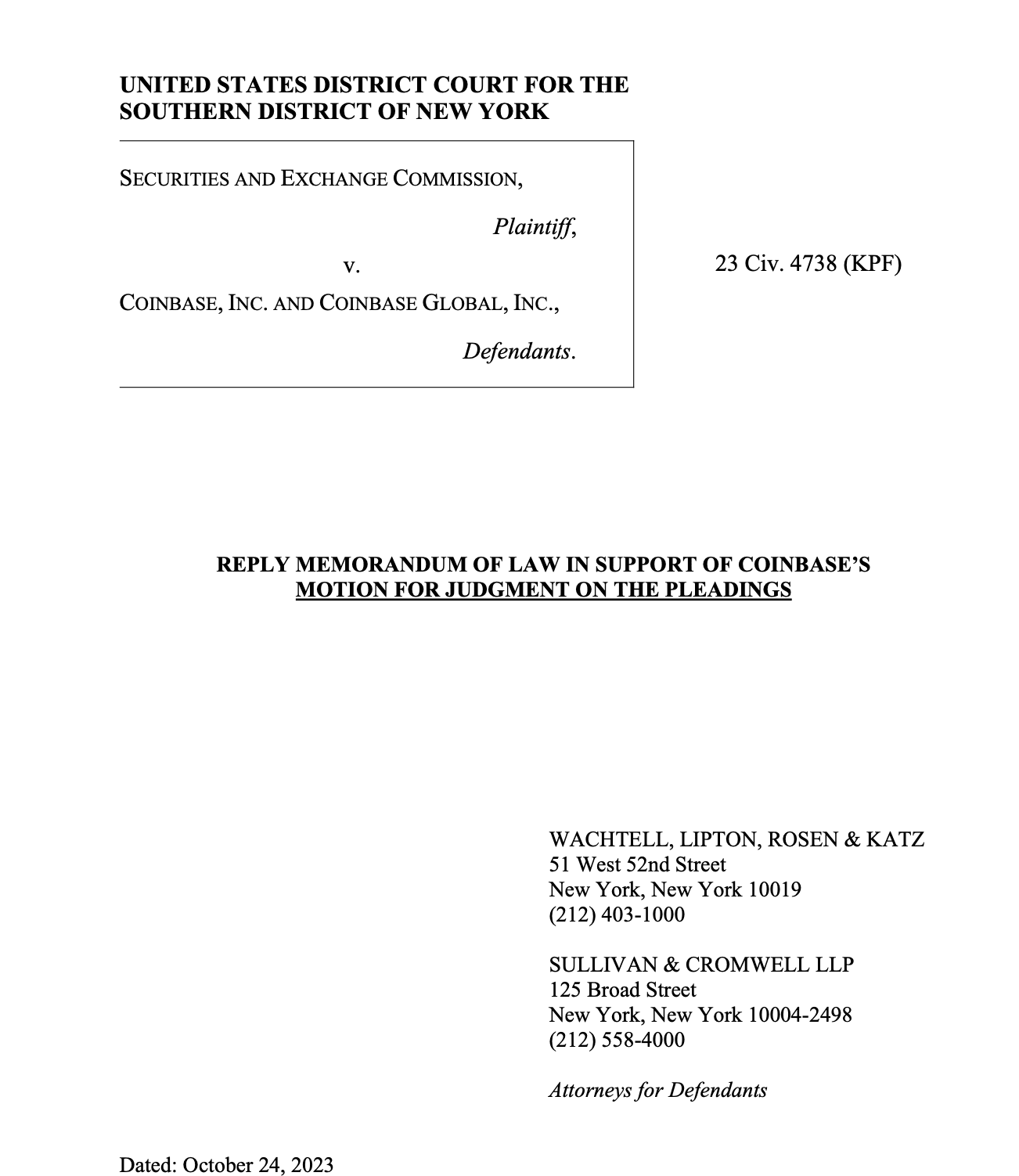
Coinbase on Tuesday filed a motion in a New York District Court, arguing the SEC overstepped its regulatory ambit when it deemed the cryptocurrencies listed on the exchange as securities. It reasoned that the regulator’s definition of what constitutes a “security” is quite broad and that Coinbase-listed cryptocurrencies do not fall under the jurisdiction of the SEC.
“The SEC’s authority is limited to securities transactions. Not every parting of capital with a hope of gain qualifies, and trades over Coinbase are only securities transactions if they involve ‘investment contracts.’ The transactions at issue here do not,” Coinbase said.
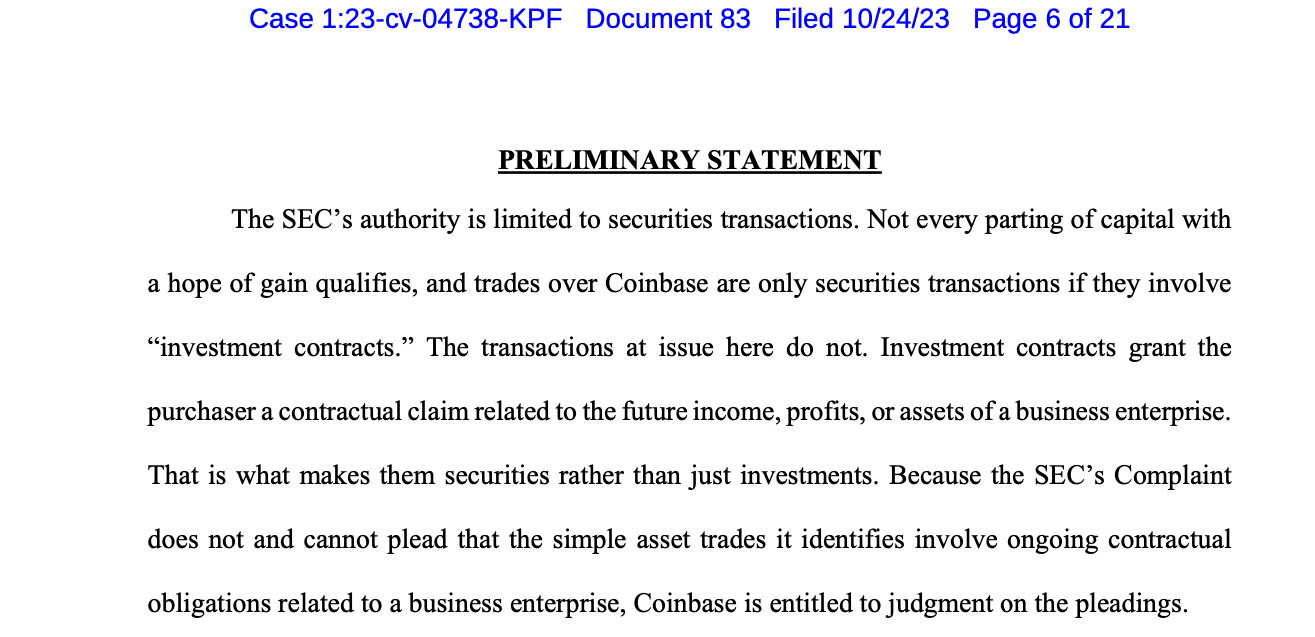 Source: CourtListener SEC’s broad definition of ‘securities’ becomes a sore point
The crypto exchange expressed sharp disapproval of the SEC’s “expansion of its own authority”, claiming that the agency was doing so without approval from Congress. Coinbase said the US securities regulator seeks dominion over “essentially all investment activity”. It also rebuked the agency for not offering a limiting principle to distinguish investments within and outside its purview.
Paul Grewal, chief legal officer of Coinbase, took to X (formerly Twitter) on Wednesday and raised similar objections, saying the SEC definitions of what qualifies as a “security” and a “contract” have “no limiting function at all.” He went on to say that if the court were to agree with the SEC’s arguments, then “everything from Pokemon cards to stamps to Swiftie bracelets” would qualify as securities.
By arguing that any purchase in which the buyer hopes for an increase in value constitutes an investment contract-and therefore a security-the SEC is attempting a radical expansion of its own authority. Only Congress can do that as the major questions doctrine makes clear. 2/3
— paulgrewal.eth (@iampaulgrewal) October 24, 2023
Earlier this month, the SEC had asked a federal judge to scrap Coinbase’s motion to dismiss the lawsuit by the regulator, claiming the exchange was well aware that it was selling unregistered securities. In June, the SEC sued Coinbase, alleging it was operating an unregistered, and therefore, illegal exchange.
The SEC’s lawsuit also alleges that Coinbase raked in billions of dollars by “unlawfully facilitating” the sale and purchase of crypto asset securities.
SEC’s overreach hindering the growth of the crypto industry
This is not the first time that the SEC has been accused of overstepping its regulatory authority. Venture capital firm Paradigm and advocacy group Chamber of Digital Commerce have previously voiced similar concerns.
Furthermore, the US securities regulator has also come under scrutiny for using its overweening power to penalize crypto companies. Critics argue that the SEC’s get-tough approach to the crypto industry is driving crypto businesses away and smothering innovation in the US.
The post Coinbase makes final case for dismissal of SEC’s lawsuit, accuses regulator of overreaching its authority appeared first on Todayq News.
