

Highlights:
Learn how to identify and avoid fake email scams by protecting your confidential information and protecting yourself online.
Always make sure to verify the authenticity of the sender of an email, stay up to date with security measures, and never release your cryptocurrencies without confirming fiat payment.
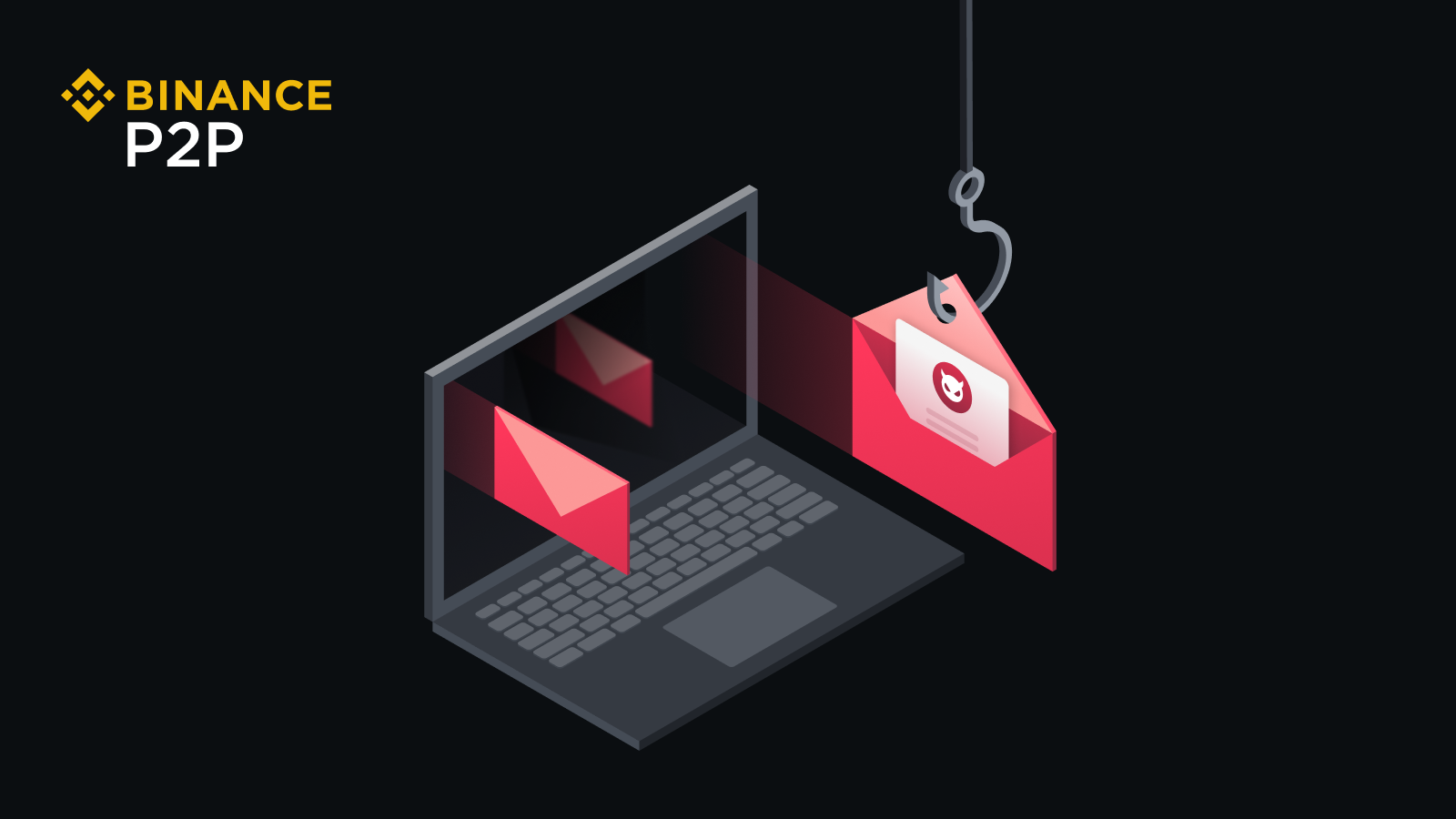
Learn about the most common type of email scam sellers encounter when using Binance P2P.
It is a fact that we live in a digital age. We all embrace technology in its new and exciting forms, but so do, unfortunately, bad actors and scammers. Among the most common scams you'll encounter is the fake email scam, a type of phishing attempt.
These emails are designed to trick users into releasing cryptocurrency before they have received any payments into their bank accounts.
Scammers have become more sophisticated in their methods, making it more difficult for people to identify and avoid these scams. However, in this article you will learn exactly how to spot and avoid fake email scams and keep your personal information safe online.
How Fake P2P Email Scams Work
Fake P2P email scams work by tricking users into believing they can release their assets to the P2P counterparty. The buyer claims that their fiat payment is held in escrow by Binance, for example. The scammer then asks the seller to check their email for a message that supposedly supports their claim. However, this email is actually fraudulent.
Once the seller releases the cryptocurrencies, the scammer keeps both the cryptocurrencies and your funds (since they never actually made the payment). Once the seller releases the cryptocurrencies, it is difficult to get them back because they have already confirmed with the release that they received the fiat money.
Our example above is just one of the common methods used for P2P email scams. Being aware of the different types of scam emails that exist will ultimately help improve your security.

Four Common Fake Email Scams and How to Identify Them
Release cryptocurrencies
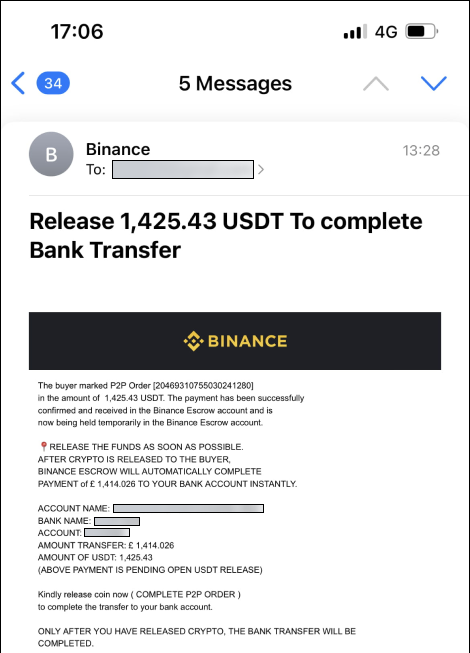
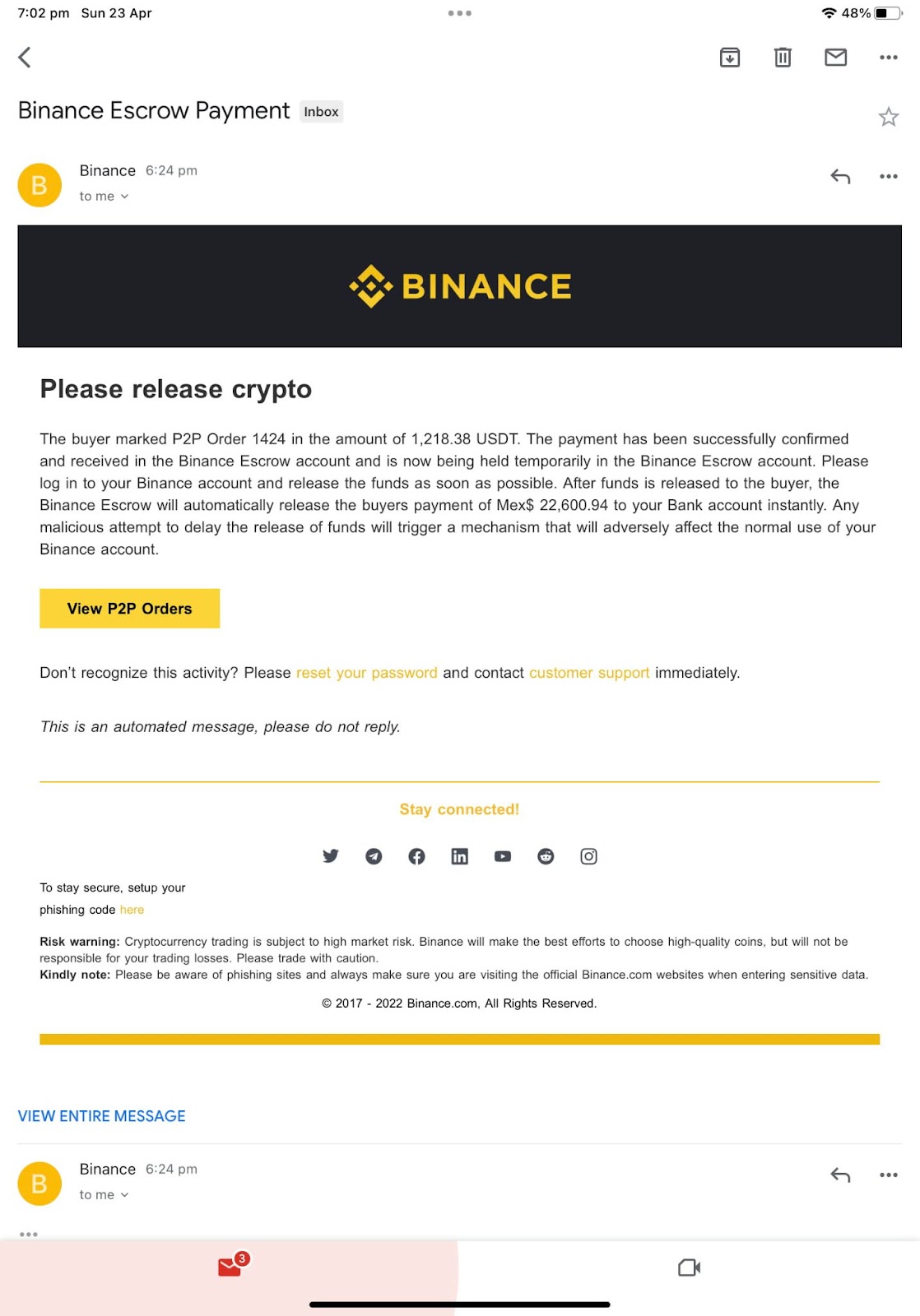
The scammer claims that your fiat funds are safely held in custody by Binance and will insist that you release the coins. It could even send you a fraudulent email, falsely confirming the presence of your fiat money in a Binance escrow service, along with a warning to block your account if you do not release the cryptocurrencies.
You can detect this attack by looking for:
Grammatical and spelling errors in the messages/emails you receive.
Suspicious sender addresses (e.g. @binancep2p .trade.com).
Urgent requests for you to release the cryptocurrencies in a hurry.
Emails or messages saying that the funds are in escrow, and that you will receive the money after releasing the cryptocurrencies.
Phishing emails
These emails often include a call to action, meaning they encourage users to click on a link. The link, however, will direct them to a fake website designed to imitate a legitimate one. Users are then pressured to enter their login credentials, which are then seized by the scammer.
You can detect this attack by looking for:
Grammatical and spelling errors in the messages/emails you receive.
Suspicious sender addresses (for example, @gmail.com instead of our official domain @binance.com).
Links that seem harmless, but lead to unexpected or fake websites.
Emails that do not include your anti-phishing code.
Late payment
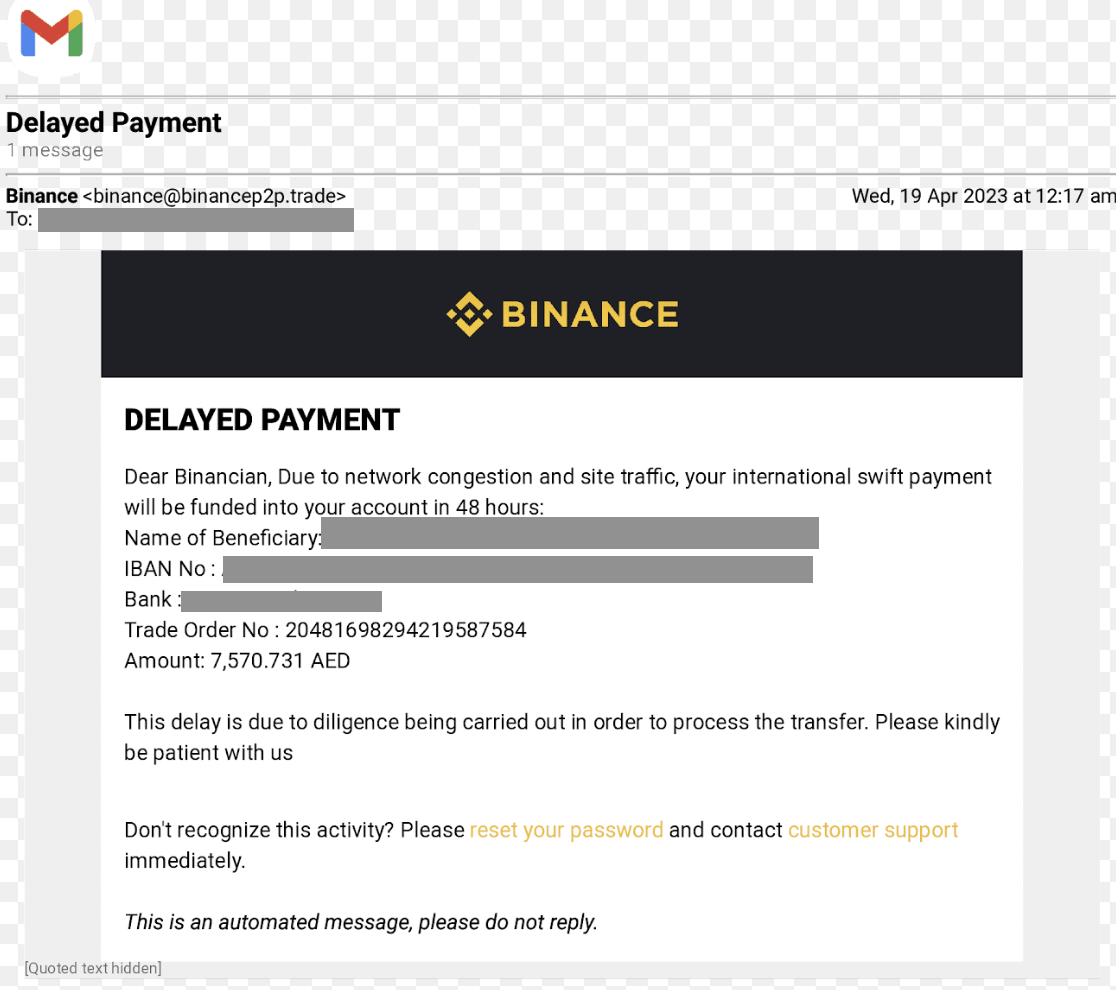
You will receive an email stating that due to a network issue, the transfer will be delayed. However, you are assured of receiving payment within 48 hours. At the same time, the buyer pressures you to release the cryptocurrencies. The reality is that the payment has not been delayed and has simply not been sent.
You can detect this attack by looking for:
Grammatical and spelling errors in the messages/emails you receive.
Suspicious sender addresses (e.g. @binancep2p .trade.com).
Urgent requests for you to release the cryptocurrencies in a hurry.
Buyer feedback that the network is congested or other possible delays.
Customer service or technical support scams
The scammers claim to be Binance technical support agents, informing users of problems with their devices and offering assistance. However, the process often involves granting the scammer remote access or providing sensitive information that can be misused.
You can detect this attack by looking for:
Unsolicited offers of customer service.
Remote access requests to your device.
Requests to pay for support with unusual payment methods.
Scams with attachments
Fake emails can often contain malicious attachments, such as PDF files or word processing files, which can infect your device with malware or viruses when opened.
You can detect this attack by looking for:
Unexpected or unsolicited file attachments.
File names inconsistent or unrelated to the content of the email.
Suspicious or harmful file extensions (e.g. .exe, .js, .vbs).
Tips to protect yourself from fake email scams
Stay alert for the aforementioned signs and trust your instincts.
Always check the email sender address and authenticity of any website you visit.
If you're unsure about an email, contact Binance customer support or check out our guide on how to identify phishing emails.
Do not provide confidential information by email or enter it on unknown websites.
Keep your devices and security software up to date to protect against the latest scams and malware.
Do not release cryptocurrencies as a P2P seller if you have not verified that you have already received the fiat money. You can open an appeal if you have any problems with the payment.
Please note that Binance P2P does not process fiat payments or escrow fiat currencies.
Activate the anti-phishing code feature in your Binance account.
Protect yourself by educating yourself about scams
Fake email scams can be quite convincing, but by educating yourself about their tactics, you can better protect yourself and your assets. Remember to be alert and always think twice before taking any action indicated in an email or by a person you don't know. And, as always, you can contact Binance if you have any questions.
Remember: prevention is better than cure.
Start your activity on Binance P2P
Are you ready to start trading on Binance P2P? Register a new Binance account or download the Binance app. Once you have completed identity verification, you can start buying and selling cryptocurrencies on the marketplace platform.

You might also be interested…
What is P2P crypto trading and how do local businesses work with Bitcoin?
How to report P2P scams on the Binance app
How to block a user on Binance P2P
Disclaimer: Your use of Binance P2P services, information and other content (including that of third parties), or that are accessible and available from Binance P2P services, is at your own risk. Our sole responsibility is to manage cryptocurrency transactions. All payments are final upon completion, unless otherwise required by law. The Binance P2P platform has no right or obligation to resolve disputes arising from a completed payment. Neither the Binance P2P platform nor the merchants are responsible for your loss resulting from a completed payment.

