

Currently, on the Zepoch node airdrop page, the modular Layer2 Rollup project Eclipse appears in its airdrop list.
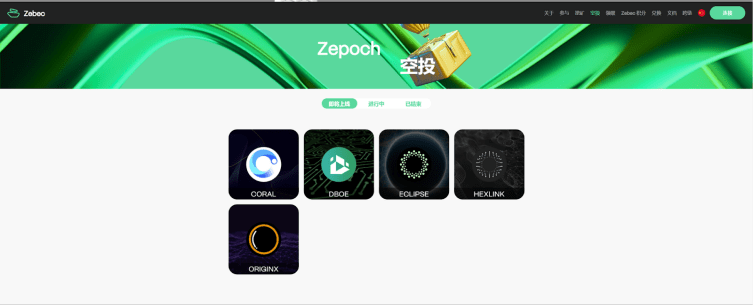
With Eclipse’s recent announcement that its Layer2 mainnet architecture will be powered by SVM and will be launched on the mainnet at the end of this year, two speculations are inevitable: one is that Eclipse may issue token airdrops to early contributors to the ecosystem in the near future according to certain rules (the token name and airdrop rules have not been disclosed at present), and the other is that Zepoch node holders may be within the scope of Eclipse’s airdrop.
From the perspective of the Zepoch node, as an equity asset of the Zebec Protocol streaming payment ecosystem, holders of the Zepoch node will receive a series of benefits including revenue sharing of the Zebec ecosystem, invitation rewards, airdrop rewards, etc.
In terms of airdrop rights, Zepoch node holders have already received several rounds of POSE token airdrops issued by Nautilus Chain ecosystem project PoseiSwap, while other ecosystem projects that have not yet airdropped but have clear airdrop plans (may not disclose specific airdrop plans) appear in the Zepoch node airdrop list. Therefore, the emergence of Eclipse basically confirms that Zepoch nodes will receive airdrops provided by Eclipse in the future.
Eclipse: Pioneer in Modular Layer 2 Solutions
Eclipse is a modular Rollup platform and one of the latest Layer2 solutions. Not long ago, Eclipse officially released its mainnet architecture. As a sovereign Rollup based on the Cosmos ecosystem, it uses Celestia as the consensus layer and DA. While being highly compatible with EVM, it also uses Solana VM (mainly in the early stage), PolygonSVM, etc. as the settlement and execution environment, and completes ZK fraud proof through RISC Zero. The settlement layer Rollup built by Eclipse based on Solana VM will also be iterated into Optimistic Rollup and Zk Rollup in the future, which will provide developers with more Rollup solution options.
Eclipse allows developers to use Solana VM on any chain to build customizable modular Rollups, and as a new chain (Layer2 layer) with different technical solutions developed in a modular way with a low threshold through the RaaS (Rollup-as-a-service) tool. These new Rollup layers have independent sovereignty, and they can obtain a lot of support including DA, settlement, consensus, etc. from multiple parties in a decentralized form during runtime, rather than relying entirely on one party. The ultimate vision of Eclipse is to build a customizable Rollup execution layer for any Layer1 heterogeneous blockchain and connect all blockchains in a modular way.
Eclipse co-founder and CEO Neel Somani recently talked about its newly released mainnet framework in the Bankless podcast. The original intention of Eclipse was to bring Solana to Ethereum. Parallel execution is a major advantage of Solana. SVM and its Sealevel runtime make parallel transaction execution possible. This allows SVM to scale directly as processors continue to add more cores at a lower cost. They hope to take advantage of Solana's execution capabilities while taking advantage of Ethereum's settlement and liquidity, but have encountered many limitations and constraints. The main challenge is that Ethereum data availability is too expensive, so it was decided to introduce Celestia and Risk Zero. Celestia is used for data availability, and Risk Zero is used for fraud proofs.
Based on a new modular architecture, Eclipse is combining Solana's high performance with Ethereum's security, verifiability, and network effects. The Eclipse mainnet is expected to provide faster transaction speeds and larger transaction sizes for the Ethereum ecosystem, while providing a better experience for developers and users. With parallel transaction processing capabilities, Eclipse's performance is expected to be 10 times faster than competitors such as Optimism.
At present, dozens of projects such as BNB Chain, Solana SVM Rollup Cascad "Cascade" launched by Iejective, Avail, a modular blockchain developed by Near and Polygon, and Nautilus Chain, a modular blockchain under the Zebec ecosystem, have been deployed on the Eclipse test network and have become its strategic partners.
As the most advanced industry infrastructure, Eclipse has also received great attention in the field of crypto capital. It is understood that the project has completed a total of US$15 million in financing in 2022, with investors including Polychain, Polygon Ventures, Tribe Capital, Infinity Ventures Crypto, CoinList, etc.
Previously, a series of Layer2 facilities represented by Optimism and Arbitrum issued airdrops after launching the mainnet, which opened a new round of airdrop craze. After Eclipse announced a new mainnet framework plan and announced plans to launch the mainnet at the end of this year, the industry speculated that Eclipse might release governance tokens and airdrops. In particular, the inclusion of Eclipse in the Zepoch node airdrop list further confirmed this speculation.
Eclipse: A supporter of the long-term development of the Zebec ecosystem
The Zebec Protocol ecosystem is closely connected to the Eclipse ecosystem. Nautilus Chain is a public chain member of the Zebec Protocol ecosystem. As the industry's first modular, Layer 3 public chain, it is receiving long-term underlying support from Eclipse.
Nautilus Chain itself is a brand-new upgrade of the blockchain architecture concept. It integrates many facilities such as Celestia, Eclipse, and EigenLayer, and encapsulates the functions and resources provided by these facilities in different modules for developers to select and replace in a plug-in manner without reinventing the wheel. Nautilus Chain is more like a new computer architecture, which is to encapsulate all kinds of components in a modular manner. Users can choose CPUs, memories, hard disks and other components from different brands, and assemble and adapt them by plugging in. The role of Nautilus Chain is the data translation and interface layer. Therefore, based on Nautilus Chain, Dangdang developers only need to upgrade the expansion layer to support the business in a sharding manner. If they want to support more languages, they only need to upgrade the interface and translation layer.
This modular design will make the blockchain more flexible in terms of functionality, scalability and composability. It also means that it can achieve higher scalability and expansion capabilities, and further improve network throughput, security and privacy based on Layer2.
The emergence of Optimistic, Arbitrum and some pan-Zk-rollup solutions are essentially patching Ethereum Layer 1. After Ethereum founder Vitalik Buterin proposed the Layer 3 concept, Layer 3 is usually considered to be a patch for Layer 2. It is more like building a new layer based on Layer 2, and may further obtain new customization at the expense of decentralization, security and other factors to make up for the shortcomings of Layer 2.
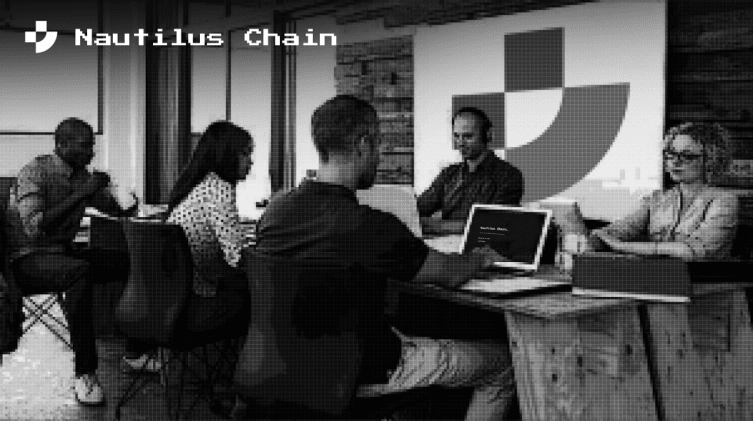
Nautilus Chain is a new concept of Layer3 system, which plays the role of data translation and interface layer, and the modular position of this layer is above Layer2, so it is also called a new form of Layer3 architecture. During operation, Nautilus Chain plays the role of the parallel processing layer at the top, and provides developers with optional, pluggable and customized solutions in a modular way, which helps to achieve scalability in the execution layer in the EVM environment.
From the developer's perspective, when they want to develop and upgrade applications to achieve more functions, reduce operating costs, enhance security, and gain more sovereignty, developers can more broadly choose the solution that suits them from the package of modules provided by Nautilus Chain, and thus choose to develop DAPP-Chain, DAPP-Rollup or DAPP-Subnet, etc.
Eclipse is one of the most important underlying facilities in the Nautilus Chain system. Based on Eclipse, developers of Nautilus Chain can customize and develop Rollups of different solutions with the support of Eclipse, and can build various "independent" DAPP-Chains or DAPP-Rollups or DAPP-Subnets that can run in parallel and have independent sovereignty from the bottom up, that is, developers are allowed to stack different chains into layers to create chain stacks, and no longer need to return to Layer1 in the end. In this process, Nautilus Chain plays the role of a parallel processing layer at the top, which helps to achieve scalability in the execution layer in the EVM environment.
In addition, Eclipse's unique SVM solution enables parallel transaction execution when running on Sealevel, which not only makes Nautilus Chain compatible with EVM but also has the fastest execution speed.
From another perspective, in addition to being the underlying infrastructure of Nautilus Chain, the Zebec Protocol ecosystem and Eclipse are also long-term strategic partners. The two parties maintain a long-term market cooperation relationship and serve as long-term co-builders to promote the long-term prosperity of each other's ecosystems.
And when Eclipse meets the airdrop expectations, Zepoch will be one of the beneficiaries.


