
鬼族研习社
331 Posts

鬼族研习社
公众号:鬼族研习社BTC 2020年老社区、专注链上数据分析、技术走势分析、信息面分析、基本面分析、直播等!聊天室里有BTC跟单体验!

Level 1 Creator
8.4 Years
15 Following
5.4K+ Followers
10.5K+ Liked
1 Badges
Posts
All
Videos
Live
PINNED
‼️Live stream every day at 3 PM (paused on holidays)
——————————
‼️Experience BTC copy trading in the chatroom
——————————
🌹Official account: Ghost Tribe Research Society BTC
——————————
‼️Experience BTC copy trading in the chatroom
——————————
🌹Official account: Ghost Tribe Research Society BTC
Last night, U.S. Treasury Secretary Bessent’s remarks gave the market a bullish stimulus. After that, where could things go next?
First, news dominates the market—there’s no way around it. If it were bearish news, for example if Israel started striking someone again, then prices would naturally move downward accordingly. So once there’s a piece of news, that’s simply how it works.
Now price is at a key pressure zone: the range [79500-80000]. Only if price can effectively break above the 80000 level is there a possibility of making new highs. But if price meets resistance in the pressure zone and pulls back, then as long as it falls back below the 78000 level again—well, that’s basically it for the bulls. A major correction would continue, and the target area for the correction is where I would be watching: [76300-76600], and possibly even around the 75500 level. So whether it goes up or down depends mainly on how it performs over the next one or two days. If it does effectively break above 80000, then don’t rule out a move toward 83000 to tap liquidity in the market—of course, that’s in a more optimistic scenario.
Also, it’s the start of a new month now. The monthly line’s close looks still quite good. So the likelihood of continued upside is relatively higher. No matter what unexpected event comes along, testing 83000 and even 84000 should be no problem. If we get even more optimistic, then 90000 could be on the table. But you must pay special, special attention: if at some point this month the price suddenly drops below 70000 because of a particular event, that would be a very strong warning signal. It would very likely mean the price is set to return to a downward trend. Beyond that, it’s all about what the bulls can do.
Right now it’s a market that can go either way—an area that’s relatively easy to stir things up and harvest liquidity. I still tend to believe that a rebound is more likely than an outright rally; that is, on the upside, it’s easier to see high short (sell) opportunities.
First, news dominates the market—there’s no way around it. If it were bearish news, for example if Israel started striking someone again, then prices would naturally move downward accordingly. So once there’s a piece of news, that’s simply how it works.
Now price is at a key pressure zone: the range [79500-80000]. Only if price can effectively break above the 80000 level is there a possibility of making new highs. But if price meets resistance in the pressure zone and pulls back, then as long as it falls back below the 78000 level again—well, that’s basically it for the bulls. A major correction would continue, and the target area for the correction is where I would be watching: [76300-76600], and possibly even around the 75500 level. So whether it goes up or down depends mainly on how it performs over the next one or two days. If it does effectively break above 80000, then don’t rule out a move toward 83000 to tap liquidity in the market—of course, that’s in a more optimistic scenario.
Also, it’s the start of a new month now. The monthly line’s close looks still quite good. So the likelihood of continued upside is relatively higher. No matter what unexpected event comes along, testing 83000 and even 84000 should be no problem. If we get even more optimistic, then 90000 could be on the table. But you must pay special, special attention: if at some point this month the price suddenly drops below 70000 because of a particular event, that would be a very strong warning signal. It would very likely mean the price is set to return to a downward trend. Beyond that, it’s all about what the bulls can do.
Right now it’s a market that can go either way—an area that’s relatively easy to stir things up and harvest liquidity. I still tend to believe that a rebound is more likely than an outright rally; that is, on the upside, it’s easier to see high short (sell) opportunities.
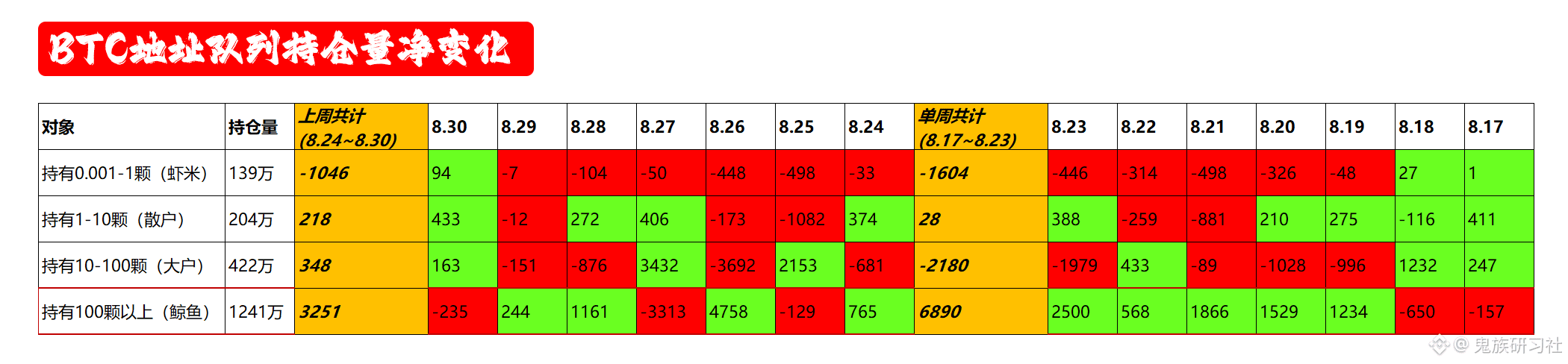
【BTC On-Chain Address Holdings Net Change】In the data, focus on the whale address section. Yesterday, there was a net outflow of 235 coins, but over the course of the entire day, it was a rebound-type market. After midnight, right after 0:00, the price started to fall sharply. So yesterday’s data has some directional significance for today’s行情 (market trend). Of course, this direction has already played out: the whale addresses’ net outflow, and the price also did decline.
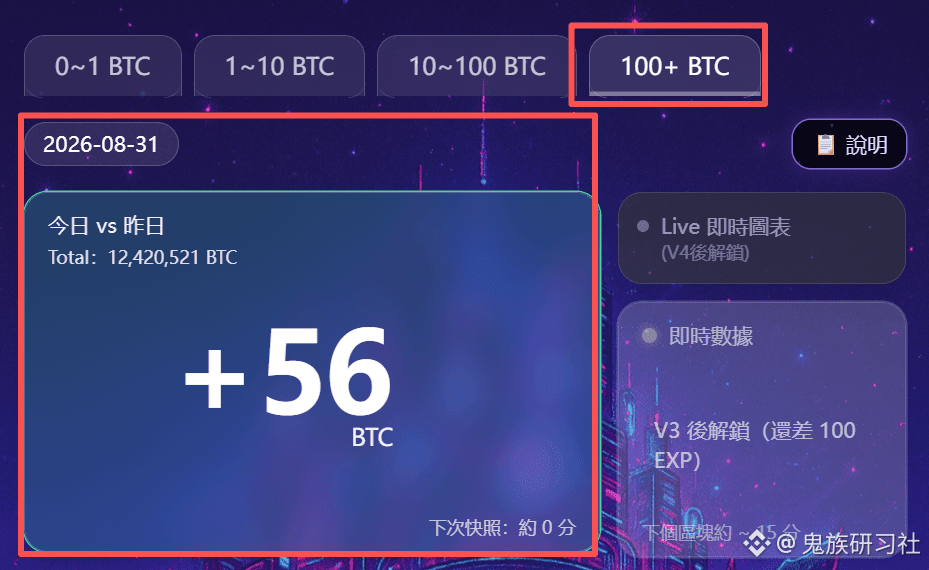
However, as of now, the whale address segment is still showing net inflow. So I think today’s rebound still deserves expectations. The key resistance level above is around the 78,500 area. If there is an effective breakout, the bulls can temporarily hold more steadily.
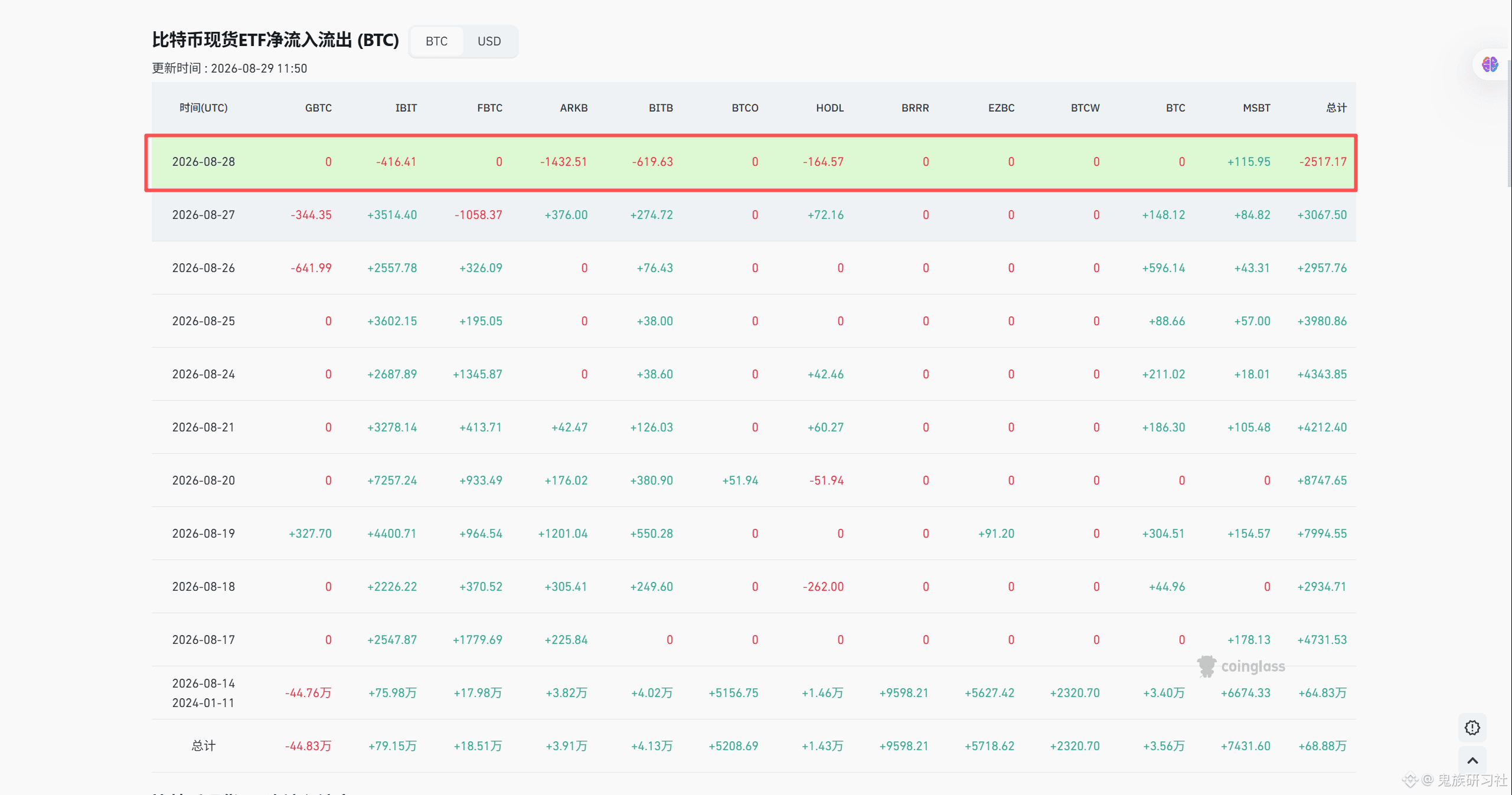
Last Friday, the spot ETF saw net outflows, ending 9 consecutive days of net inflows. This is normal—funds can’t keep net inflow going all the time. Nine straight days is already very impressive and fully reflects an increase in market capital. Therefore, we allow the market to experience a spontaneous net outflow as part of an adjustment, which is very normal. In about three days or so, the ETF funds will still need to resume net inflow behavior. If it continues to be net outflow all the time, then that would be a bit of a problem.
However, as of now, the whale address segment is still showing net inflow. So I think today’s rebound still deserves expectations. The key resistance level above is around the 78,500 area. If there is an effective breakout, the bulls can temporarily hold more steadily.
Last Friday, the spot ETF saw net outflows, ending 9 consecutive days of net inflows. This is normal—funds can’t keep net inflow going all the time. Nine straight days is already very impressive and fully reflects an increase in market capital. Therefore, we allow the market to experience a spontaneous net outflow as part of an adjustment, which is very normal. In about three days or so, the ETF funds will still need to resume net inflow behavior. If it continues to be net outflow all the time, then that would be a bit of a problem.

You can’t offend anyone, but you especially can’t offend rich people. Even if you offend a rich person, you still can’t offend the big shot in a particular industry. And even if you offend the top big shot in an industry, you still can’t offend a marketing-born big shot. Jing Tian, how clueless can you be?
Back then, even Wang Sicong, who was at the height of his power, was wary of Jing Tian by three points. Now, however, Sun Ge is directly ripping her apart over a mere 30 million. Is it that Jing Tian has fallen on hard times, or is Sun Ge’s background rock-solid?
Bao Beier cheating, Sun Yuchen suing Jing Tian, and Han Peiying revealing Liu Haocun—could it be that all of these are meant to suppress some truly important information?
Verified
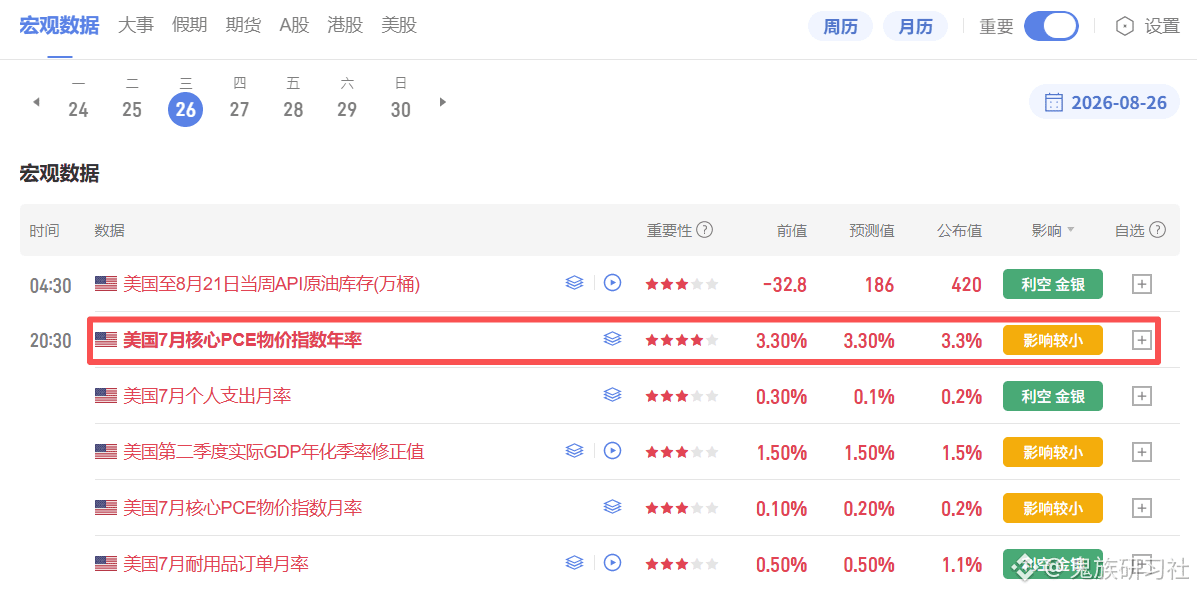
The U.S. PCE data for tonight has been released. Core inflation is in line with expectations, but overall it is still elevated. In July, the core PCE price index rose 0.2% month-on-month and 3.3% year-on-year, both matching market expectations. Total PCE rose 0.2% month-on-month. Actual consumer spending stalled in July after two consecutive months of strong growth. The data suggest the U.S. economy is cooling, which may also strengthen the case for the Federal Reserve to keep interest rates unchanged.
Note: This Friday’s Jackson Hole annual symposium is the real highlight. The theme is “Financial Innovation: The Impact on Payments and Policy.” This is not only the keynote for the annual policy conference, but also, according to Wall Street, the most critical window for Chair Waller—or rather, “Wosh”—to reshape the Fed’s credibility.
Since taking office in May, Waller has deliberately avoided forward guidance and shortened policy statements. The market has interpreted this as a sign of insufficient determination to fight inflation, after which the yield on the 30-year U.S. Treasuries surged at one point to the highest level since 2007, reaching 5.34%.
Goldman Sachs estimates that improving communication could reduce interest-rate volatility by about 10% over the next year, but Waller is moving in the opposite direction.
At the meeting, if Waller provides too little information, the market will be extremely disappointed.
Waller’s remarks likely need to reaffirm three things: inflation risks have not been eliminated, policy rates remain the core tool to combat inflation, and if inflation runs too high again, the Fed will further tighten.
In short, the PCE data are in line with expectations and should have limited impact on the market in the near term. The real test is Waller’s speech on Friday. If he issues clearer policy signals, market volatility will be sharply amplified. If he continues with an ambiguous communication style, the market may be disappointed again and trigger selling.
Whether BTC can hold above $80,000 depends on whether Waller can provide the answers the market wants.
Note: This Friday’s Jackson Hole annual symposium is the real highlight. The theme is “Financial Innovation: The Impact on Payments and Policy.” This is not only the keynote for the annual policy conference, but also, according to Wall Street, the most critical window for Chair Waller—or rather, “Wosh”—to reshape the Fed’s credibility.
Since taking office in May, Waller has deliberately avoided forward guidance and shortened policy statements. The market has interpreted this as a sign of insufficient determination to fight inflation, after which the yield on the 30-year U.S. Treasuries surged at one point to the highest level since 2007, reaching 5.34%.
Goldman Sachs estimates that improving communication could reduce interest-rate volatility by about 10% over the next year, but Waller is moving in the opposite direction.
At the meeting, if Waller provides too little information, the market will be extremely disappointed.
Waller’s remarks likely need to reaffirm three things: inflation risks have not been eliminated, policy rates remain the core tool to combat inflation, and if inflation runs too high again, the Fed will further tighten.
In short, the PCE data are in line with expectations and should have limited impact on the market in the near term. The real test is Waller’s speech on Friday. If he issues clearer policy signals, market volatility will be sharply amplified. If he continues with an ambiguous communication style, the market may be disappointed again and trigger selling.
Whether BTC can hold above $80,000 depends on whether Waller can provide the answers the market wants.
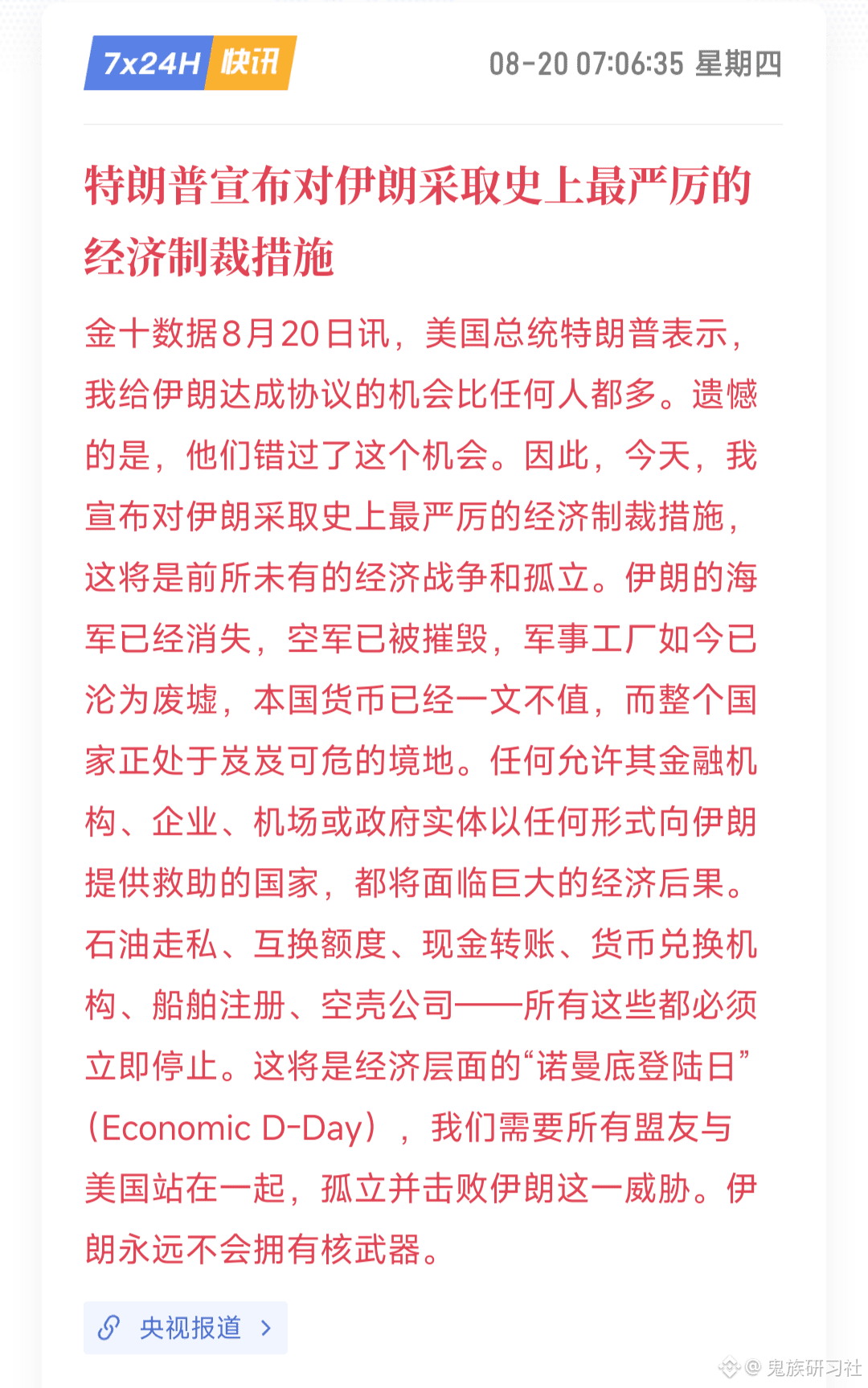
2:00 AM Beijing time on August 25, the U.S. Treasury Secretary Bessent officially announced the imposition of “the strictest sanctions in history” on Iran.
Bessent said this is the largest coordinated economic isolation action in human history, and the core of it is to force all countries and companies worldwide to take sides between the United States and Iran.
The sanctions target three types of economic and trade activities: buying Iranian oil, sending remittances to Iran, and maritime transshipment of Iranian crude oil. Any country or company that continues doing business with Iran will face the U.S.’s secondary sanctions.
Iran’s Supreme National Security Council Secretary Rezaei warned that if the United States continues its economic war, Iran will blockade the oil transportation through the Strait of Hormuz, adding that no drop of oil will be exported through the Strait of Hormuz and even the Persian Gulf region. Any country that participates in or supports the United States’ economic war against Iran will be viewed by Iran as an enemy.
This round of sanctions was announced by Trump on August 19. At the time, his exact words were that the U.S. would launch “the most destructive economic action ever, aimed at a country.” U.S. Treasury Secretary Bessent immediately confirmed it, and then will officially release the specific measures on August 24–25.
Now the strictest sanctions are about to land—the short-term uncertainty is basically gone. Interestingly, some funds are once again choosing to move in.
So even if the specific operations are announced tonight at 2:00 AM, the impact on the BTC price should be limited.
What matters more, though, is oil prices—the real hidden risk.
Brent crude oil is currently above $92 per barrel, and Iranian oil exports have plunged from about 2.0 million barrels per day before the war to 287,000 barrels. If the Strait of Hormuz is truly blocked, oil prices would keep surging, and inflation pressure would continue to make it harder for the Federal Reserve to ease policy. Rate-hike expectations would return—this is the real pressure on BTC.
Whether the short-term rebound brought by the sanctions actually holds will depend on whether oil prices can stabilize.
Bessent said this is the largest coordinated economic isolation action in human history, and the core of it is to force all countries and companies worldwide to take sides between the United States and Iran.
The sanctions target three types of economic and trade activities: buying Iranian oil, sending remittances to Iran, and maritime transshipment of Iranian crude oil. Any country or company that continues doing business with Iran will face the U.S.’s secondary sanctions.
Iran’s Supreme National Security Council Secretary Rezaei warned that if the United States continues its economic war, Iran will blockade the oil transportation through the Strait of Hormuz, adding that no drop of oil will be exported through the Strait of Hormuz and even the Persian Gulf region. Any country that participates in or supports the United States’ economic war against Iran will be viewed by Iran as an enemy.
This round of sanctions was announced by Trump on August 19. At the time, his exact words were that the U.S. would launch “the most destructive economic action ever, aimed at a country.” U.S. Treasury Secretary Bessent immediately confirmed it, and then will officially release the specific measures on August 24–25.
Now the strictest sanctions are about to land—the short-term uncertainty is basically gone. Interestingly, some funds are once again choosing to move in.
So even if the specific operations are announced tonight at 2:00 AM, the impact on the BTC price should be limited.
What matters more, though, is oil prices—the real hidden risk.
Brent crude oil is currently above $92 per barrel, and Iranian oil exports have plunged from about 2.0 million barrels per day before the war to 287,000 barrels. If the Strait of Hormuz is truly blocked, oil prices would keep surging, and inflation pressure would continue to make it harder for the Federal Reserve to ease policy. Rate-hike expectations would return—this is the real pressure on BTC.
Whether the short-term rebound brought by the sanctions actually holds will depend on whether oil prices can stabilize.
Last night at 2:00, the U.S. Federal Reserve released the minutes of the July FOMC meeting, sending out a somewhat hawkish signal. The minutes showed that many officials believed that if inflation cannot be brought down, further tightening of monetary policy would be necessary. The meeting kept the interest rate unchanged at 3.50% to 3.75%, with a vote of 9 to 3; three regional Fed presidents cast dissenting votes, calling for a 25-basis-point rate hike.
The minutes did not mention any views supporting rate cuts. Several officials warned that elevated AI valuations and the expansion of lending-backed financing are being transmitted from the equity market into the credit system. The Middle East conflict was listed as a major source of uncertainty for the inflation outlook. CME data showed that the probability of a rate hike in September was still as high as 32.7%.
The strange part is that while the minutes were hawkish, BTC still surged sharply. The core reason is the three forces mentioned in the previous section, which outweighed the bearish takeaways from the minutes. First, the U.S. Treasury announced a major expansion of its Treasury bill repurchase program, adding a large amount of liquidity to the market. Next, the epic-level short squeeze was still building. Earlier bearish positions that had been concentrated were closed out over the past few months; price strength triggered a chain of liquidations, and passive buying further amplified the rally. Then there was the proposal by Wosh to reduce the Fed’s number of policy meetings from eight times per year to six. The market interpreted this as the Fed entering a “quieter” mode—fewer decision points would actually reduce the frequency of policy disruptions.
So, the sharp surge, in essence, was that macro factors (the Treasury’s repo expansion + fewer Fed meeting days) outweighed the hawkish wording in the minutes themselves, and combined with the technical factors of shorts being forced to cover, together pushing BTC into a round of explosive rally.
But the risk of rate hikes has not disappeared, and the shadow of geopolitical conflict still lingers. Stay cautious—don’t get overheated.
The minutes did not mention any views supporting rate cuts. Several officials warned that elevated AI valuations and the expansion of lending-backed financing are being transmitted from the equity market into the credit system. The Middle East conflict was listed as a major source of uncertainty for the inflation outlook. CME data showed that the probability of a rate hike in September was still as high as 32.7%.
The strange part is that while the minutes were hawkish, BTC still surged sharply. The core reason is the three forces mentioned in the previous section, which outweighed the bearish takeaways from the minutes. First, the U.S. Treasury announced a major expansion of its Treasury bill repurchase program, adding a large amount of liquidity to the market. Next, the epic-level short squeeze was still building. Earlier bearish positions that had been concentrated were closed out over the past few months; price strength triggered a chain of liquidations, and passive buying further amplified the rally. Then there was the proposal by Wosh to reduce the Fed’s number of policy meetings from eight times per year to six. The market interpreted this as the Fed entering a “quieter” mode—fewer decision points would actually reduce the frequency of policy disruptions.
So, the sharp surge, in essence, was that macro factors (the Treasury’s repo expansion + fewer Fed meeting days) outweighed the hawkish wording in the minutes themselves, and combined with the technical factors of shorts being forced to cover, together pushing BTC into a round of explosive rally.
But the risk of rate hikes has not disappeared, and the shadow of geopolitical conflict still lingers. Stay cautious—don’t get overheated.
BTC returns to nearly $70,000 for the first time in almost three months. The 24-hour high touched $70,000; the gain exceeded 7%. It hit a new high since early June. ETH surged in tandem, up more than 18%, briefly reaching $2,300, also a new high since May. In the past hour alone, liquidations across the whole network exceeded $1.3 billion—almost all of them were short liquidations.
This round of explosive rally is mainly driven by four engines resonating together!
First, the absolute core is an epic short squeeze. Bearish trades that had piled up for months were forced to close—within about an hour, more than $1 billion in BTC short positions were liquidated, triggering the largest wave of short liquidations since 2021. Price movement upward set off a chain reaction of liquidations, and passive buying further amplified the rally. On the day, a total of 126,000 traders across the market had $1.92 billion in positions liquidated, marking the largest single-day short liquidation in history.
Second, there were dual breakthroughs in both Trump and regulatory policy. On the 19th, Trump met with crypto industry executives such as Coinbase, Gemini, and Ripple at the White House. He publicly urged Congress to advance the CLARITY Act. On the same day, the SEC proposed new rules for “Regulation Crypto Assets,” establishing a clear pathway for token financing and, for the first time, introducing a mechanism for a safe harbor for investment contracts. The White House convened discussions with the President, crypto industry executives, and SEC and CFTC officials—signaling that digital assets have formally entered the level of national financial strategy discussions.
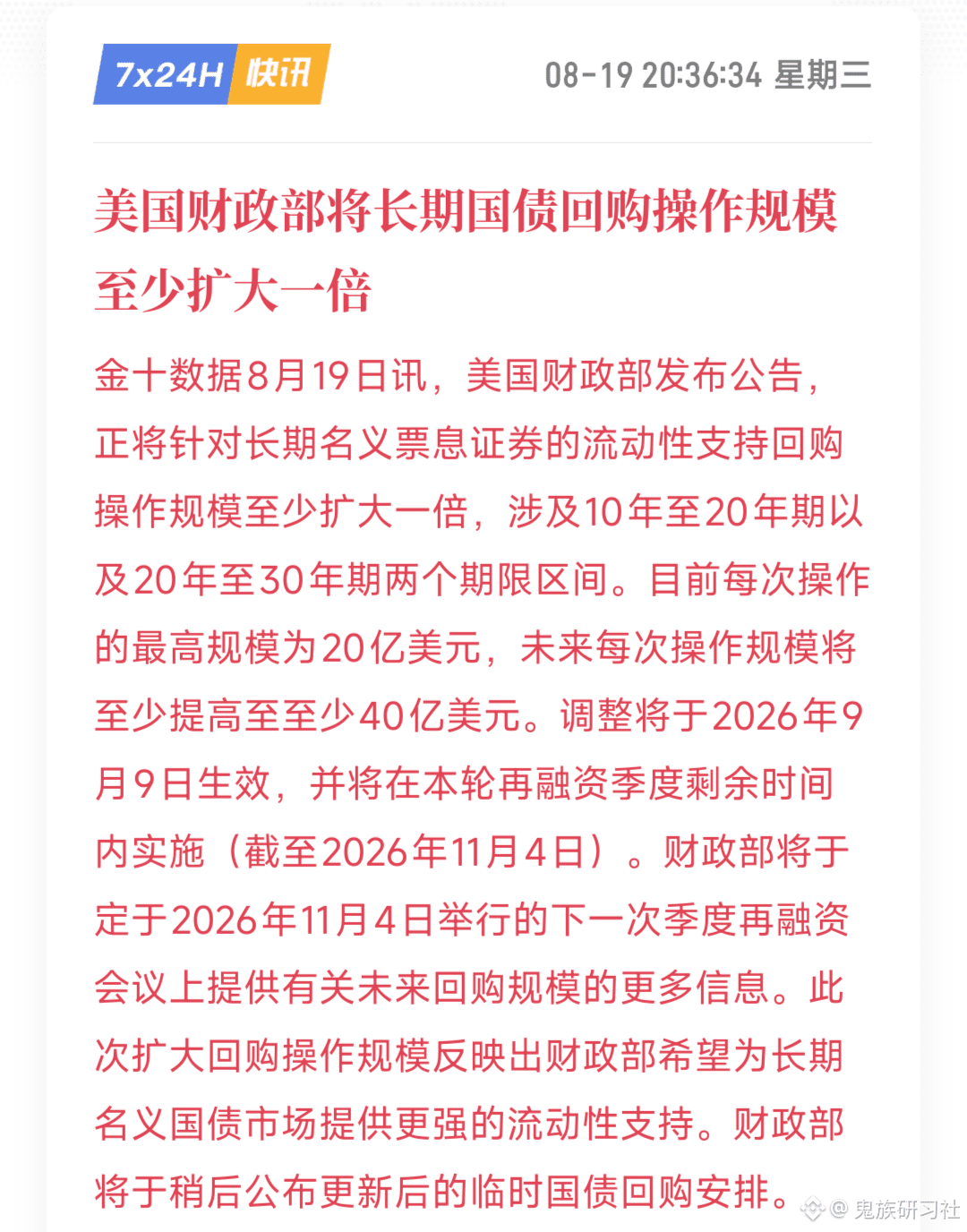
Third, the U.S. Department of the Treasury expanded its U.S. Treasury securities repurchase (repo) program. It announced that the scale of repos for 10- to 30-year Treasuries would be increased by at least double, with each operation not less than $4 billion. The new policy takes effect on September 9. Market interpretation sees it as mild quantitative easing. Both long-term Treasury yields and the U.S. dollar fell, creating a more favorable environment for risk assets.
Finally, there is the exaggerated, persistent inflow of ETF capital. In the first two weeks of August alone, BTC spot ETFs saw net inflows of about $1 billion. On Tuesday, the single-day net inflow was $189.3 million. BlackRock’s IBIT contributed $144 million. Multiple consecutive days of positive inflows have provided strong support to prices.
Of course, risks remain. The Fed meeting minutes did not mention rate cuts, and policy discussions have clearly shifted compared with the past year. The key for BTC next is whether it can convert the short squeeze into real buying demand—and fully hold above the $70,000 level?
This round of explosive rally is mainly driven by four engines resonating together!
First, the absolute core is an epic short squeeze. Bearish trades that had piled up for months were forced to close—within about an hour, more than $1 billion in BTC short positions were liquidated, triggering the largest wave of short liquidations since 2021. Price movement upward set off a chain reaction of liquidations, and passive buying further amplified the rally. On the day, a total of 126,000 traders across the market had $1.92 billion in positions liquidated, marking the largest single-day short liquidation in history.
Second, there were dual breakthroughs in both Trump and regulatory policy. On the 19th, Trump met with crypto industry executives such as Coinbase, Gemini, and Ripple at the White House. He publicly urged Congress to advance the CLARITY Act. On the same day, the SEC proposed new rules for “Regulation Crypto Assets,” establishing a clear pathway for token financing and, for the first time, introducing a mechanism for a safe harbor for investment contracts. The White House convened discussions with the President, crypto industry executives, and SEC and CFTC officials—signaling that digital assets have formally entered the level of national financial strategy discussions.
Third, the U.S. Department of the Treasury expanded its U.S. Treasury securities repurchase (repo) program. It announced that the scale of repos for 10- to 30-year Treasuries would be increased by at least double, with each operation not less than $4 billion. The new policy takes effect on September 9. Market interpretation sees it as mild quantitative easing. Both long-term Treasury yields and the U.S. dollar fell, creating a more favorable environment for risk assets.
Finally, there is the exaggerated, persistent inflow of ETF capital. In the first two weeks of August alone, BTC spot ETFs saw net inflows of about $1 billion. On Tuesday, the single-day net inflow was $189.3 million. BlackRock’s IBIT contributed $144 million. Multiple consecutive days of positive inflows have provided strong support to prices.
Of course, risks remain. The Fed meeting minutes did not mention rate cuts, and policy discussions have clearly shifted compared with the past year. The key for BTC next is whether it can convert the short squeeze into real buying demand—and fully hold above the $70,000 level?
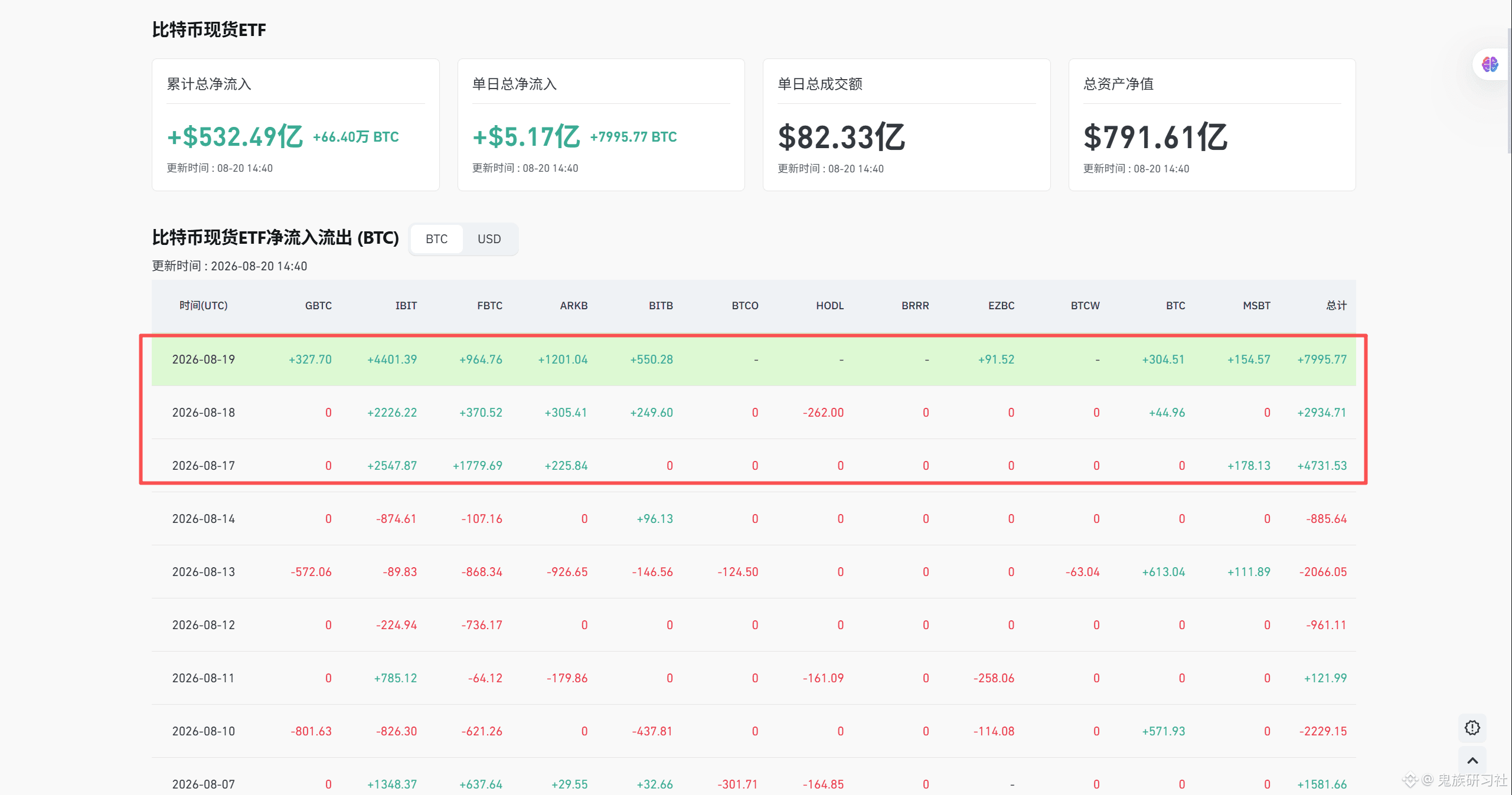
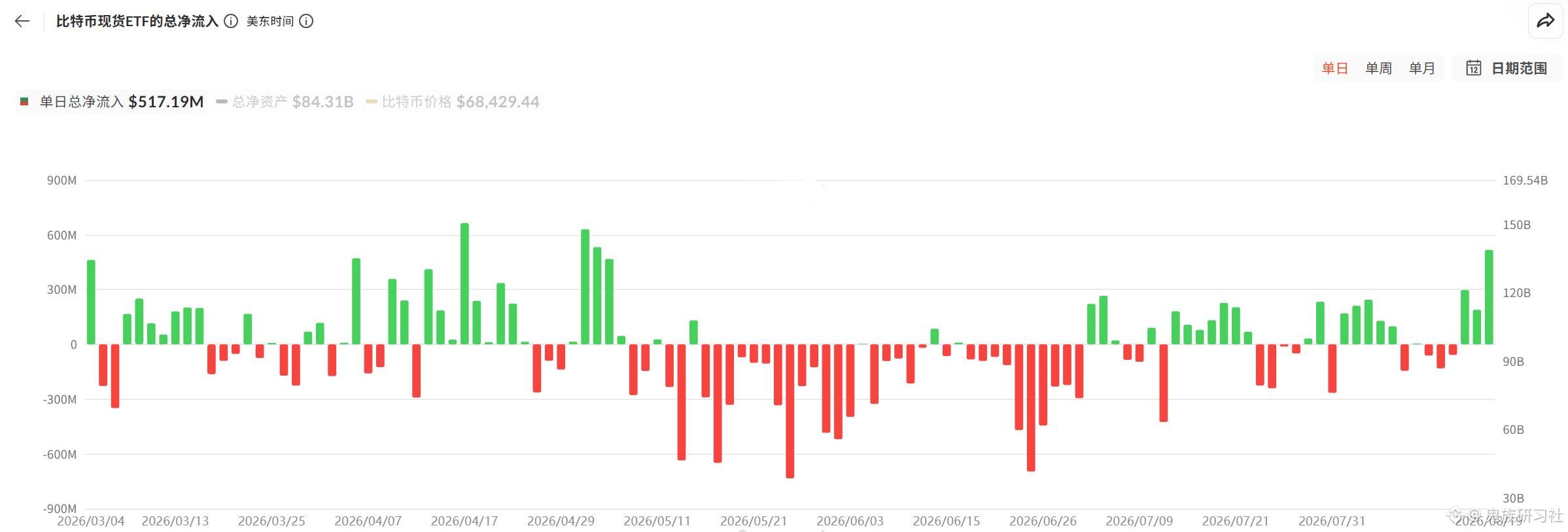
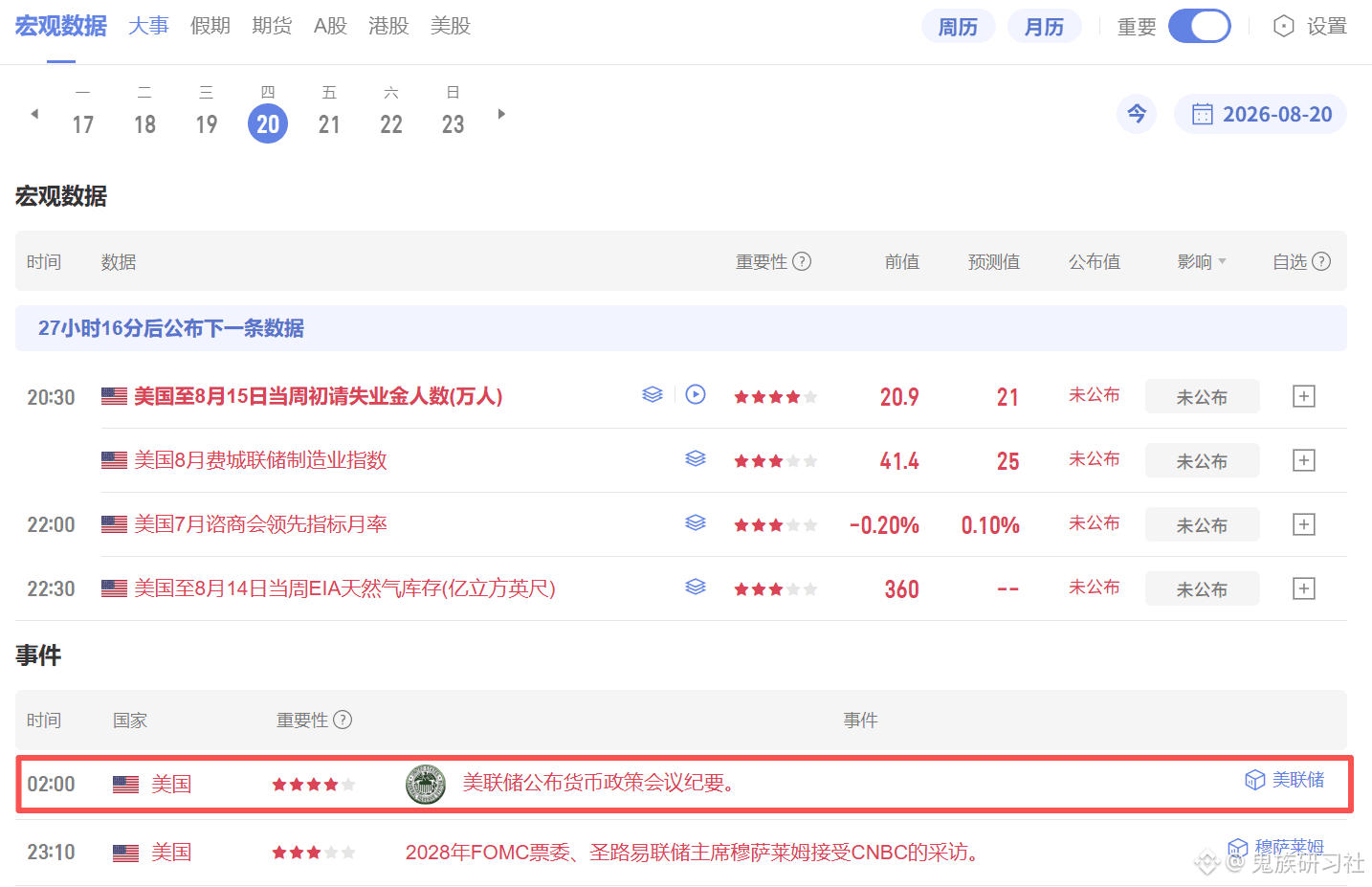
Tonight at 2:00, the Federal Reserve’s July FOMC meeting minutes will be released. This is the most critical risk event for the markets this week.
At the July FOMC meeting, the Fed kept the interest rate unchanged at 3.50% to 3.75% by a vote of 9 to 3, marking the fifth consecutive hold. Three regional Fed presidents voted against the decision, arguing for a 25-basis-point rate hike— the first time since September 2016 that three votes against were cast simultaneously. After the meeting, Fed Chair Waller clearly rejected describing this decision as a “pause,” saying, “This is just the beginning of the story.” He also emphasized that the Fed does not have a flexible inflation target—2% is the only target.
Since then, economic data has weakened across the board. July nonfarm payrolls rose by only 57,000. CPI year-on-year fell to 3.4%, and market pricing for a September rate hike has dropped sharply from 65% to 80% right after the meeting to roughly 30% to 40% now. In a Reuters survey, about 90% of economists expect rates to remain unchanged in September.
Tonight’s key is to see how large the hawkish faction revealed in the minutes is.
If the minutes show that most participants agree inflation is cooling and do not feel it’s time to hike, the probability of a September hike will likely be pushed down further, and BTC could hold above 65,000 and challenge higher levels.
If the minutes show deeper concern within the Fed about inflation persistence and more people moving closer to supporting a rate hike, then combined with the reality that the yield on the 30-year U.S. Treasuries has surged to the highest level since 2007, and that Brent crude has returned to $94 because the Iran–Israel ceasefire deal has expired without reaching an agreement, the 35% probability of a rate hike could rise again, and BTC may retest 62,000, or even 60,000.
In short, after Waller takes office and sharply compresses forward guidance, the market will parse the minutes word by word for any clues about internal disagreements and the rate-hike threshold.
For now, BTC is consolidating around $64,500, waiting for this news. After the minutes are released, volatility will surge sharply.
The direction will depend on how the minutes describe inflation risks and the interest-rate path—not simply whether the Fed hikes or doesn’t hike.
At the July FOMC meeting, the Fed kept the interest rate unchanged at 3.50% to 3.75% by a vote of 9 to 3, marking the fifth consecutive hold. Three regional Fed presidents voted against the decision, arguing for a 25-basis-point rate hike— the first time since September 2016 that three votes against were cast simultaneously. After the meeting, Fed Chair Waller clearly rejected describing this decision as a “pause,” saying, “This is just the beginning of the story.” He also emphasized that the Fed does not have a flexible inflation target—2% is the only target.
Since then, economic data has weakened across the board. July nonfarm payrolls rose by only 57,000. CPI year-on-year fell to 3.4%, and market pricing for a September rate hike has dropped sharply from 65% to 80% right after the meeting to roughly 30% to 40% now. In a Reuters survey, about 90% of economists expect rates to remain unchanged in September.
Tonight’s key is to see how large the hawkish faction revealed in the minutes is.
If the minutes show that most participants agree inflation is cooling and do not feel it’s time to hike, the probability of a September hike will likely be pushed down further, and BTC could hold above 65,000 and challenge higher levels.
If the minutes show deeper concern within the Fed about inflation persistence and more people moving closer to supporting a rate hike, then combined with the reality that the yield on the 30-year U.S. Treasuries has surged to the highest level since 2007, and that Brent crude has returned to $94 because the Iran–Israel ceasefire deal has expired without reaching an agreement, the 35% probability of a rate hike could rise again, and BTC may retest 62,000, or even 60,000.
In short, after Waller takes office and sharply compresses forward guidance, the market will parse the minutes word by word for any clues about internal disagreements and the rate-hike threshold.
For now, BTC is consolidating around $64,500, waiting for this news. After the minutes are released, volatility will surge sharply.
The direction will depend on how the minutes describe inflation risks and the interest-rate path—not simply whether the Fed hikes or doesn’t hike.
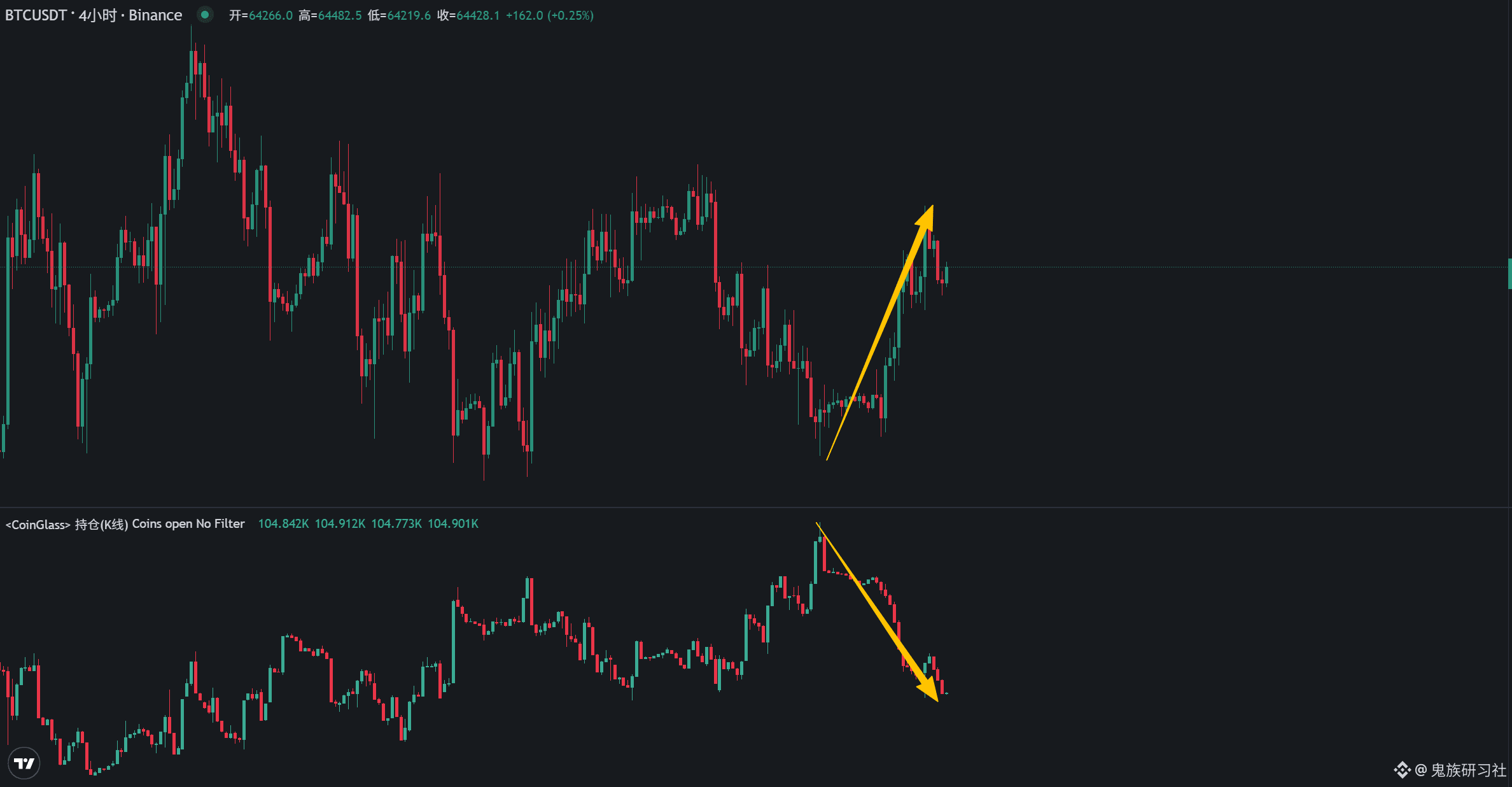
Prices are rising, yet the open interest is clearly declining. What does this mean? When prices rise while open interest decreases, it is usually a market driven by short covering (buying to close) that results from shorts being liquidated, rather than a large influx of new long positions.
Such a rally often lacks sustained momentum and is relatively “hollow.” If the open interest does not expand again afterward, prices are likely to fall once more. So the strength is in question—watch whether open interest keeps pace.
Such a rally often lacks sustained momentum and is relatively “hollow.” If the open interest does not expand again afterward, prices are likely to fall once more. So the strength is in question—watch whether open interest keeps pace.


Log in to explore more content