

By Samuel Chapman
Compiled by: Heart of the Metaverse
Key Takeaways
There is no fixed definition of the metaverse, but most people agree that it is a three-dimensional virtual space that adds a visual interface to common online activities.
After Facebook changed its name to “Meta,” many companies invested billions of dollars in the Metaverse. However, by 2023, interest had waned.
Most consumers are interested in the Metaverse for social interaction and doing things they can’t do in the real world.
The term “metaverse” has gone from science fiction to reality since it first appeared in Neal Stephenson’s novel Snow Crash in 1992. The metaverse, a shared virtual reality (VR) where avatars interact in a vast digital space, will soon impact our lives as much as the internet did — but will it? Just take a look at the metaverse statistics below to see how things are progressing.
It’s unclear whether the Metaverse trend heralds a true Web 3.0 or is just a passing fad, but given the amount of money being spent on developing it ($120 billion in the first five months of 2022 alone) we’ll be hearing about the Metaverse for at least the next few years. Facebook, for example, has invested so much in the concept that it changed its company name to Meta.
We’ve compiled a list of metaverse statistics to keep you informed as the media continues to cover this potentially revolutionary concept.
5 Key Statistics for the Metaverse in 2023
The majority of potential Metaverse users (44%) most want to use the Metaverse to communicate with friends and family in a more immersive way.
Three-quarters of Americans (77%) believe the metaverse could cause “serious harm” to real life.
Google searches for the term "metaverse" peaked at over 1 million searches per month in late 2021, then began to decline sharply in early 2022.
Metaverse real estate transactions once exceeded $500 million, but as interest declined, transactions slowed.
Despite the slowdown, assuming an annual growth rate of 41.6%, the metaverse market will reach $936.57 billion by 2030.
What exactly is the metaverse?
As a concept that has only recently emerged from science fiction, the metaverse does not yet have a generally accepted definition. It is generally believed that it is a shared, three-dimensional, explorable digital space where users can fully exist in a way they cannot on the current Internet. IoT hardware devices often play a key role.
Most concepts about the metaverse are perceived through virtual reality devices.
Beyond that, there are a lot of questions. Is the metaverse a video game, a social network, a chat app, an augmented reality platform, some combination of the above, or something else entirely? So far, efforts to build the metaverse have been fragmented, with companies reluctant to collaborate on building the kind of sprawling shared worlds seen in movies like Ready Player One.
Metaverse proponents sometimes use the term to describe different layers of the experience, from content to the engines that power it to underlying concepts like blockchain, which can cause confusion. Still, with a little research, we can discern where Metaverse builders agree and where they still disagree.
1. There is no unified metaverse yet
Most people who promote the Metaverse don’t mean a single platform. Instead, they use the term “Metaverse” the same way people use the term “Internet,” to describe a single technology that is adopted by everyone through global consensus.
There is no such metaverse. Several competing virtual worlds, including Roblox, Decentraland, and The Sandbox, could claim to be part of the nascent metaverse, but “metaverse” implies full interoperability, where each digital world interacts seamlessly, like unrelated websites on the World Wide Web.
2. Consumers are keen on building social connections
In April 2022, researchers surveyed 2,939 people in Europe and Asia about the metaverse; 59% of respondents said there was at least one activity they would prefer to participate in virtually rather than in person.
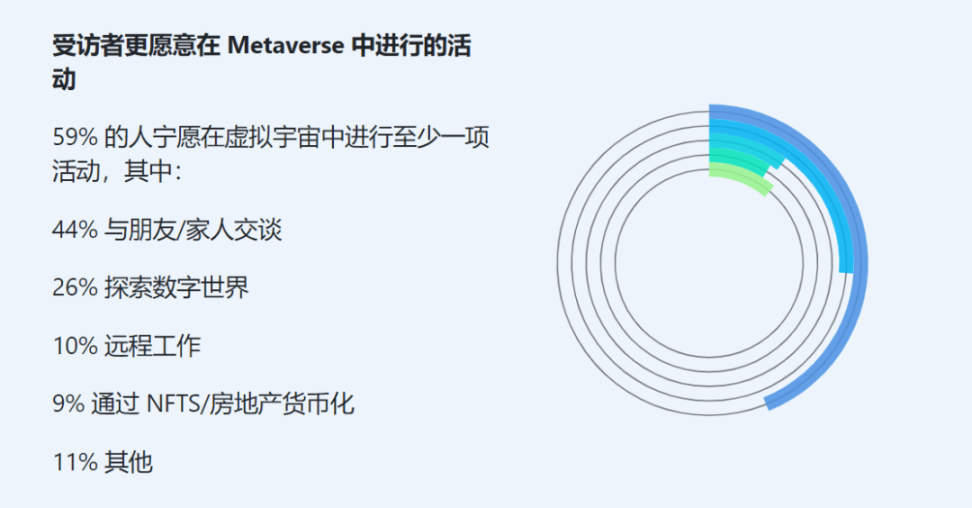
Of those respondents, 44% said they were most looking forward to using the Metaverse to connect with friends and family in a more immersive way. Another 26% said they were excited about "exploring the digital world," 10% said they would use it to work remotely, and 9% were most enthusiastic about tokenizing the Metaverse through NFTs and real estate. There were also some other uses, accounting for 11% of the total survey.
3. The entertainment industry has the greatest potential for change
According to research from Wunderman Thompson, consumers expect the Metaverse to impact the entertainment industry more than any other sector, with 90% of survey participants believing that interactive experiences will evolve far beyond video games.
For example, the shared PlayStation Dreams world, which is normally used to create and share video games, is being used to create a feature-length film. Winter’s Journey, directed by Alex Helfrecht and starring John Malkovich, is currently in production with no release date set.
4. Fashion and retail could also be affected
Of those surveyed who were aware of the Metaverse, 70% believed it would be used as a virtual storefront. Some companies have already opened stores in the Metaverse, with Nike and Forever 21 opening stores in Roblox, and Skechers planning to open a store in Decentraland.
History of the Metaverse
The Metaverse’s journey from concept to viability spanned decades, and it’s still evolving today as companies try various approaches to creating shared augmented and virtual realities.
5. The first shared virtual world in 1978
Multiplayer online games are almost as old as the internet. In 1979, Richard Bartle and Roy Trubshaw created MUD (Multi-User Dungeon), a text-based game where internet users could explore a fantasy world via the arpanet. MUD could be called the first online RPG, and thus the ancestor of games like World of Warcraft, which itself gave rise to the concept of the metaverse.
6. The term “metaverse” first appeared in 1992
The term “metaverse” first appeared in print in 1992 in author Neal Stephenson’s novel Snow Crash. Snow Crash tells the story of a shared virtual world where people go to escape a dystopia ruled by corporations. Other works have used similar plot points, including the novel Ready Player One and the anime series Sword Art Online.
7. Fortnite has the highest global usage rate
Many shared virtual worlds can be considered examples of metaverses, from early MUD prototypes to massively multiplayer online role-playing games (MMORPGs) such as EverQuest, Final Fantasy XIV, and World of Warcraft. There are also popular examples such as Second Life that are not explicitly video games.
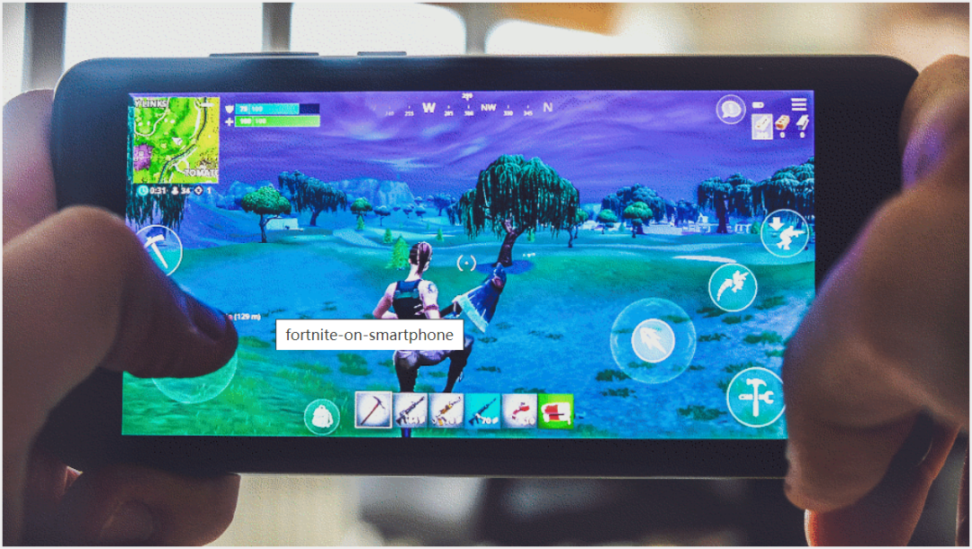 Fortnite is the most popular app and can be called the metaverse.
Games like Minecraft and Roblox have attracted millions of users, but the most successful game today may be Fortnite. Not only does the battle royale game average 240 million users per month, it also holds the record for the most concurrent players of any game, with 12.3 million people attending a virtual concert in 2020.
One thing to note: Although PlayerUnknown's Battlegrounds, the original battle royale game, has more published player counts than Fortnite, these numbers don't always match up with player observations. To be safe, we're going to give Fortnite the title for now.
8. User interest in the Metaverse is declining
While the companies driving the Metaverse boom are excited about its potential, the public may not share their enthusiasm. In late October 2021, Google searches for the term “Metaverse” peaked at over 1 million searches per month before beginning to decline in February 2022. At the time of writing, Google interest in the Metaverse is only 5% of its peak, perhaps as artificial intelligence takes its place in the cultural conversation.
Investing in the Metaverse
Much of the recent interest in the Metaverse has been driven by money. Starting in 2021, a large number of investors began to view the Metaverse as a real business opportunity with huge potential returns.
9. Metaverse investment explodes in 2022
Not only did metaverse-related technologies attract a staggering $120 billion in investment from January to May 2022, but that figure was more than double the investment for all of 2021. In that year, investors poured in just $57 billion.
While more than doubling investment in 2021 is impressive, it’s worth noting that the majority of funding in 2022 came from Microsoft’s proposed acquisition of video game company Activision Blizzard, in part to “provide building blocks for the Metaverse.” As of August 2023, the deal remains on hold due to antitrust concerns in the United States.
10. Facebook’s Big Gamble
Facebook's actions over the past few years indicate that it may be more bullish on the Metaverse than any other company. After officially changing its name to Meta in 2021 and establishing the Reality Labs division to develop Metaverse technology, Mark Zuckerberg announced plans to invest at least $10 billion in the virtual world each year.
Zuckerberg said the Metaverse could take 10 years to come to fruition, implying a total investment of more than $100 billion. This all-inclusive approach was not widely welcomed. In October 2022, Meta's stock price fell by more than 60%, and a well-known shareholder wrote an open letter asking the board to withdraw its investment in Meta.
11. Another $1 billion investment
As we covered in Stat 9, Microsoft considers its $69 billion acquisition of Activision Blizzard an investment in the Metaverse. However, Microsoft and Meta aren’t the only companies investing more than $1 billion in their Metaverse capabilities.
Epic Games, which owns Fortnite and Rocket League, received $2 billion from investors to advance its metaverse ambitions, including development of the Unreal Graphics Engine Unity, another 3D rendering engine, spent $1.6 billion to acquire Weta Digital, the New Zealand special effects company that produced the Lord of the Rings trilogy.
12. Even the government is involved
In July 2022, the Spanish government awarded $4.1 million to EU businesses whose products involve the Metaverse or Web3, and $8.5 million to the production of video games and Metaverse content.
13. The withdrawal of giants in 2023
So far, 2023 has been the year of the Metaverse “hangover” as companies and investors began to realize that the technology had not taken off as expected. Both Microsoft and Disney canceled their Metaverse divisions because customer adoption and revenue could not match the high startup costs of the technology.
Even Meta has de-emphasized the Metaverse, despite spending some $36 billion on Reality Labs. Zuckerberg told shareholders in March 2023 that generative AI is now his company’s largest investment, and the Metaverse has been relegated to one product among many.
Metaverse real estate boom
One of the most common ways to join the Metaverse is to buy land in a popular Metaverse. Just like in the real world, Metaverse platforms keep real estate supply scarce to drive demand. Ownership of Metaverse real estate is recorded on the blockchain, making each plot of land theoretically unique (much like an NFT).
14. $1.4 billion in real estate exchanges in 2022
The Metaverse real estate market first heated up in 2021, when users of the “big four” platforms (Decentraland, Sandbox, Somnium Space, and Cryptovoxels) traded $500 million in Metaverse real estate. Moreover, sales in 2022 were even greater, reaching $1.4 billion, an increase of about 180%. One sale cost 333 Ethereum (ETH), which was about $1 million at the time.
 This concept art shows a compact real estate plot in the Sandbox metaverse.
Interestingly, the majority of 2022’s record-breaking sales came from new platforms, especially Yuga Labs’ Otherside, which accounted for three-quarters of sales Finally, in 2021, trading volumes remained low as artificially scarce supply dried up, with the four largest economies losing much of their market share.
15. The boom may be over
The rapid growth of virtual real estate has created extreme optimism, but the market has failed to live up to expectations. Throughout 2022, real estate has depreciated on every major metaverse platform, even Otherside (which drove the craze in the first place). Decentraland performed the best, but still lost about 4% of its cumulative real estate value.
Another bad sign is that trading volume in April 2023 is still at rock bottom, with only about $50,000 worth of virtual land traded on Decentraland per week. Considering that 2022 was also the year of the Crypto crash, this is not surprising.
Consumer Behavior in the Metaverse
While companies are investing significant resources in developing the Metaverse, the future Metaverse means nothing without customer adoption of the technology. Measuring public acceptance of the Metaverse can be tricky. However, based on the average internet user, we can draw some conclusions about the Metaverse.
16. More than 400 million daily users
According to research by consulting firm Metaverse, virtual worlds reached a milestone of 400 million daily active users (DAU) in 2022. However, this number includes more traditional metaverses like Roblox, Minecraft, and Fortnite, which have a total of 385 million users. Blockchain-based worlds like Decentraland account for only 15 million.
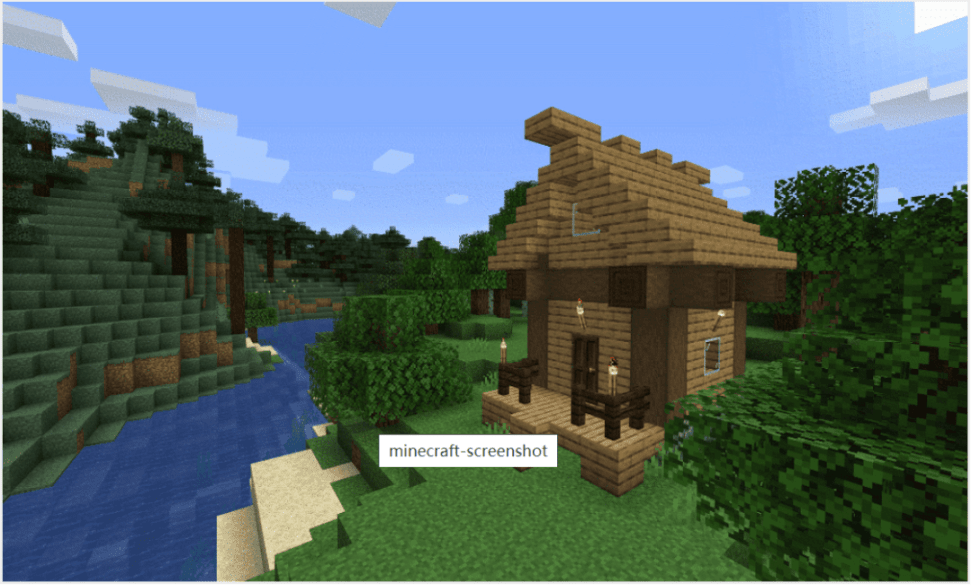 If you include games like Minecraft, the Metaverse seems even more popular.
This distinction is important because Web3 technology is key to delivering on the promise of the Metaverse. For example, much of the hype relies on being able to transfer assets like NFTs from one platform to another. The public's willingness to embrace Web3 concepts can be seen as a proxy for acceptance of the Metaverse as a whole.
17. The Metaverse Could Cause Harm
According to a Tidio survey of US consumers, more than three-quarters (77%) of respondents believe that the metaverse poses a risk of "serious harm" to real life. The most common fears include decreased physical fitness, addiction to technology products, and mental health issues such as depression and anxiety.
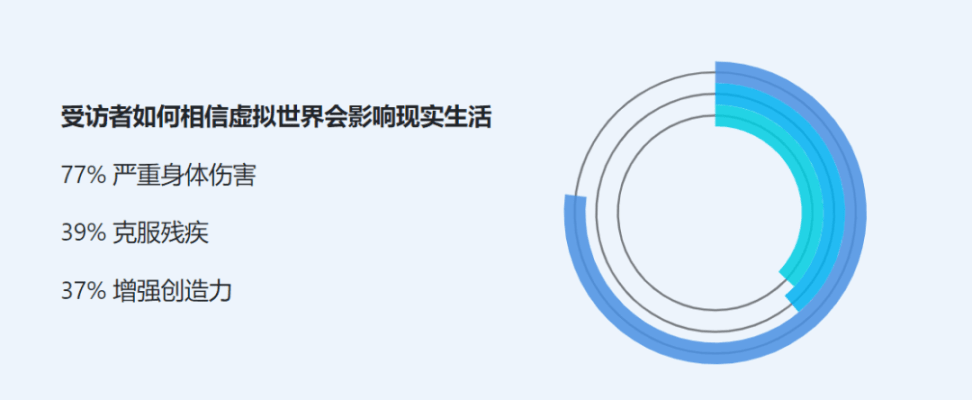
It’s not all doom and gloom, though. In the same survey, 39% of respondents believed the Metaverse could allow people to overcome real-world disabilities, and 37% believed it could enhance their creativity.
18. Things I wouldn’t do in real life
The same Tidio survey asked respondents to name things they would never do in the real world but might be willing to do in the metaverse; 38% said they would like to try extreme sports, 22% said they would like to go big game hunting, 19% would participate in a gladiatorial fight to the death, and 17% would consider having a virtual harem.
These numbers are less concerning when we consider that the Metaverse is a virtual world and no real people (or animals) could be harmed by these actions. However, 14% of respondents did say they would engage in hate speech in the Metaverse, so the potential for real-world harm still exists.
The future of the metaverse
It’s been less than two years since Facebook’s rebrand made the Metaverse a household name, but it feels like it’s been longer. Since 2021, we’ve seen the Metaverse go from a futuristic metaphor to a multibillion-dollar industry to yesterday’s news. Wild fluctuations make it hard to predict what the Metaverse will look like next year, let alone 2030, but we can still try.
19. $800 billion by 2024
Soon after Facebook announced its name change and its intention to rule the metaverse, analysts at Bloomberg predicted that the global metaverse could be an $800 billion market by 2024, including software subscriptions (especially video games) and advertising revenue.
20. 2030 USD 936 billion
Analysts’ forecasts for the first half of 2023 are slightly more modest, but still predict growth. Assuming annual growth of 41.6%, the market will reach $936.57 billion by 2030, according to an April report from Grandview Research.
The report uses a broad definition of the metaverse, including infrastructure, hardware (especially AR and VR headsets), software (including virtual worlds and tools used to create virtual worlds), and assets in the metaverse (such as real estate). According to Grandview, AR and VR devices generate the most revenue for virtual worlds because they are widely used in industries that simulate reality.
Metaverse needs to be proven by the market
Despite the challenges faced by the Metaverse in 2023, losing investment and being surpassed by generative AI, supporters still believe that these are just growing experiences. To evangelists, the Metaverse is inevitable, even if it is not built by Meta. They point to research showing that people want better virtual worlds, and in areas beyond games.
Opponents point out that the metaverse has always lacked coherence and that builders disagree on its final form. They argue that the technology is too expensive for its value. Ultimately, only the market will prove which side is right.


